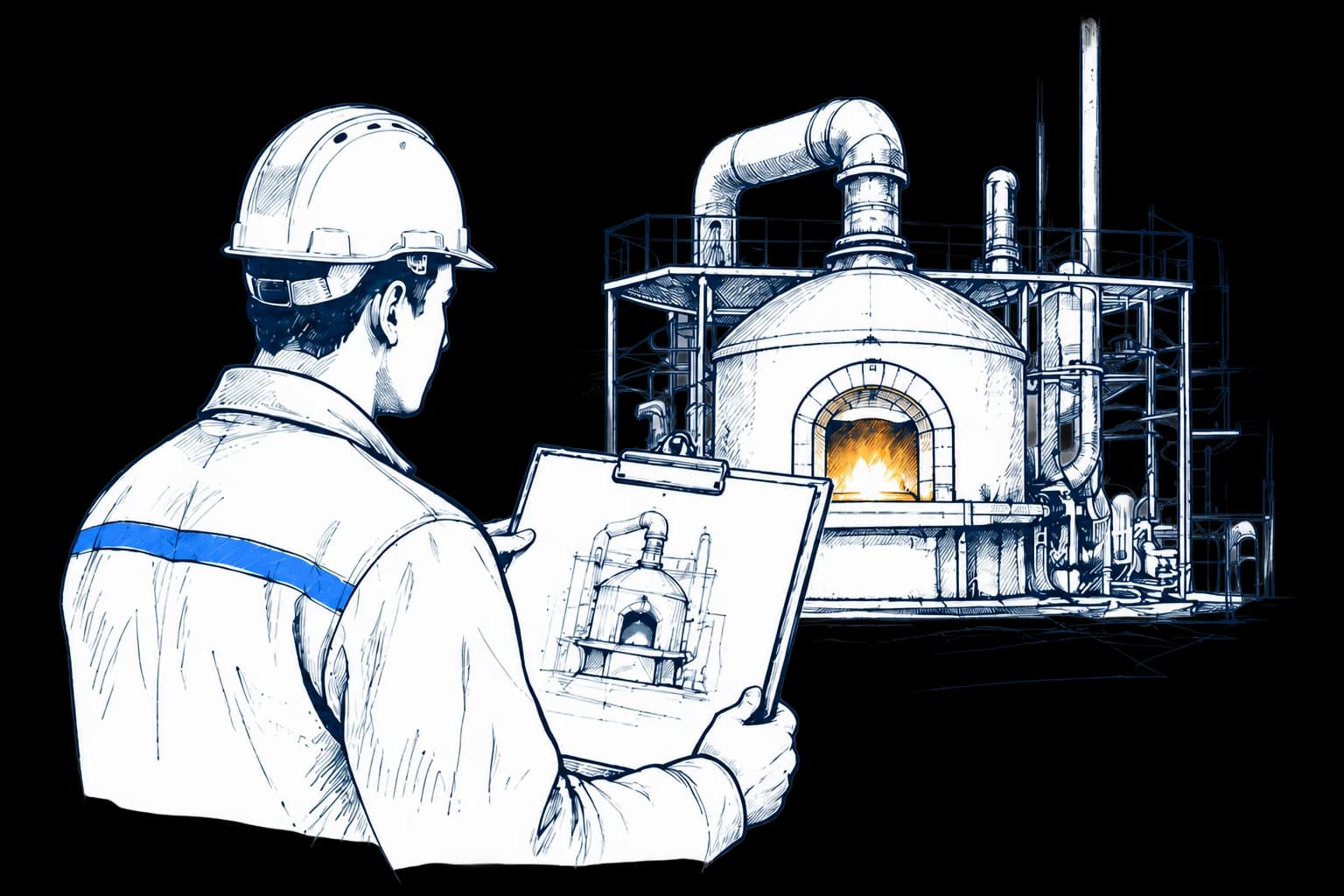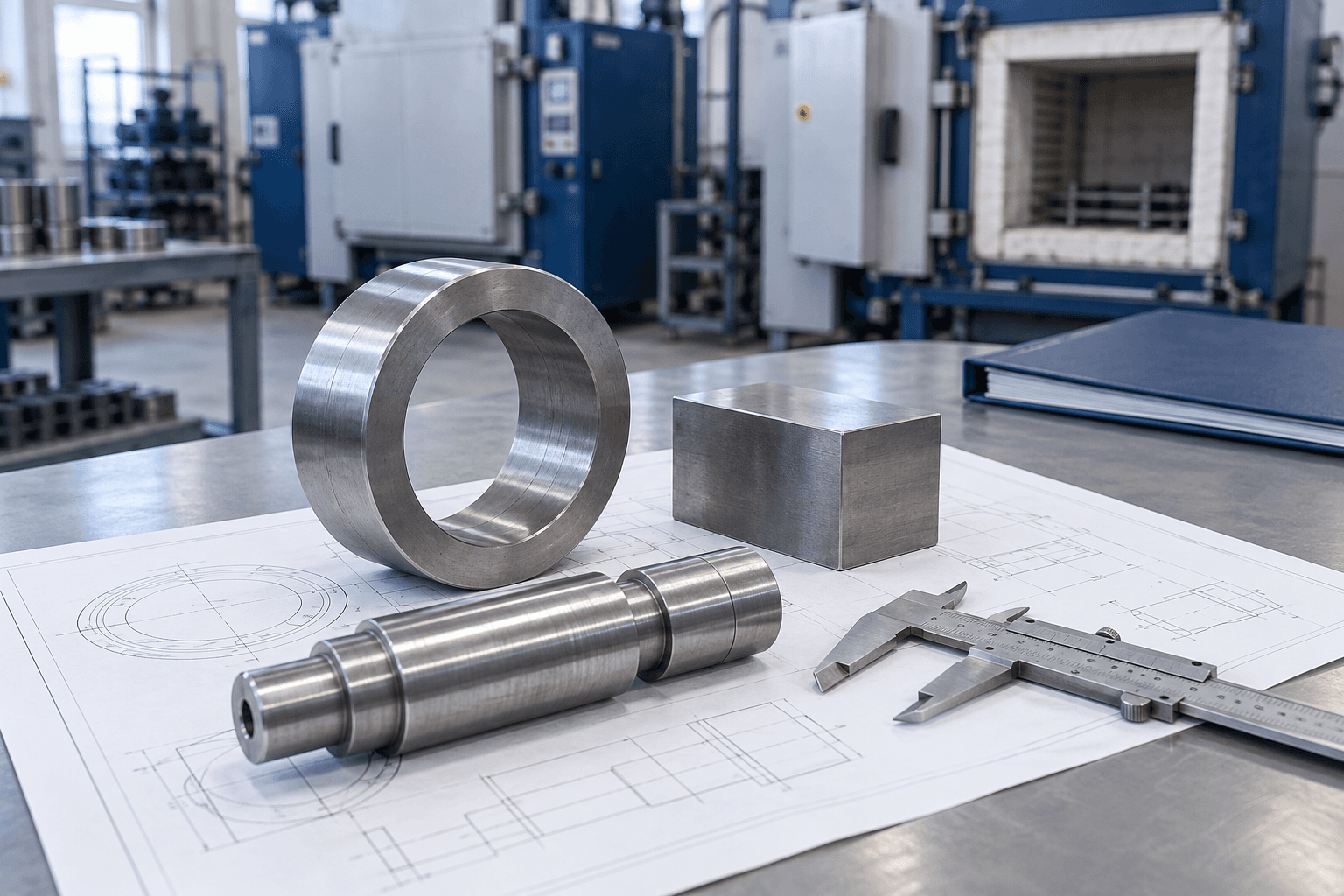
11 parameters to check before requesting a price
Group the details by workpiece, process and site. Mark any outstanding item “to be confirmed.”
AParts and loading
Material, individual and maximum overall dimensions, piece weight and fixturing.
Length, width and height of the usable working zone determine structure and loading space.
State the batch weight, daily target, or hourly throughput and line speed for a continuous furnace.
BProcess and configuration
Specify the maximum design and usual operating temperatures, for example 650°C, 950°C or 1200°C.
Annealing, solution treatment, ageing, tempering, quenching or normalizing. Include a temperature–time curve if available.
State whether ±5°C, ±10°C, ±15°C or another tolerance is required for the process and furnace.
Electricity, natural gas, LPG, diesel or steelworks by-product gas.
Temperature controllers, PLC, touch panel, recorder, traceability or connections to plant MES/SCADA systems.
CEquipment and site
Car-bottom, box, pit, mesh-belt, roller-hearth or pusher furnace. If undecided, describe the part and process.
Floor space, electricity, gas, lifting equipment, foundations and charging or discharge method.
Target delivery, installation and commissioning, existing-furnace alterations, relocation or restart.
Include photos, drawings or process curves when available.
Use the copyable checklistWhat else does each furnace type require?
Check the following points in addition to the common parameters.
Car-bottom furnace quotation inputs
- Chamber dimensions
- Batch weight
- Hearth car load rating
- Door design
- Rails and foundations
- Temperature uniformity
Box furnace quotation inputs
- Usable working zone
- Temperature rating
- Heating element type
- Door opening method
- Control accuracy
Mesh-belt furnace quotation inputs
- Belt width
- Throughput or belt speed
- Number of temperature zones
- Belt material
- Continuous operating time
- Loading and unloading
Pit furnace quotation inputs
- Usable diameter and depth
- Lifting method
- Workpiece length
- Lid construction
- Atmosphere or circulation requirements
Retrofit quotation inputs
- Photos of the original furnace
- Lining condition
- Control-system condition
- Current problem
- Retrofit scope
- Shutdown window
Compare quotations against the same scope of supply
Car-bottom and annealing furnaces can differ substantially in configuration and quantities. For new and retrofit projects, identify included work and items requiring separate confirmation.
| Category | Typical work | Items to confirm separately |
|---|---|---|
| Engineering | Diagnosis, design, quantities, equipment and system configuration, drawings and technical documentation. | Itemize site surveys, third-party design and special certification. |
| Equipment and materials | Shell, lining, heat source or combustion system, mechanical drives, controls, safety interlocks and agreed accessories. | Identify retained components, buyer-supplied items, consumables and spares. |
| Site work | Dismantling, manufacture, transport, installation, commissioning and operator training within the agreed scope. | Assign foundations, lifting, utilities, scaffolding, removal and reinstatement of insulation, and shutdown support. |
| Testing and handover | Agreed factory inspections, commissioning, performance tests and documents. | Confirm third-party inspection, emissions testing, certification tests and additional retesting separately. |
What changes configuration and cost?
Chamber dimensions
A larger working zone changes steelwork, lining, heating power and fabrication hours. The furnace name alone gives no cost basis.
Temperature rating
650°C, 950°C and 1200°C classes call for different refractories, heating elements, instruments and controls.
Load
Batch weight, car rating, baskets or conveyors affect strength, drive selection and margin.
Process requirements
Annealing, tempering, normalizing and solution treatment impose different requirements for zoning, circulation, heating and soaking.
Energy source
Electricity, natural gas, LPG, diesel and by-product gas each require different heating systems, pipework and interlocks.
Automation
Controllers, PLCs, touch panels, recorders, traceability and line integration change electrical and controls costs.
Eight factors affecting price
- At comparable temperature, materials and scope, larger working zones generally require more material and fabrication. Verify the specific design.
- Higher temperatures increase demands on refractories and heating systems.
- Heavier charges require greater structural strength.
- Check uniformity against heating, heat transfer, loading, sensors and controls. For forced convection, also check fans and flow guides.
- With comparable functions, brands, interfaces and scope, additional automation generally increases controls and implementation costs. Compare the actual scope.
- Gas-fired furnaces add combustion equipment, pipework and interlocks compared with basic electric resistance furnaces.
- Continuous furnaces depend more on conveying, zoning and cycle coordination than batch furnaces.
- Estimate a retrofit against the condition of the existing furnace.
Three examples of quotation variables
These project figures illustrate retrofit and line-level pricing inputs. Each set belongs to its own project and does not establish standard equipment, prices or throughput elsewhere.
Large gas-fired car-bottom annealing furnace retrofit
Working zone approximately 13 × 7.4 × 4.3 m. Rated/maximum operating temperature 700°C. The design uses 14 control zones and fourteen 630 kW-class high-velocity natural gas burners (14 × 630 kW = 8,820 kW). Combustion air at 250–300°C was a design target.
Effect on scopeAllow for the structure, lining, combustion, piping, safety interlocks, exhaust and site responsibilities.
Annealing and solution-treatment section of an 850 mm strip line
Strip annealing temperature approximately 1050–1150°C, maximum furnace temperature up to 1300°C, and furnace body approximately 130 m long.
Effect on scopeConfirm strip dimensions, speed calculations, temperature zones, cooling, recoiling and controls interfaces.
RCWT-75/45-9/6 controlled-atmosphere mesh-belt line
Working dimensions approximately 400 × 3200 mm for quenching and 400 × 5600 mm for tempering. The quoted 950°C rating applies to the quench furnace. Approximately 150 kg/h is a design reference for the specified loading conditions.
Effect on scopeInclude conveying, atmosphere, quenching, washing, tempering, speed and throughput conditions in the quotation.
Copy this checklist to prepare your inquiry
Fill in what you know and mark unknowns “to be confirmed.” Send via the website form, phone, WeChat or email.
Industrial furnace quotation checklist
17 items- Equipment type:
- Workpiece material:
- Workpiece dimensions:
- Weight per piece:
- Batch load or hourly throughput:
- Maximum temperature:
- Usual operating temperature:
- Heat-treatment process:
- Heating, soaking and cooling schedule:
- Temperature uniformity:
- Heating method:
- Controls:
- Site conditions:
- Target delivery:
- New furnace, retrofit or overhaul:
- Current problem:
- Available photos or drawings:
Gather operating conditions for technical review.
What happens after you send the information?
Review the design direction, confirm the key parameters and prepare a checkable quotation.
Send the basic parameters
Provide furnace type, workpiece, temperatures, throughput, process and site conditions.
Suneng reviews the equipment direction
An engineer assesses a new design, retrofit or overhaul against the supplied information.
Confirm key parameters
Recheck chamber dimensions, loading, temperature controls, utilities and delivery boundaries.
Receive an initial proposal and price range
Once the data are clear, Suneng can outline the design, equipment and price range.
Confirm the formal proposal and price
The final technical proposal, quotation and scope follow agreement on the details.
An initial assessment generally takes one working day. Response and quotation timing depend on complexity, the information available and the site. Existing furnaces or complex lines may require a survey.
Questions before you request a quote
Can I request a quote if I only know the workpiece dimensions?
Yes, for a preliminary review. Include the material, dimensions, weight, process, throughput and maximum temperature so an engineer can assess car-bottom, box, pit, mesh-belt or other designs.
Why do car-bottom furnace prices differ?
Chamber size, charge weight, temperature class, lining, car capacity, door, heating method and controls all affect cost. Compare the actual configuration.
How long does an industrial furnace quote take?
With sufficient information Suneng can assess the design direction and price range. Complex lines, retrofits or uncertain site conditions may need further engineering or a survey. A firm price follows the agreed design, equipment list and delivery scope.
Can you quote without drawings?
Photos, dimensions, workpieces and process data can support an initial assessment. Complex projects may require site measurements, drawings or further discussion.
How does pricing a retrofit differ from pricing a new furnace?
New equipment is priced from the design and configuration. For retrofits also consider the original condition, removal work, lining damage, existing controls interfaces, site access and shutdown time.
Can we have an indicative price?
An initial range is possible. A firm price requires the furnace type, dimensions, operating temperatures, loading, process, controls and delivery boundaries.
What should an energy-efficiency retrofit quotation cover?
Separate diagnosis and design, shell and lining, heating or combustion, drives, controls and interlocks, removal and transport, installation, commissioning, tests and documents. Assign foundations, lifting, utilities, third-party tests, buyer-supplied components and shutdown support.
How much does an energy-efficiency retrofit cost?
Estimate a range after confirming condition, scope, chamber, temperatures, workpieces, throughput, heat source, controls, site and downtime. A firm price follows the technical proposal, quantities and scope.
How should we budget an old-furnace retrofit?
Itemize diagnosis, design, removal, shell and lining, heating or combustion, drives, controls and interlocks, commissioning, testing, third-party work and shutdown support. Keep concealed damage and unverified site quantities open for inspection.
Sources and limits
The source article cites Suneng project records SN-CASE-P1-014, SN-CASE-P0-006 and SN-CASE-P0-004. Their figures illustrate cost drivers. The formal quotation follows the agreed design, equipment list, delivery scope and contract. Chinese source published 12 June 2026.