
Shafts, rolls and tie rods
Often suitable for vertical lifting; confirm length, diameter, aspect ratio, centre of gravity and distortion requirements.

Loading page…
Loading is taking longer than usual. Please wait or try again.
Retry loading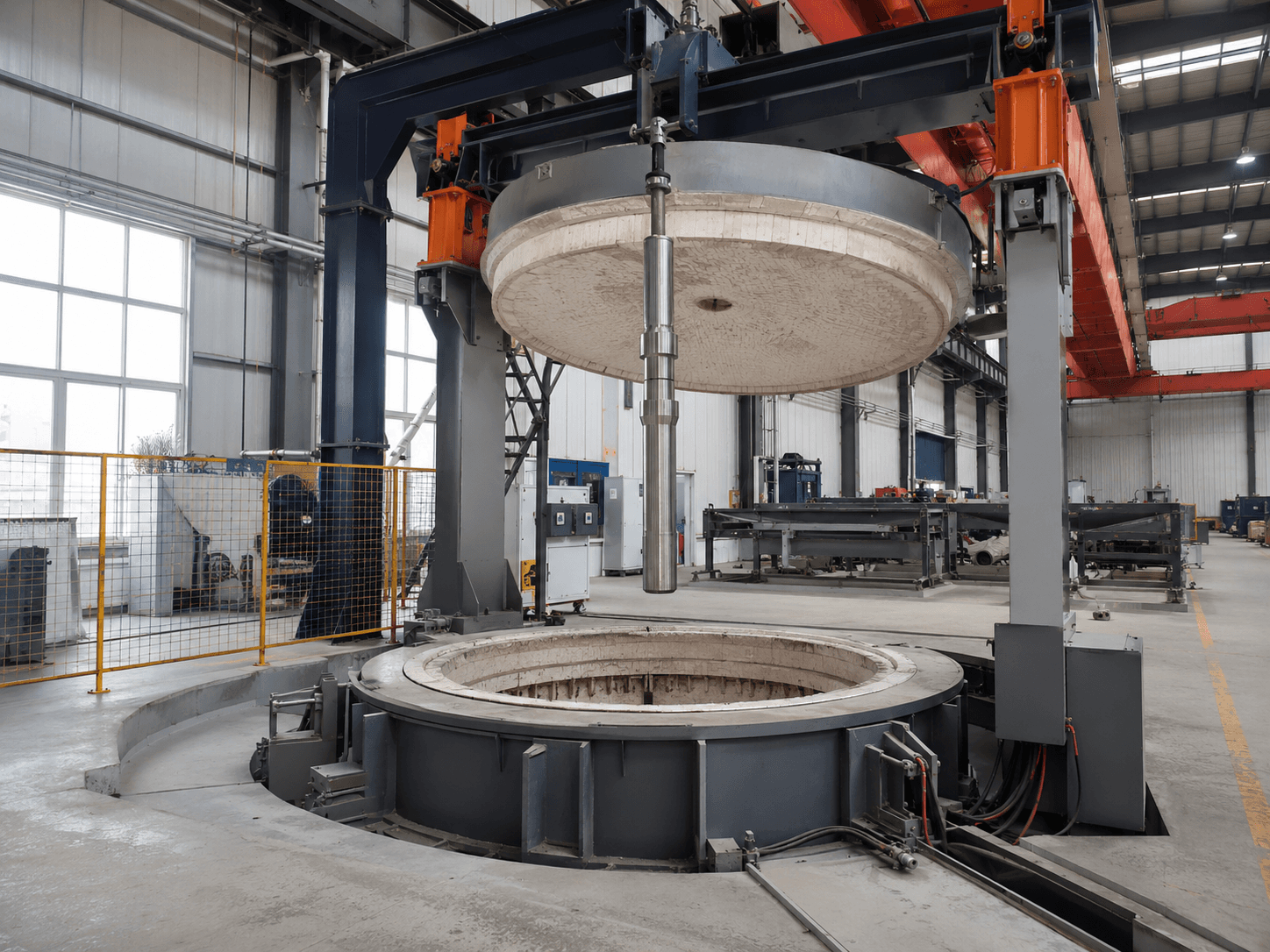
PIT TYPE HEAT TREATMENT FURNACE
For shafts, rolls, tie rods, sleeves and basket loads, first assess aspect ratio, loading envelope, process, lifting route and building conditions, then define the effective heating zone and structural design.
Parts, spacing and tooling form the loading envelope. Also check the opening, lifting route and building clearance. Determine the effective heating zone under agreed conditions.
Assess part shape and loading method first to determine suitability for a pit-furnace design.
Often suitable for vertical lifting; confirm length, diameter, aspect ratio, centre of gravity and distortion requirements.
Assess suspension, racks or baskets; check envelope, spacing and thermal-circulation space.
For stable specifications and continuous cycles, also compare belt, pusher or roller-hearth designs.
Temperature uniformity alone cannot guarantee distortion. Material, initial condition, aspect ratio, clamping, supports, heating/cooling schedule and cooling method also matter.
These are configuration options to confirm against operating conditions.
Configure for process temperature
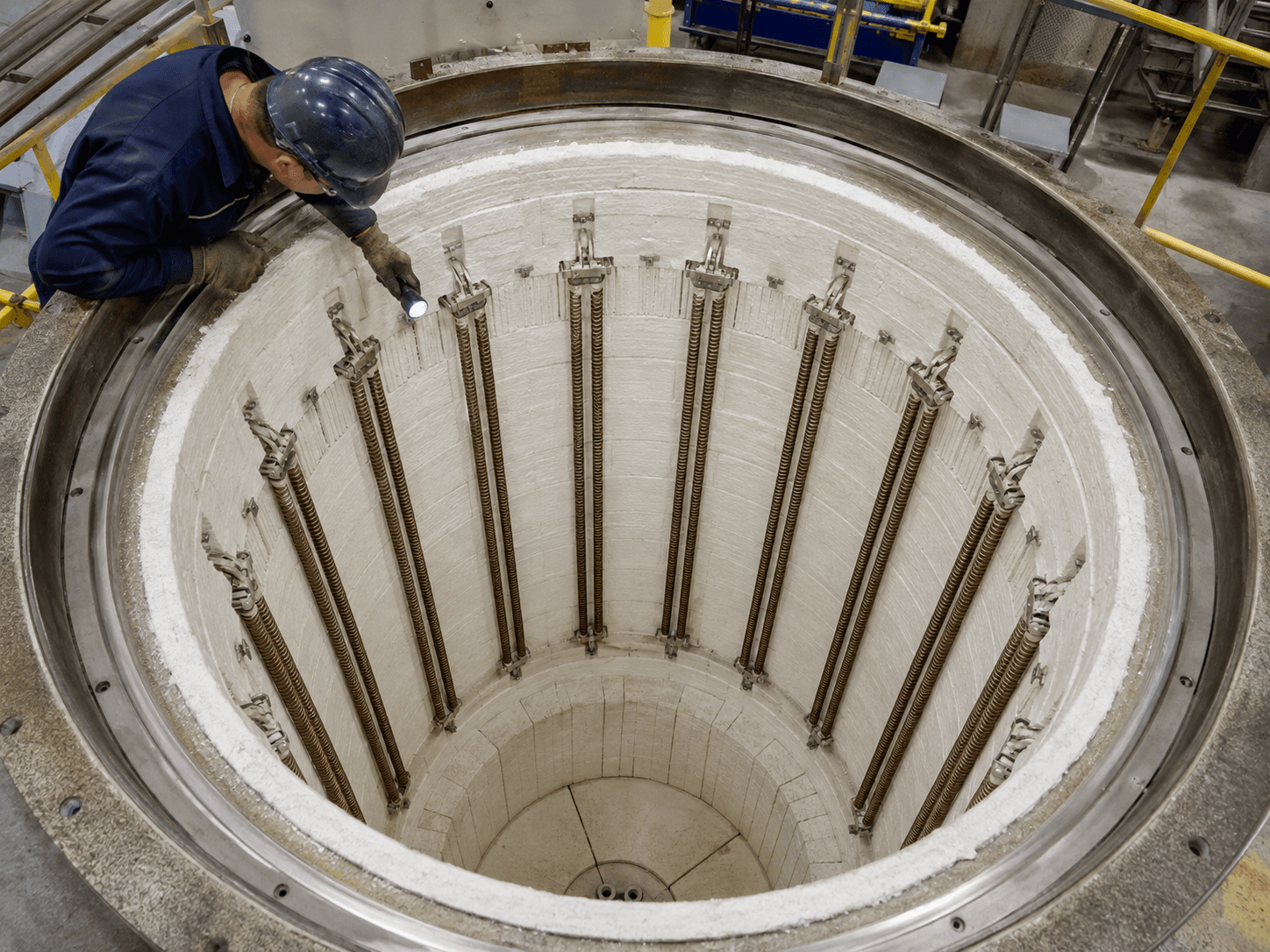
Assess temperature and material compatibility
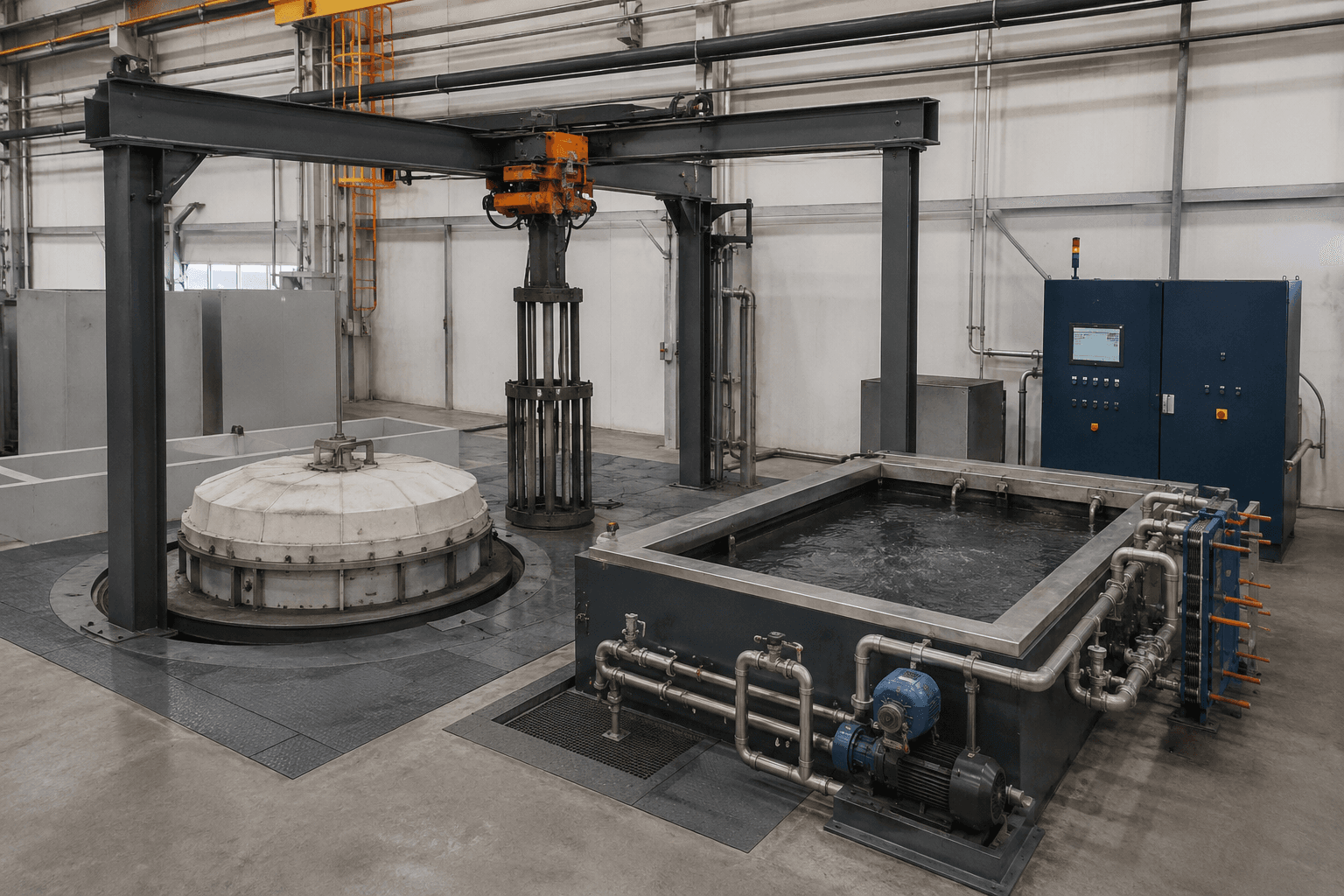
Heating, transfer and cooling
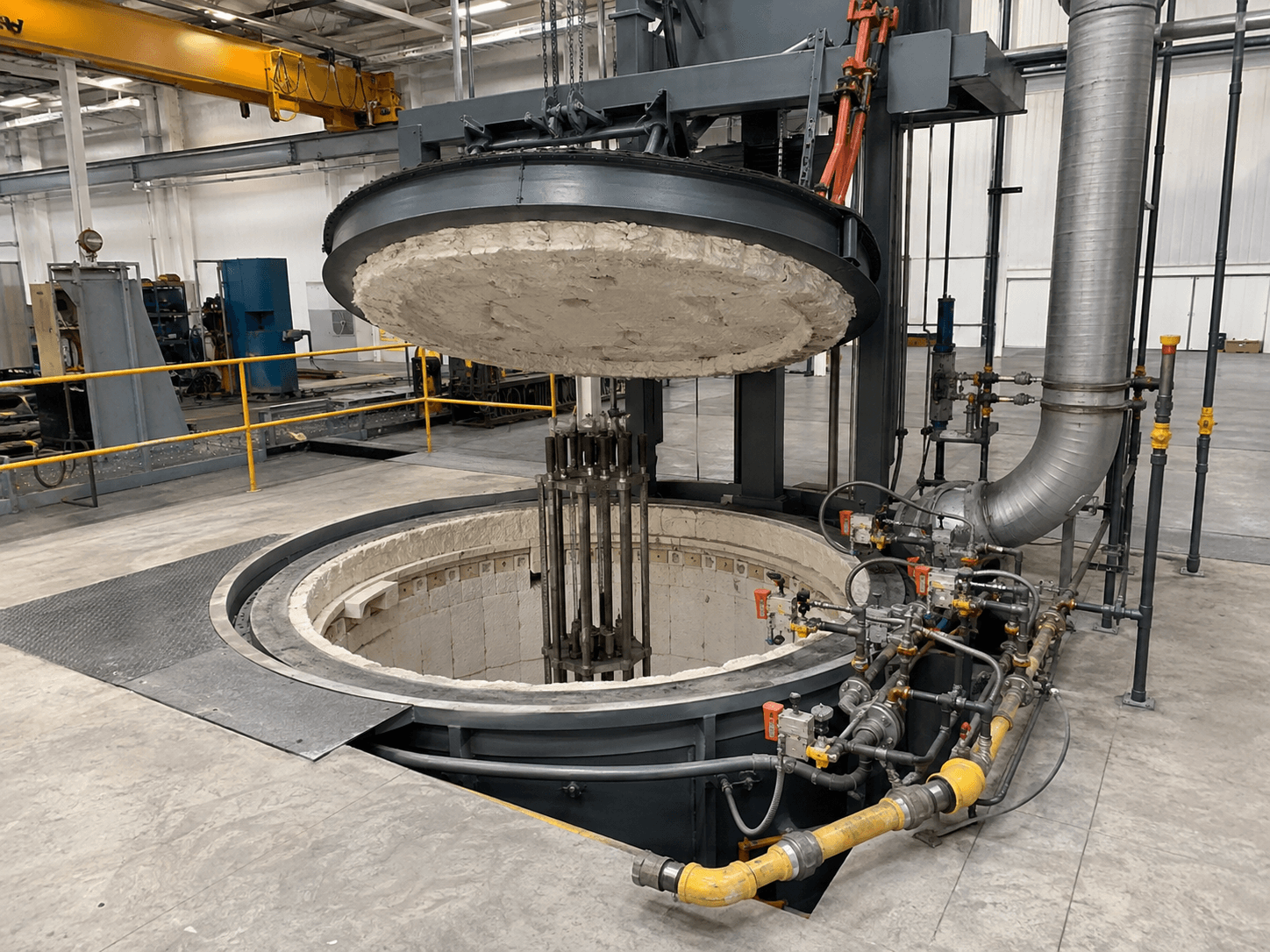
Assess energy and exhaust conditions
| Equipment approach | Better-suited conditions | Main advantage | Required checks | Do not promise without verification |
|---|---|---|---|---|
| Pit resistance furnace | Batch treatment of long parts requiring zoned control and defined site power | Clear control arrangement supports effective-zone calculations | Power capacity, control zones, tooling and lid structure | Do not promise temperature spread or heating time without loading conditions |
| High-temperature pit furnace | A verified need for a higher rated class with material, lining and process confirmed | Configure lining and heaters for the rated class | Continuous/maximum temperatures and material compatibility | Rated temperature is not the default continuous working temperature |
| Pit furnace and quench-tank unit | Processes requiring transfer into cooling medium after heating | Assess heating, lifting, transfer and cooling as a system | Maximum total lifted mass, transfer time, route and interlocks | Do not promise transfer cycle or cooling results with incomplete conditions |
| Gas-fired pit furnace | Projects with suitable gas supply, exhaust and safety conditions | Compare heat sources using available energy | Burners, gas supply, exhaust, interlocks and building conditions | Burner reference standards do not replace agreed whole-furnace acceptance |
Process temperature comes from material, treatment objective and process curve. Also check continuous/maximum temperatures and loading conditions.
Separate thermal, loading and lifting boundaries to create a verifiable design.
| Data group | Items to confirm |
|---|---|
| Workpiece | Name, grade, maximum dimensions, unit mass, centre of gravity and distortion requirements |
| Process | Continuous/maximum temperatures, heating/cooling curves, soaking time and quality targets |
| Loading and cycle | Suspension / racks / baskets, batch quantity, spacing and cycle |
| Quality targets | Effective zone, temperature records, surface, hardness or microstructure and acceptance criteria |
| Cooling | Furnace cooling, air or cooling medium, transfer route and permitted time |
| Utilities | Power or gas, exhaust, crane, building height, pit depth and installation boundaries |
The cutaway explains structural components. Final layout depends on workpieces, process, load and site.
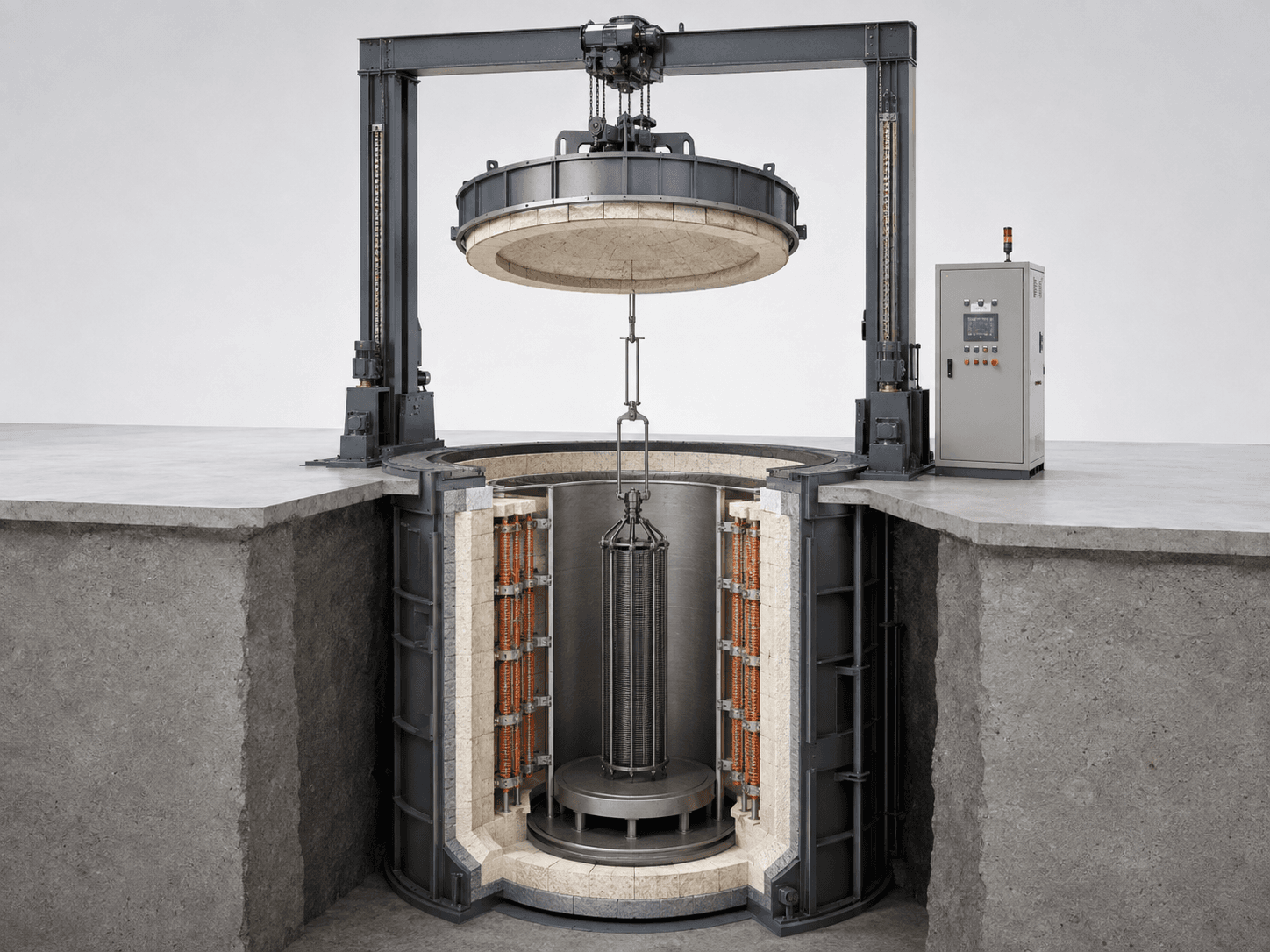
Maximum vertical envelope of workpieces and loading tooling.
Maximum horizontal envelope of parts, spacing and tooling.
State and calculate thermal load and lifting load separately.
Used to check vertical lifting route, building clearance and foundations.
Opening method has no millimetre unit; millimetres apply only to top and side clearances.
Define structure around effective heating zone, rated class, heat loss and maintenance boundaries.
Calculate separately for heat source, process temperature, control zones and utilities.
Select airflow sleeve, circulation direction and loading gaps for process and temperature-field requirements.
Confirm lifting or rotating method, seals, clearances and interlocks individually.
Check maximum total lifted mass, centre of gravity, route, speed and cooling method.
Agree on temperature control, records, alarms, interlocks, emergency stops and data interfaces.
These answers explain selection boundaries, not the final technical design or contract annexes.
Long shafts, rolls, tie rods, sleeves and parts loaded vertically by suspension, racks or baskets are candidates. Assess maximum dimensions, aspect ratio, unit mass, net load, tooling, distortion requirements and site lifting conditions.
Define material, treatment objective, continuous and maximum operating temperatures and heating/soaking schedule first. Then check lining, heaters, load and heat-source suitability. Rated temperature is not automatically the continuous working temperature.
The effective heating zone is the working space evaluated for temperature uniformity under agreed conditions. Chamber structure also includes lining, heater/combustion layout, airflow guidance and safety clearances. The two serve different purposes and cannot replace each other.
Net workpiece and furnace-tooling masses enter thermal-load calculations. Maximum total lifted mass also includes lifting beams, hooks and slings taking part in the lift. Check lifting mechanisms and workshop cranes against that total.
Provide part name, grade, maximum dimensions, unit mass, batch quantity, net workpiece load, furnace-tooling mass, maximum total lifted mass, continuous/maximum temperatures, soaking time, loading method, cooling medium, process curve and site conditions.
Compare design directions first, then discuss the complete operating conditions.
Assess effective zone, loading method and temperature-control zones.
Check lifting, transfer, cooling and safety interlocks together.
Assess gas, exhaust and site utilities.
Tell us about the workpiece, throughput or existing equipment issue. Drawings and detailed parameters can follow.
Prefer to talk first? Contact us directly.
What you will receive