
Large castings, forgings, dies and structures
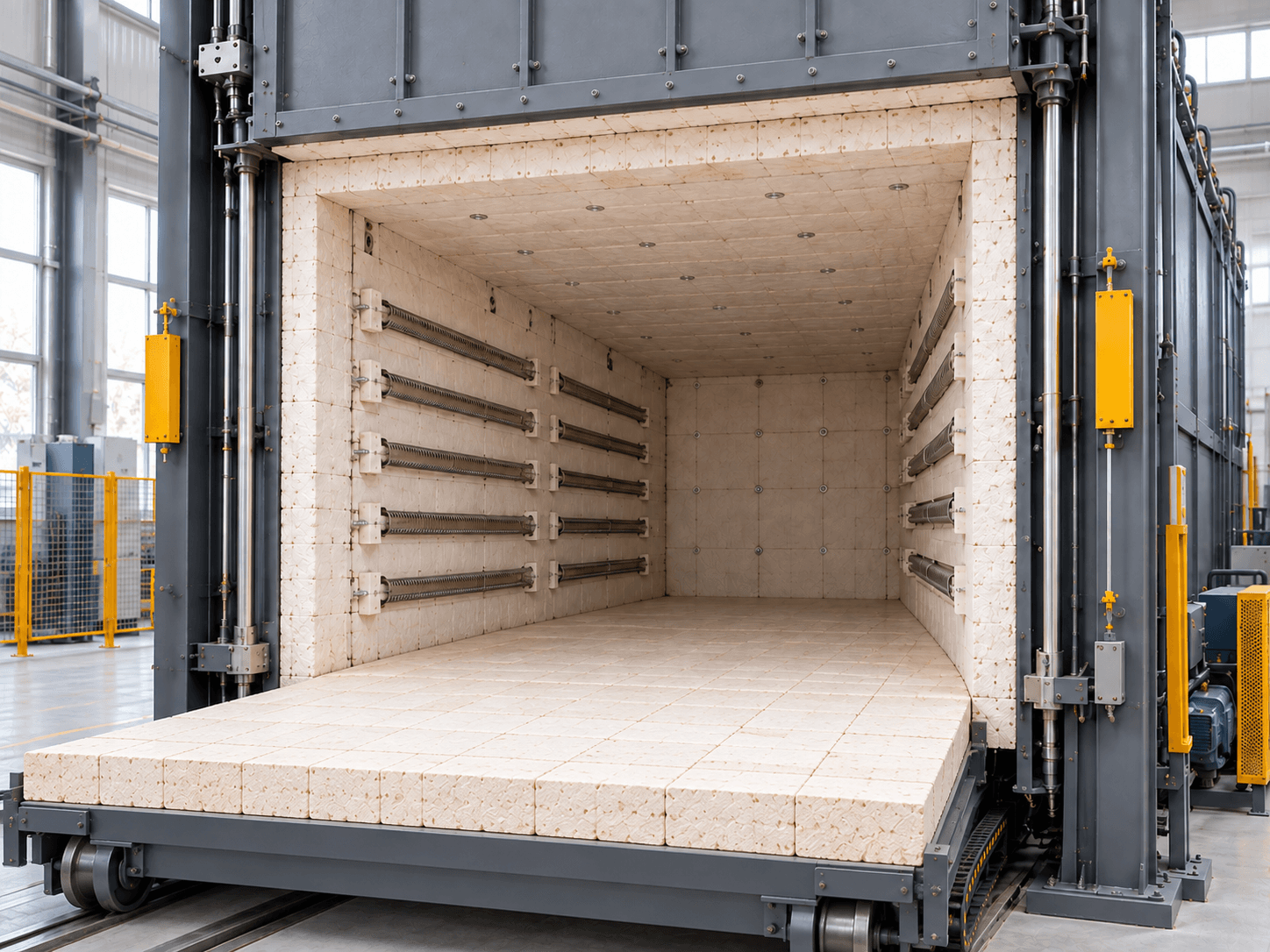
For batch heat treatment with the complete load carried into and out of the furnace on a bogie.

Loading page…
Loading is taking longer than usual. Please wait or try again.
Retry loading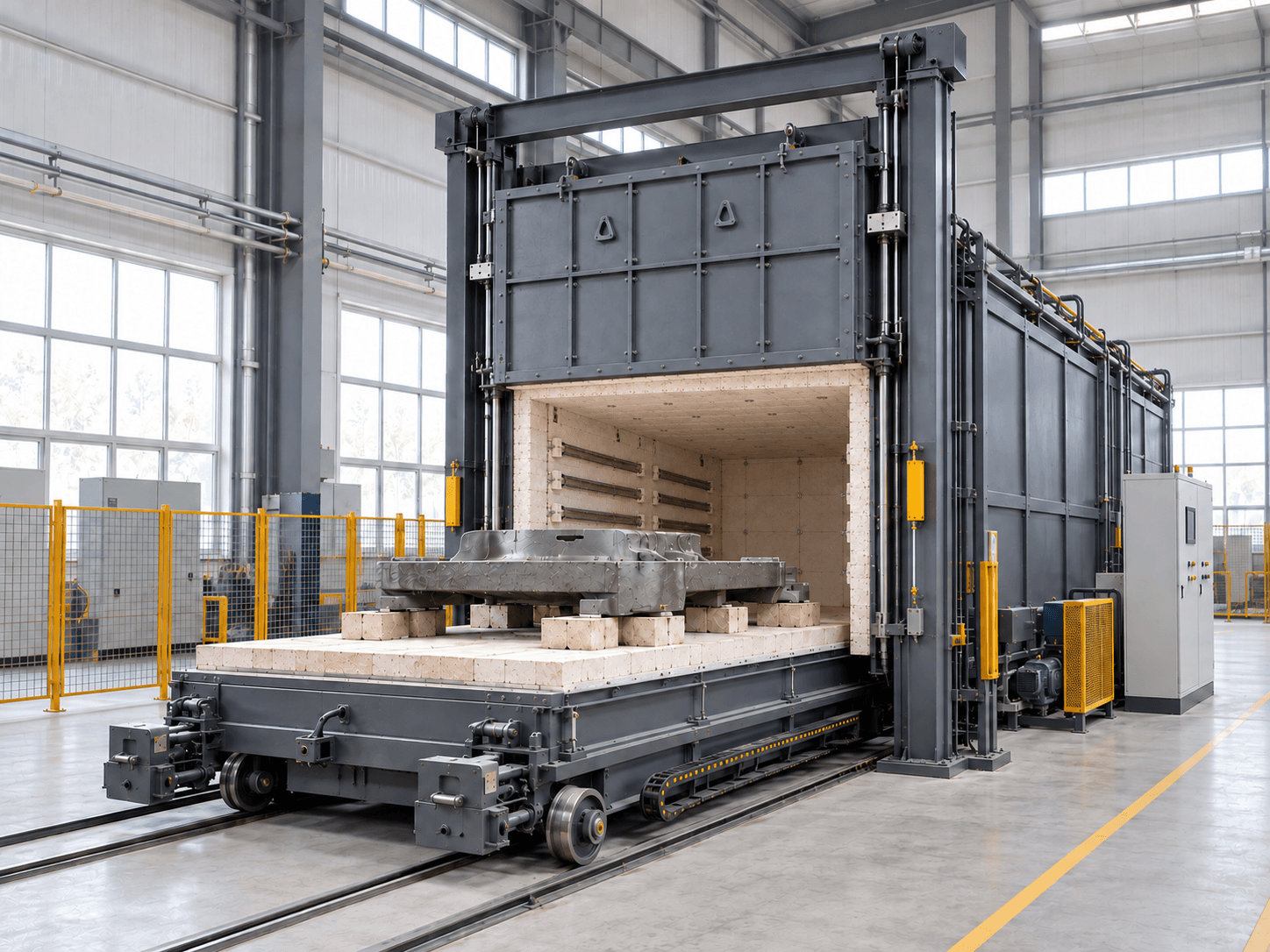
BOGIE HEARTH HEAT TREATMENT FURNACE
For large castings, forgings, weldments, dies and heavy mechanical parts. Check shape, support points, total load, bogie travel and foundations before defining the effective heating zone, bogie structure and heat source.
Rated-temperature classes come from GB/T 10067.48-2014; dimensions and project temperatures come from existing Suneng records. They are selection examples, not a continuous specification range or equipment capability guarantee.
Assess workpiece shape and loading or conveying first to determine suitability for a bogie-hearth furnace design.
For batch heat treatment with the complete load carried into and out of the furnace on a bogie.
Define centre of gravity, support points, blocks, deck-load distribution and high-temperature distortion limits.
Also compare pit, roller-hearth and pusher furnaces.
Bogie capacity depends on support locations, load distribution, deck strength at temperature, rails and drive conditions as well as total weight.
These are configuration options to confirm against operating conditions.
Zoned resistance heating
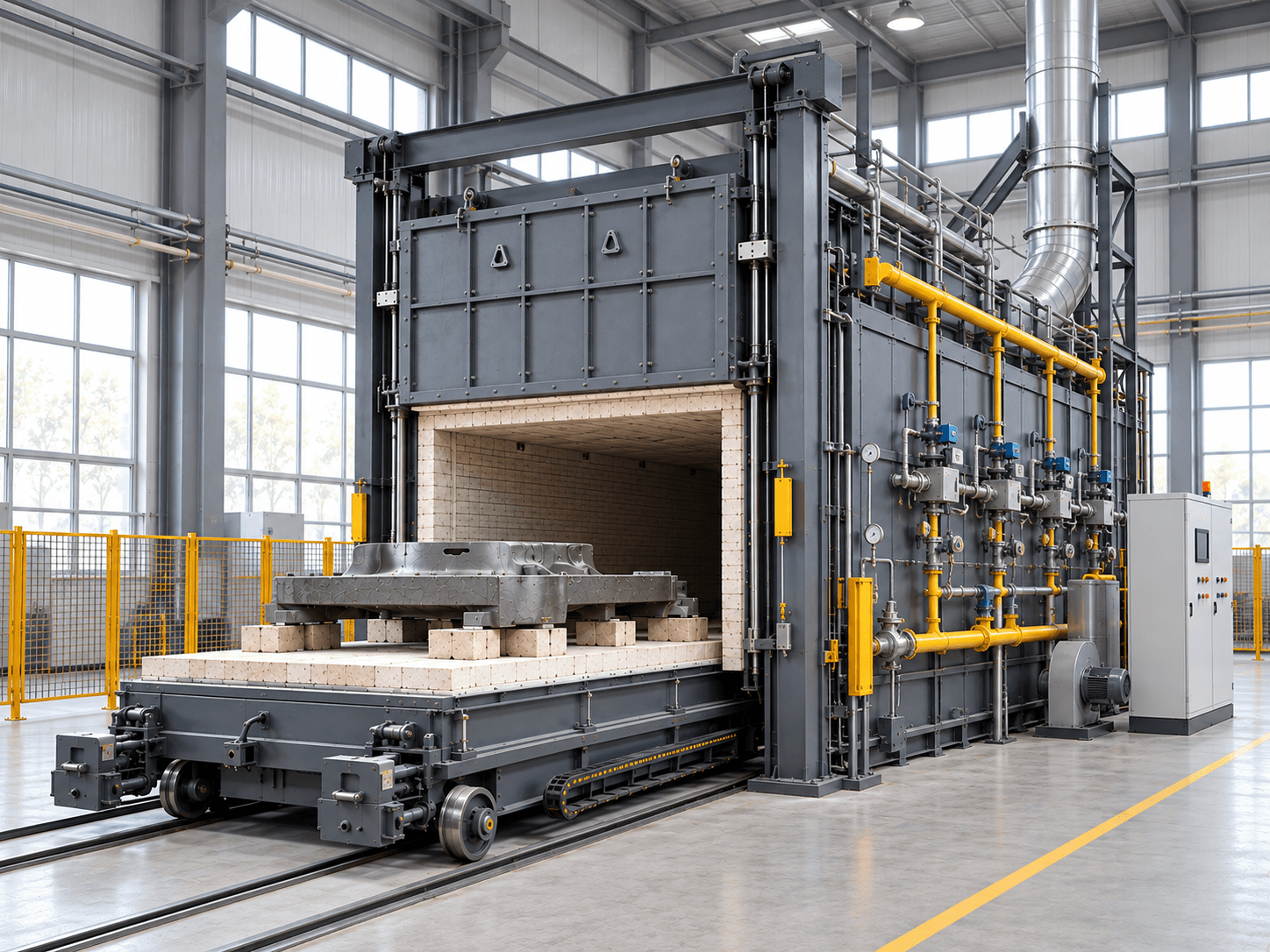
Combustion and flue-exhaust system
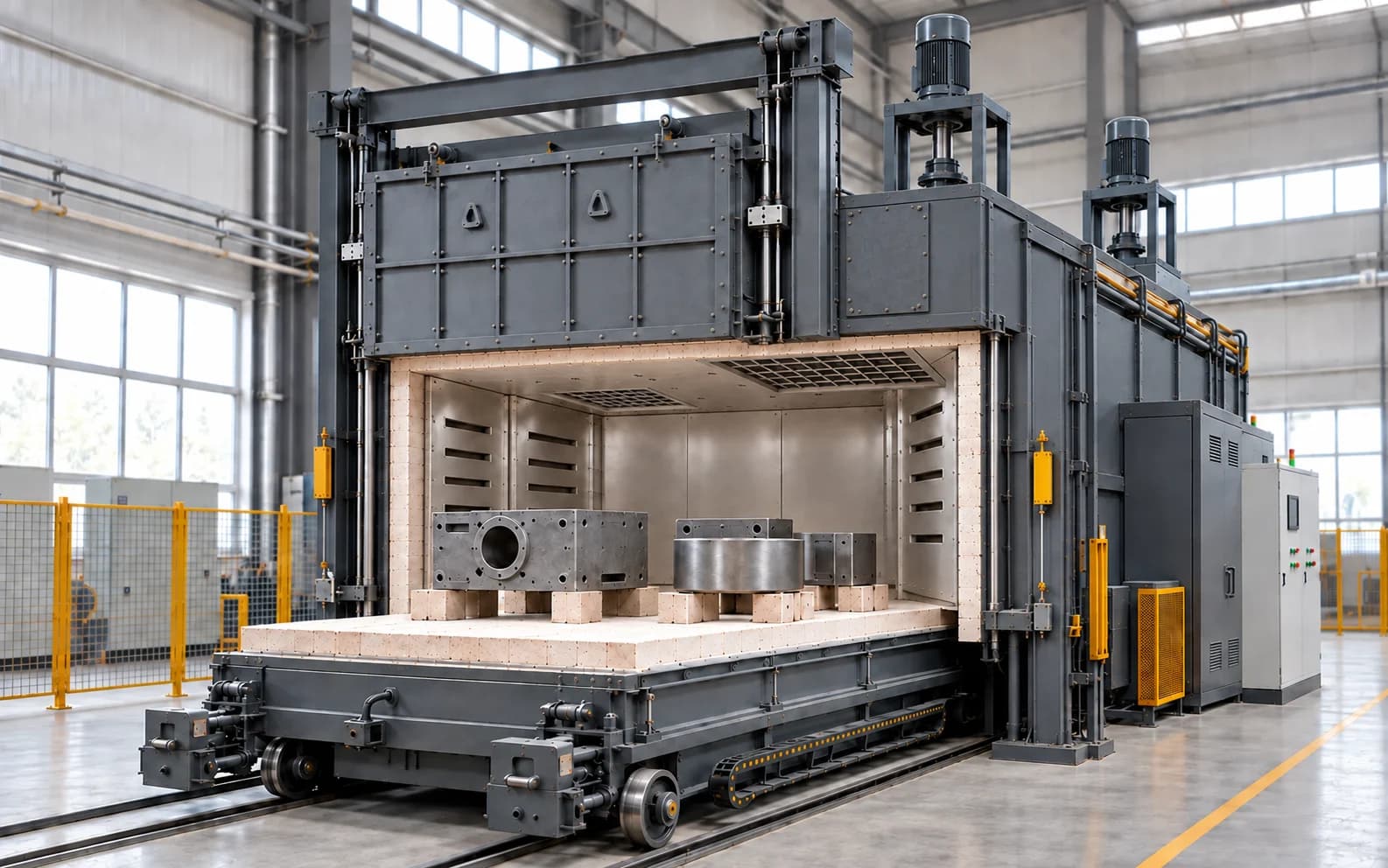
Circulation and airflow guidance
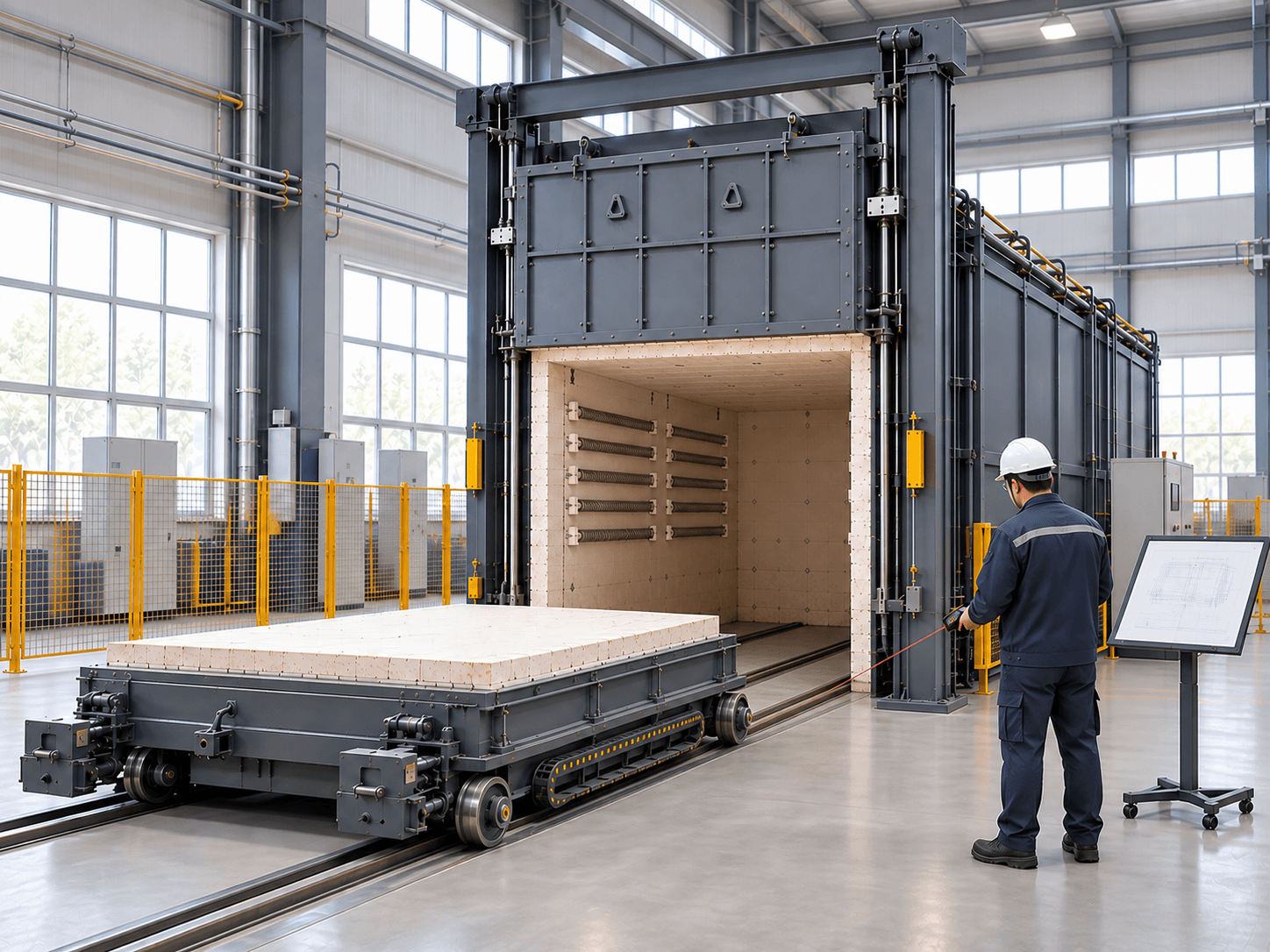
New furnace / overhaul / retrofit
| Configuration | Better-suited conditions | Main advantage | Required checks | Do not promise without verification |
|---|---|---|---|---|
| Bogie-hearth resistance furnace | Assess annealing, tempering, normalizing or stress relief of large heavy parts | Arrange heating zones around the effective zone and loading | Power capacity, zones, tooling, sealing and bogie load | Do not guarantee temperature spread or heating time without defined loading |
| Gas-fired bogie-hearth furnace | Large-part duties with defined site gas and exhaust conditions | Compare heat sources using energy availability and furnace scale | Gas parameters, burners, flue exhaust, furnace pressure and interlocks | Burner specifications do not replace whole-furnace performance acceptance |
| Forced-circulation bogie-hearth furnace | Large low- or medium-temperature loads requiring enhanced convection | Optimize internal airflow around workpiece gaps | Fan temperature rating, airflow guides, load resistance and maintenance space | A fan does not establish temperature-uniformity performance |
| Bogie-furnace replacement and retrofit assessment | Sites with declining furnace performance or energy/control upgrade needs | Compare retention, retrofit and complete replacement boundaries | Existing-furnace inspection, foundations, interfaces, shutdown and acceptance scope | Do not guarantee retrofit results before site inspection |
Separate working space, loading/conveying variables and structural variables to create a verifiable design.
| Data group | Items to confirm |
|---|---|
| Workpiece | Name, material, maximum shape, unit mass, centre of gravity and supports |
| Process | Continuous working and maximum temperatures, curves, soaking and cooling |
| Furnace charging | Batch quantity, net load, tooling, support blocks and load distribution |
| Production | Batch timing, handling time, bogie exchange and maintenance windows |
| Building | Rails, foundations, travel, door clearance, lifting and logistics routes |
| Utilities | Power or gas, flue exhaust, cooling water, compressed air and interfaces |
Structure examples explain components. Final layout depends on workpieces, process, load, cycle and site conditions.
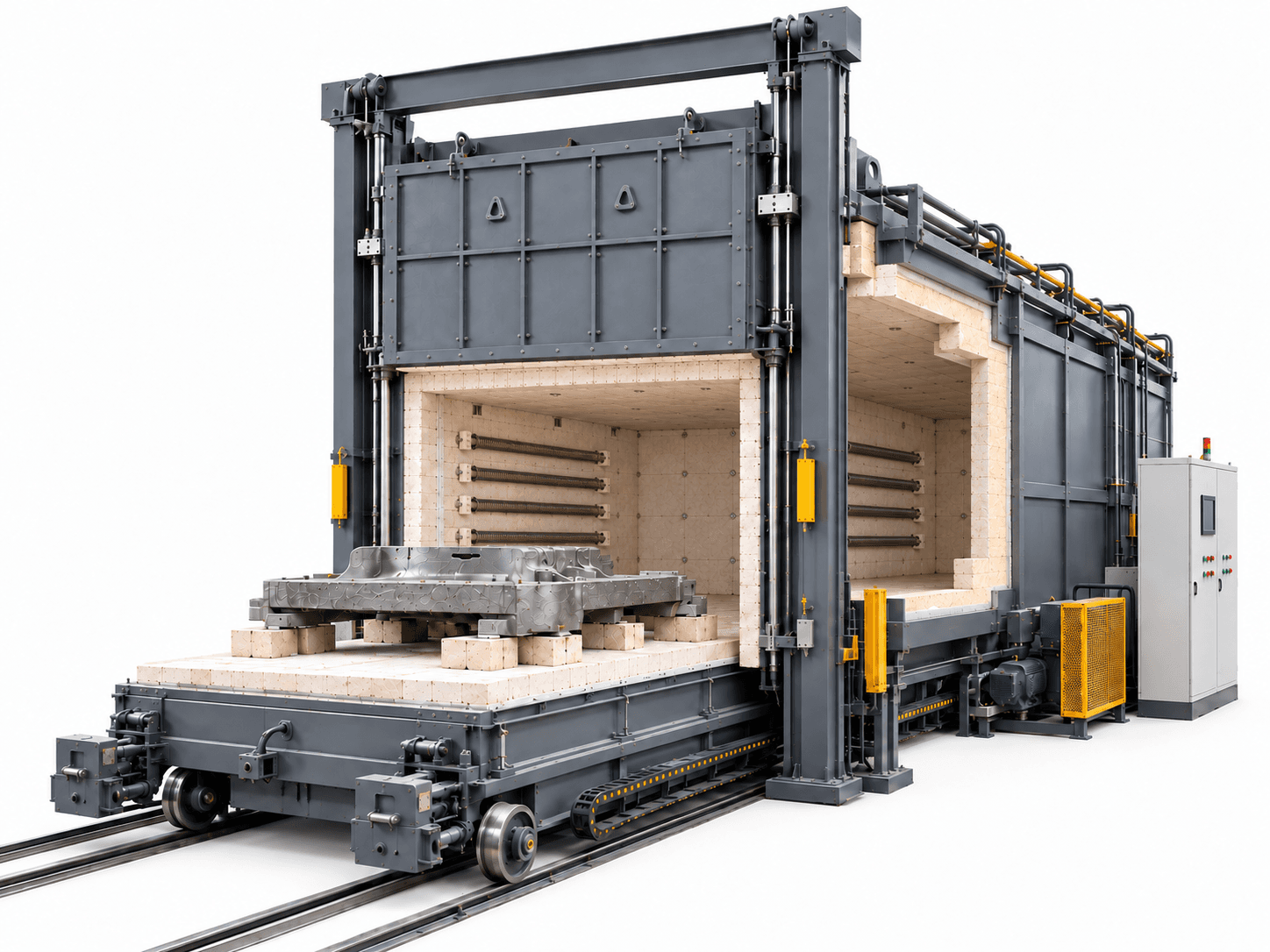
Include workpieces, support blocks, spacing and furnace tooling.
Calculate thermal, structural and drive loads separately.
Used to check deck, heat-resistant blocks, wheel sets and rails.
Confirm workshop logistics, foundations and service space.
Define lining, heating, flue exhaust and interlocks.
Determine from effective zone, heat source, operating temperature and maintenance method.
Design resistance or gas systems around thermal load, zones and utilities.
Confirm lifting, clamping, insulation, sealing and safety interlocks together.
Design deck, supports, wheel sets, bearings and tooling for high-temperature loads.
Coordinate gauge, foundations, thermal expansion, traction, limits and emergency bogie return.
Agree on temperature control, records, alarms, door/bogie interlocks and emergency stops.
These answers explain selection boundaries, not the final technical design or contract annexes.
Large castings, forgings, weldments, dies and heavy mechanical parts that can enter and leave on a loaded bogie are candidates. Check maximum shape, unit mass, supports, net load and site conditions.
The same weight produces different structural responses depending on supports, distribution, centre of gravity and temperature. Check deck, wheel sets, rails and drive separately.
Compare power/gas availability, furnace scale, process temperature, control and exhaust requirements, operating arrangement and maintenance capability. Energy unit price alone is insufficient.
Inspect shell, lining, bogie, rails, door, heating/combustion system, controls and foundations first. Then compare retention and retrofit with replacement for risk, downtime and acceptance boundaries.
Provide maximum part shape, unit mass, batch quantity, net load, tooling, supports and load distribution, process curve, door/bogie direction, rail foundations, lifting and energy conditions.
Compare loading or conveying arrangements first, then discuss the complete operating conditions.
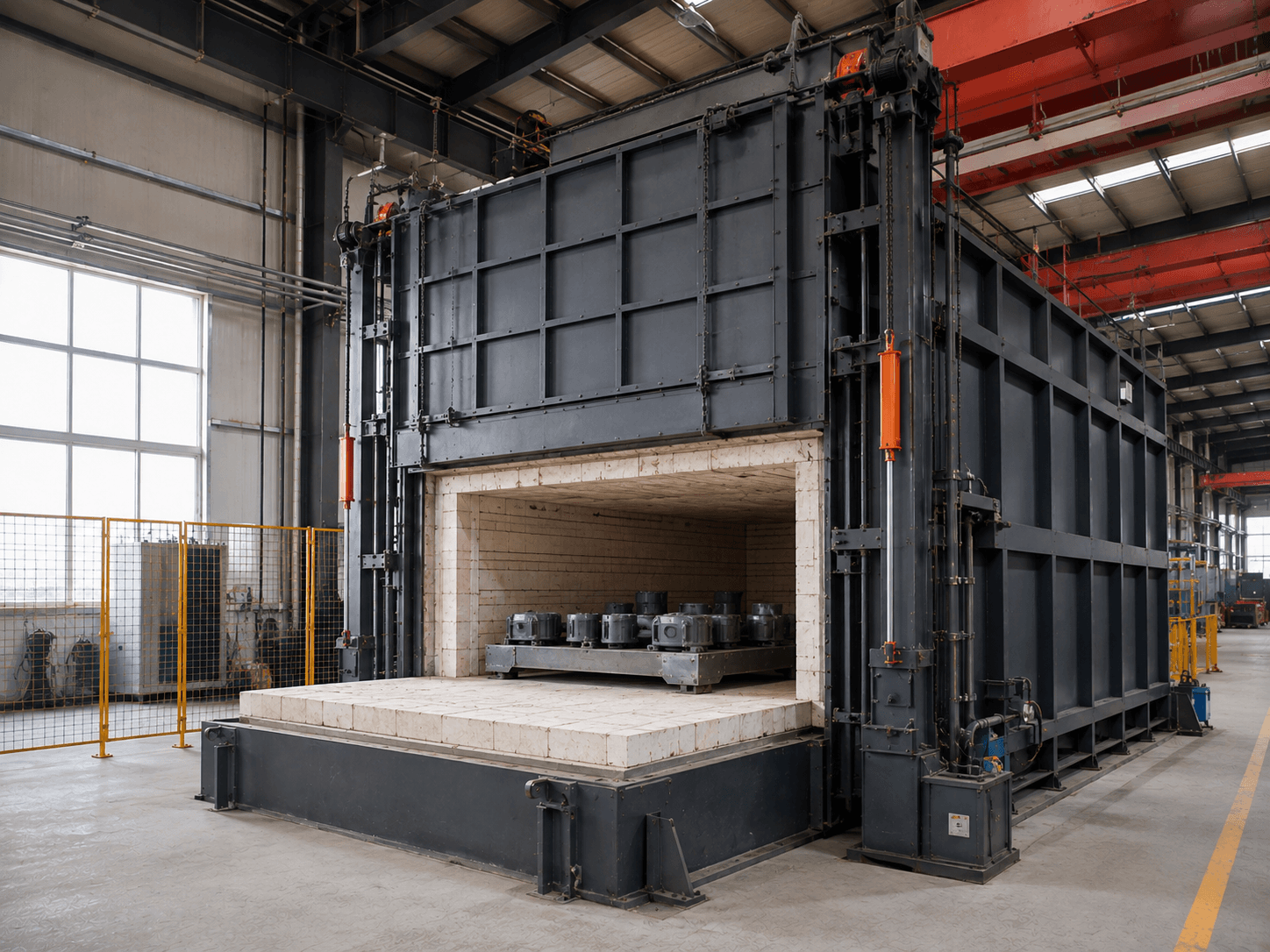
Compare door loading for small and medium parts.
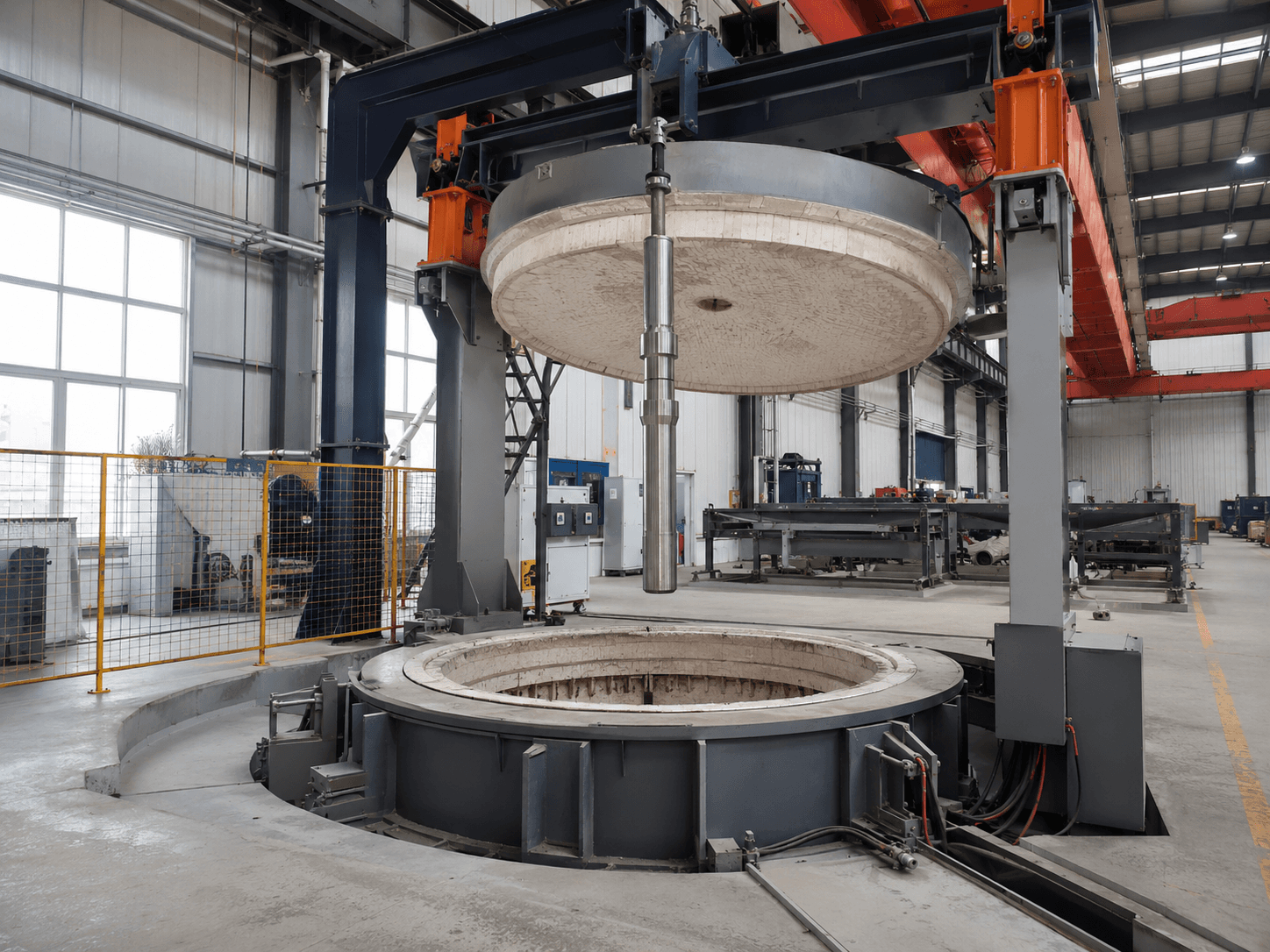
Compare vertical loading for long shafts and rods.
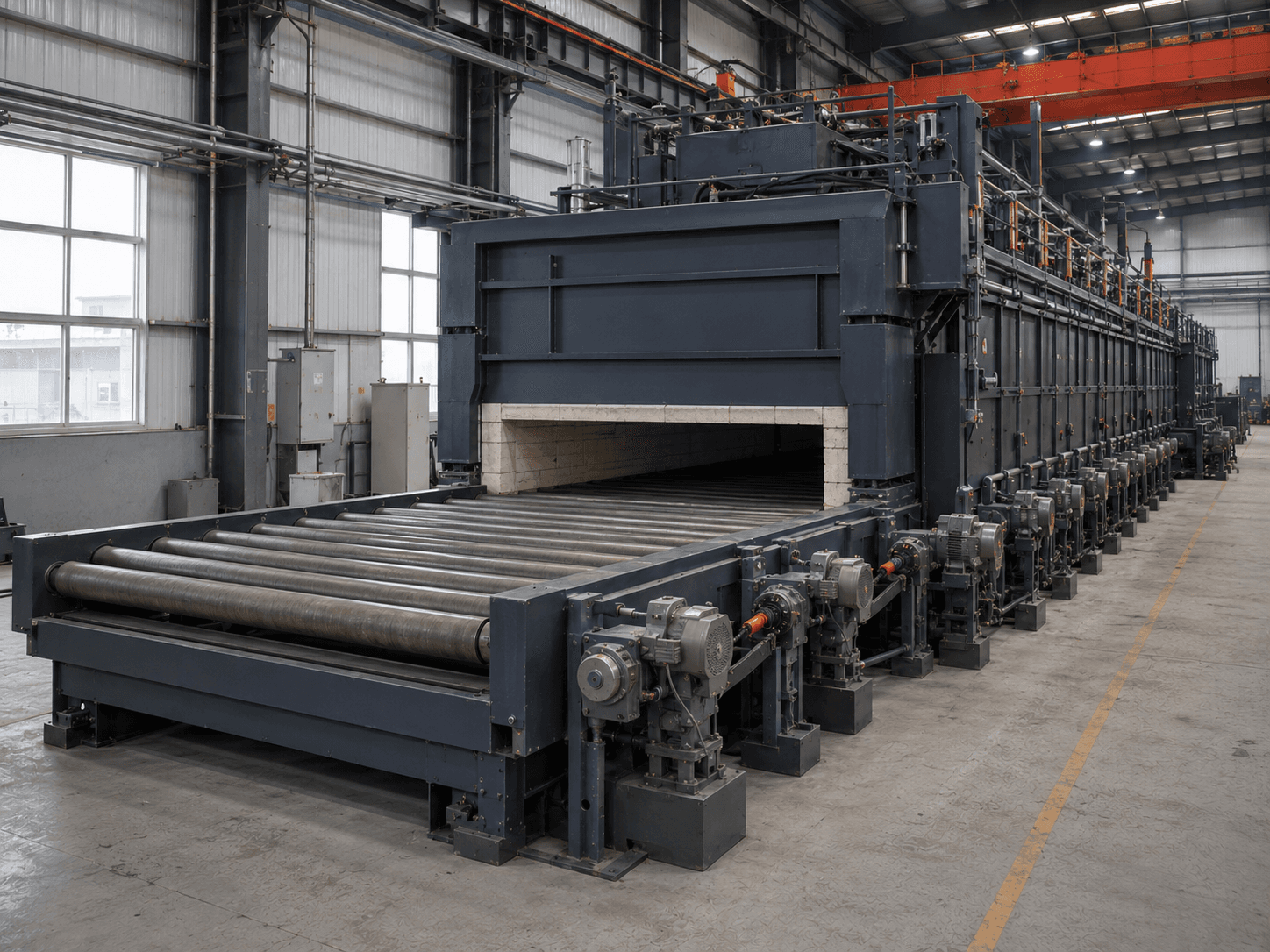
Compare continuous roller conveying for stable batches.
Tell us about the workpiece, throughput or existing equipment issue. Drawings and detailed parameters can follow.
Prefer to talk first? Contact us directly.
What you will receive