
Equipment documentation
Relevant drawings and operation and maintenance instructions.

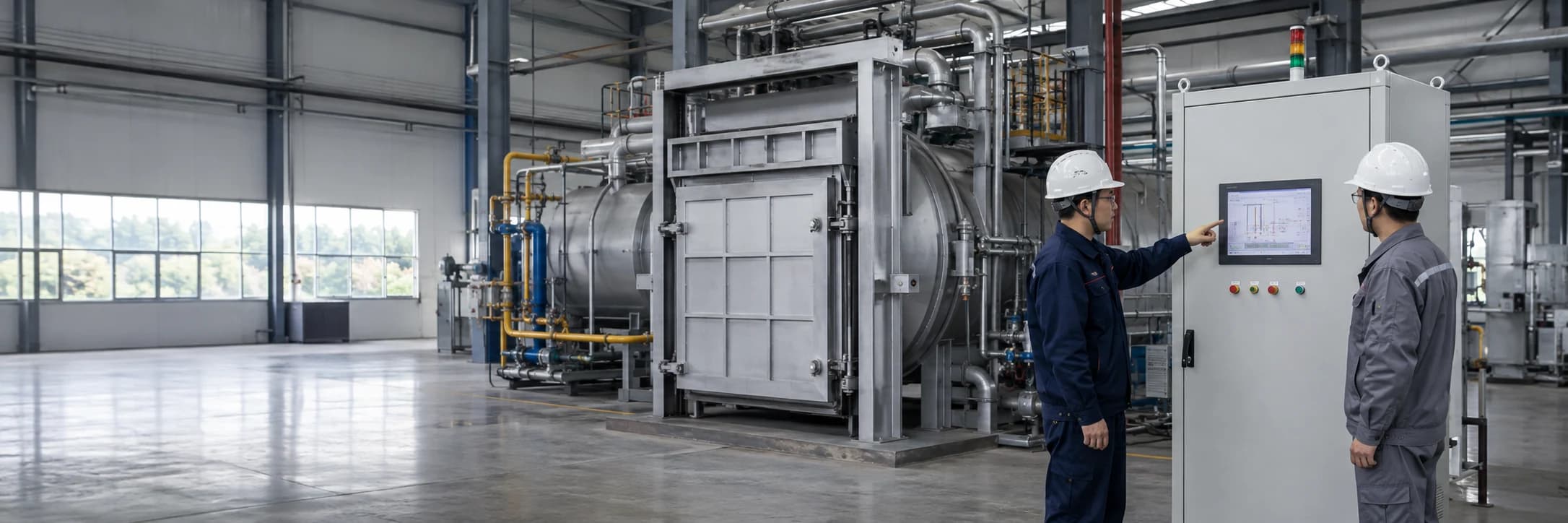
Contact Suneng for equipment repair support or new-equipment installation, commissioning, handover and operator training.
Start fault reporting with these four items; missing information can follow:
Send the nameplate, fault description, alarms and photos.
Review the situation and identify further checks and information needed.
Define the scope and costs of remote support, spare parts or site service before confirming implementation arrangements.
Record the outcome and confirm follow-up precautions.
State when the fault occurred, the operating conditions and actions already taken. Take photos from a safe position; do not open energized cabinets or restart faulty equipment to gather evidence.
Check site conditions and scope before arranging site work, commissioning and handover.
| Stage | Service scope | Customer responsibilities |
|---|---|---|
| Installation preparation | Check equipment layout, foundations and utility interfaces. | Provide site dimensions, foundation and utility conditions. |
| Installation & reconnection | Complete installation, connection and inspection within the agreed scope. | Coordinate site access, passages and lifting conditions. |
| Commissioning & verification | Individual equipment commissioning, integrated trials and agreed acceptance checks. | Provide trial workpieces, operators and production conditions. |
| Training & handover | Operation and maintenance training, document handover and delivery confirmation. | Assign receiving personnel to participate in training and confirmation. |
Confirm responsibility for lifting, foundations, utilities and third-party testing before site work.
Relevant drawings and operation and maintenance instructions.
Agreed inspection items, trial operation and rectification records.
Maintenance guidance and applicable spare-parts lists.
Provide program backups and other documents according to configuration and actual supply scope.
Before quotation, agree the destination requirements and responsibilities on both sides.
| Item | What to Confirm |
|---|---|
| Destination & Process | Share the country, city, workpiece, throughput, process and acceptance requirements. Equipment suitability is reviewed for each project. |
| Power & Utilities | Confirm voltage, frequency, earthing, fuel, atmosphere gases, cooling water, exhaust and site connections. |
| Destination Requirements | Identify local safety, electrical, emissions and import requirements before quotation. Confirm required certifications, inspections and responsible parties separately. |
| Supply & Transport | Agree equipment boundaries, packing, freight, insurance, customs, taxes, unloading and lifting responsibilities in the quotation and contract. Confirm the schedule separately. |
| Documents & Language | Agree the scope and language of drawings, operating and maintenance manuals, electrical documents and program backups. Specify translation and training needs early. |
| Installation & Acceptance | Agree foundations, utility connections, staffing, on-site or remote support, travel and costs. Define factory checks and site trials separately, including conditions, methods and records. |
| Warranty & Spares | Confirm the warranty period, start date, coverage, consumables, spare parts and shipping costs in the contract. Agree time zone, communication language and service timing for the project. |
This checklist does not confirm approval in any country, local service coverage or a fixed response time. Availability, compliance and delivery commitments require project-specific written confirmation.
Discuss Destination & Delivery RequirementsFor failures caused by manufacturing quality or design defects during the warranty period, free repair or replacement is provided as agreed in the contract.
Confirm the scope and costs of repair, spare parts and retrofit services separately.
Provide the contract or delivery information to check warranty scope, start date, duration and cost responsibilities. Confirm repair, replacement and site-service scopes separately.
Check foundations, access, lifting, power and the utility connections required by the equipment.
Arrange trials within the agreed acceptance scope and confirm workpieces, processes and inspection requirements in advance.
Repair or spare-parts needs can be discussed after confirming equipment condition and costs.
The equipment nameplate, fault symptoms, alarm information and site photos.
Provide the equipment model and current issue so the appropriate technical staff can respond.