

Workpieces & materials
Material grade, dimensions & target properties

Loading page…
Reload pageMatch equipment to your workpieces and output
Heating, quenching, tempering and auxiliary systems for steel fasteners requiring quench-and-temper treatment.
Material grade, dimensions & target properties

Check loading depth, conveying & part condition
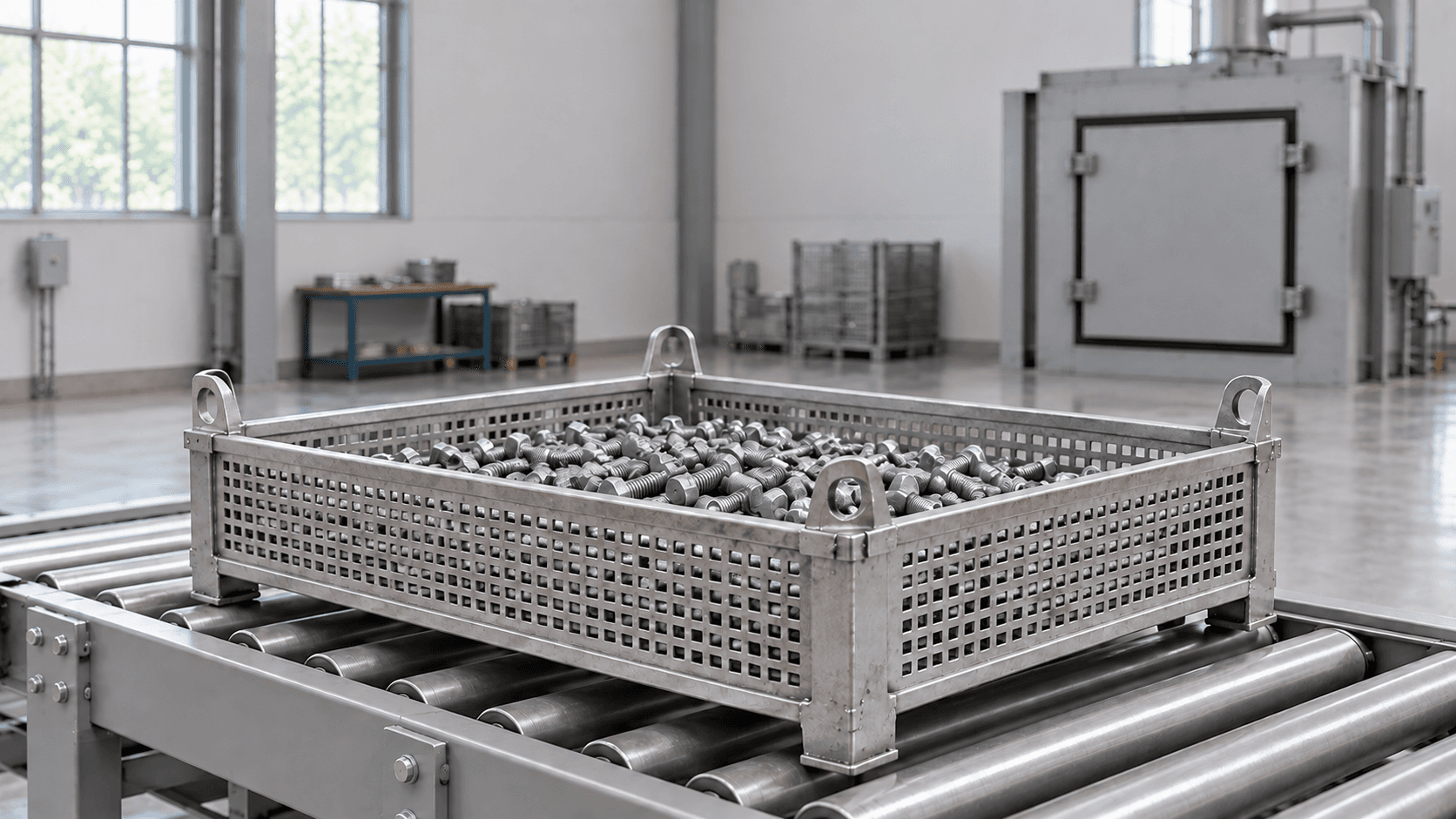
Check baskets, furnace load & batches
Point to equipment or select a step to see its location and action
Scroll horizontally for the complete line, or select a step below
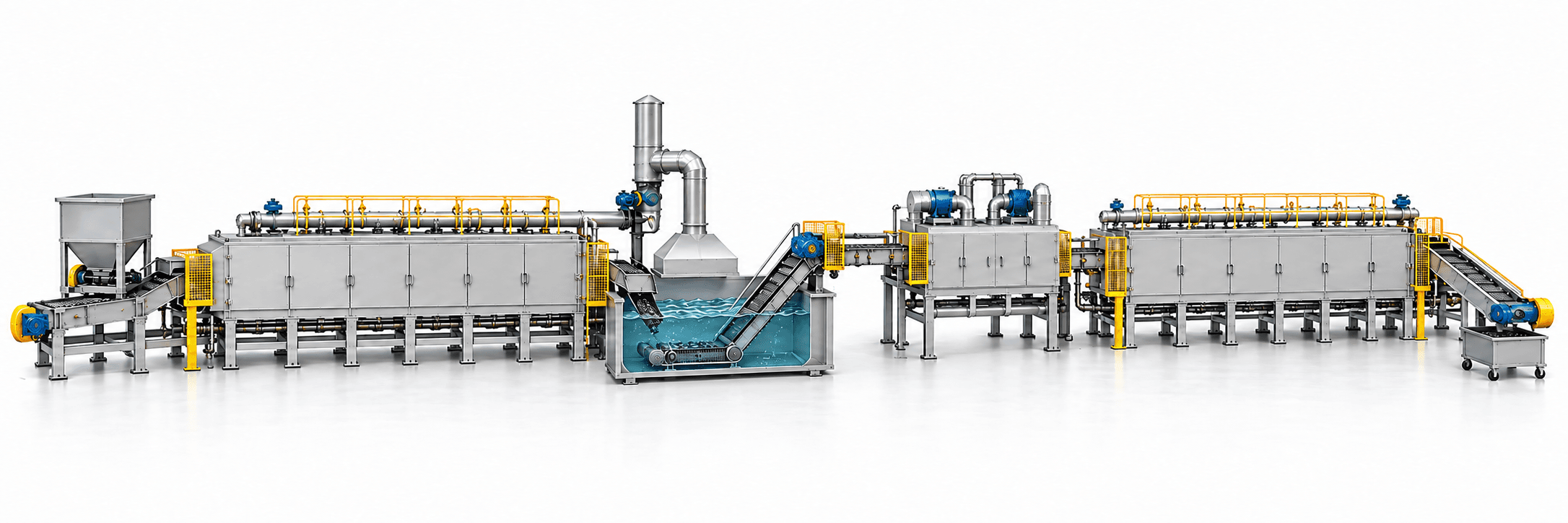
Transfer heated parts into the quenching section. Select medium and cooling conditions against material and target properties.
Equipment: Quench
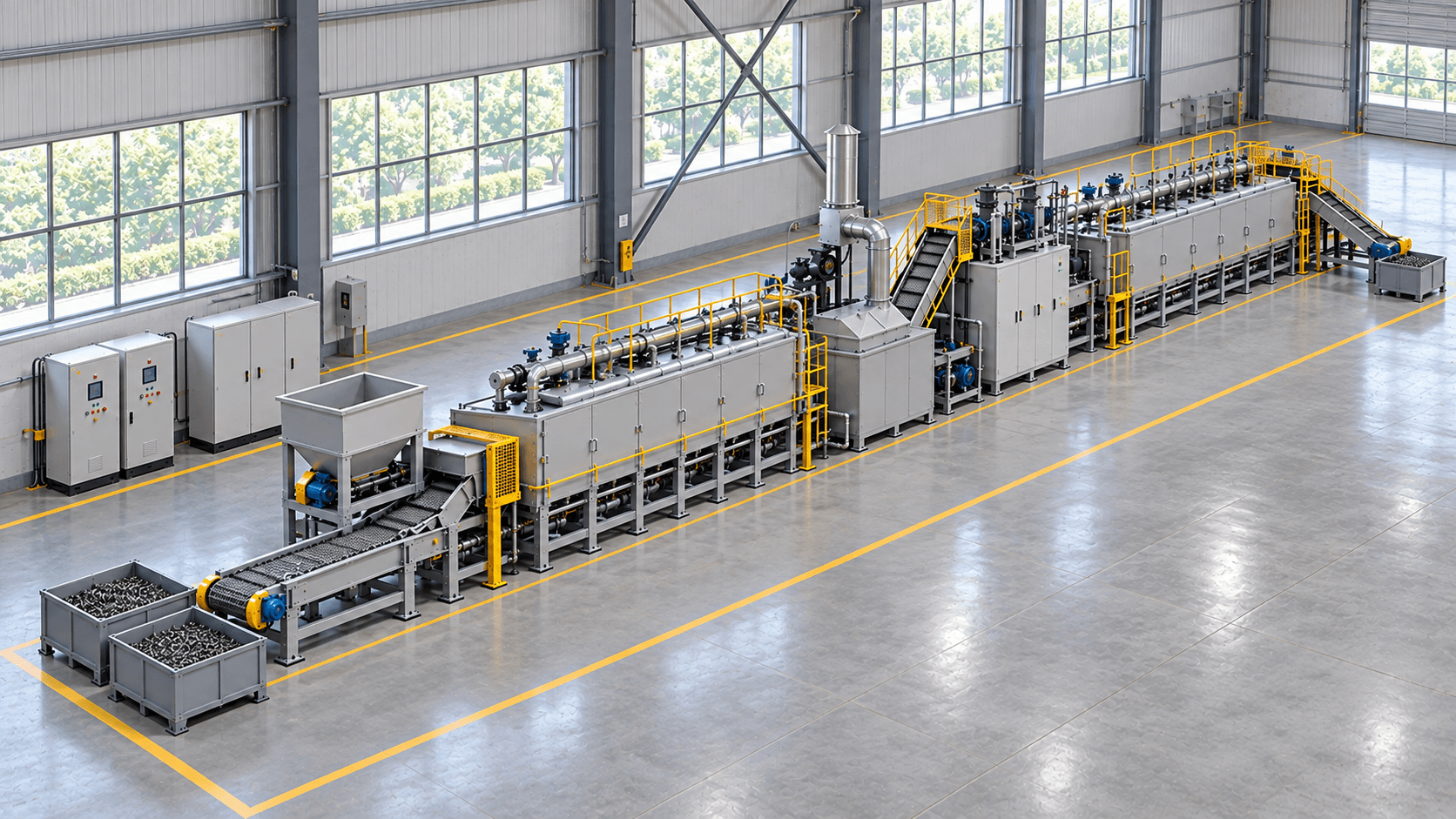
Explore the process and equipment connections using a continuous mesh-belt quench-and-temper line with washing and drying.
Pre-washing, post-quench washing and drying depend on part condition and process requirements. Blue in the illustration represents quench medium and does not specify water.
Highlights identify functional areas. Equipment and layout follow the agreed proposal.
Compare loading and production organisation to select an appropriate equipment combination.
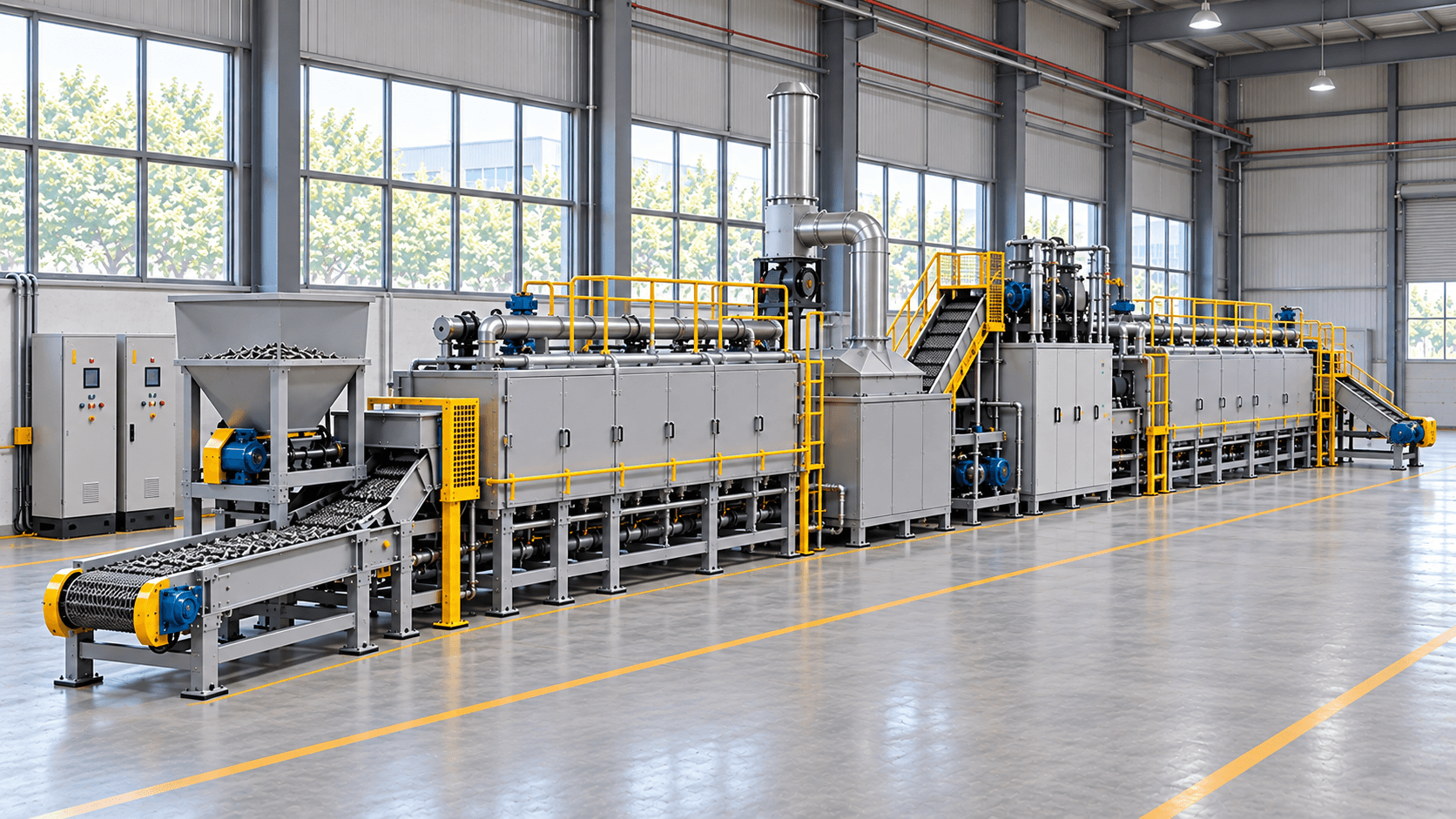
Suited to organised, steady-volume production.
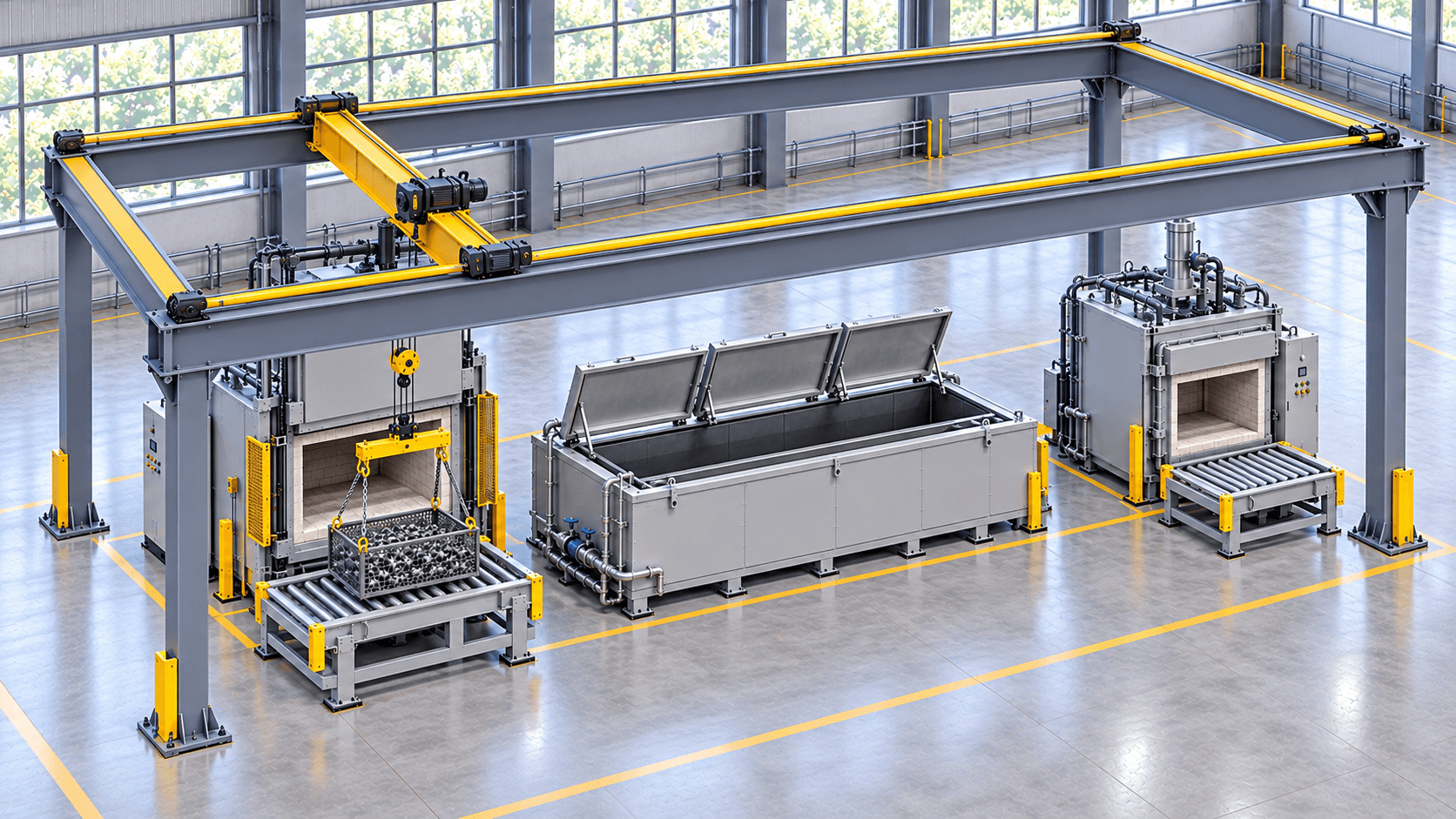
Suited to batch-based production.
Scroll horizontally to view the complete comparison
| Comparison item | Continuous | Batch |
|---|---|---|
| Part loading | Belt loading: check layer depth and conveying | Baskets or fixtures: check furnace loading and heating |
| Production organisation | Continuous production at an agreed rhythm | Load, unload and treat by furnace batch |
| Changeovers | Assess line clearance, transition parts and recipe changes | Assess tooling, batch and process changes |
Compare key equipment, processing capacity and auxiliary conditions.
Scroll horizontally to view the complete comparison
| Configuration item | Continuous mesh-belt arrangement | Batch furnace arrangement |
|---|---|---|
| Capacity basis | Hourly throughput of representative parts | Batch load, furnace-cell rhythm and auxiliary capacity |
| Heating & tempering | Mesh-belt heating furnace + mesh-belt tempering furnace | Heating furnace + transfer equipment + tempering furnace |
| Effective working space | Effective belt width and heated length | Effective loading space and basket arrangement |
| Quenching auxiliaries | Furnace-to-medium interface, quench tank and circulating cooling | Transfer equipment, quench tank and circulating cooling |
| Energy & atmosphere | Configure around heat source, process and surface requirements | Configure around heat source, process and sealing requirements |
| Controls & records | Batches, recipes, loading, temperature, speed, key operating states and interlocks | Batches, recipes, furnace load, temperature, time, key movements and interlocks |
Check medium temperature, level, agitation and cooling capacity. Control furnace-to-medium and quench-to-temper intervals against material and process requirements.
Control decarburization and unintended carburization through atmosphere, temperature, time and loading. Define protective-atmosphere monitoring and interlocks against the process.
Calculate capacity for representative parts, loading and process conditions, including transfer, quenching and tempering.
Define equipment, auxiliary systems and site interfaces.
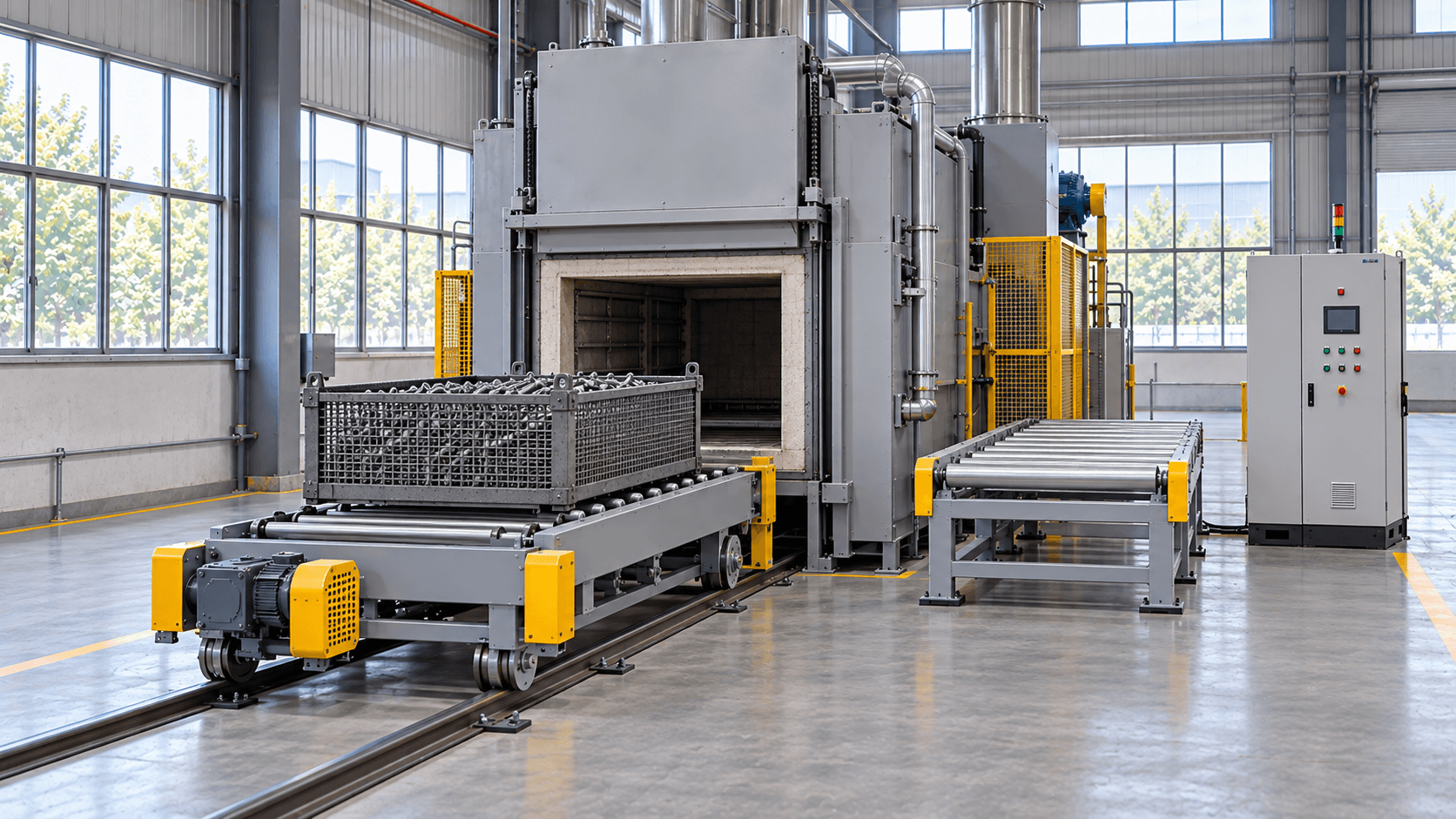
List the equipment, supply scope and responsibilities in the technical proposal.
Define the work at each stage so both parties can coordinate delivery.
Check movements, interlocks, alarms and operating records.
For agreed parts and loading, verify temperature control, part heating and processing capacity.
Agree tests, sampling and pass criteria against product category and property class.
Test bolts and nuts against their respective product standards and property classes. Acceptable hardness does not establish all required properties. Specify inspection, sampling and pass criteria in the technical proposal.
Define conditions and responsibilities separately for equipment acceptance and product inspection.
Review selection, auxiliary equipment and site interfaces.
Assess material grade and required product properties. Carburizing or other thermochemical requirements need a separately configured process.
Assess batch size, changeover frequency and process differences. Continuous lines require review of line clearance, transition parts, recipe changes and loading variation. Batch arrangements also require tooling, batch and process-change planning. Compare both approaches using representative parts, the production plan and target properties.
Check its condition, capacity, process suitability, transfer, control interlocks and site interfaces. Provide equipment lists, available technical records and the layout, then define retained, modified and new equipment. Agree integration feasibility and responsibilities in the technical proposal.
Key factors include representative parts and properties, output and shifts, continuous or batch operation, effective working space, heat source and atmosphere, plus quenching, washing, handling and control records. Define site interfaces, installation coordination and supply scope before comparing quotations on equivalent equipment lists.
Confirm the medium and cooling against material, part geometry, target properties and quality requirements. Check medium temperature, level, agitation and circulating cooling capacity. Pre-washing, post-quench washing and drying depend on incoming condition, residue and downstream needs. Define extraction and wastewater interfaces too.
Determine tests from material, product category, property class and applicable standards. Check relevant tensile, proof-load and hardness requirements for bolts, screws and studs, and relevant proof-load and hardness requirements for nuts. Define methods, sampling stage, quantities and criteria for decarburization, unintended carburization, cracks and other surface defects. One hardness result cannot replace all required properties. Agree the parties responsible for equipment and product inspection separately.
Link raw-material batches, heat-treatment batches and recipes. Define loading, temperature, time, speed and medium records. For continuous changeovers, define clearance, transition parts and mixed-part segregation; for batches, check furnace and basket identification. Identify, segregate and review batches outside the process window, then follow the agreed disposition procedure. Specify recorded items, storage and record delivery.
Fastener Quench & Temper Line · Project consultation
Tell us about the workpiece, throughput or existing equipment issue. Drawings and detailed parameters can follow.
What you will receive