

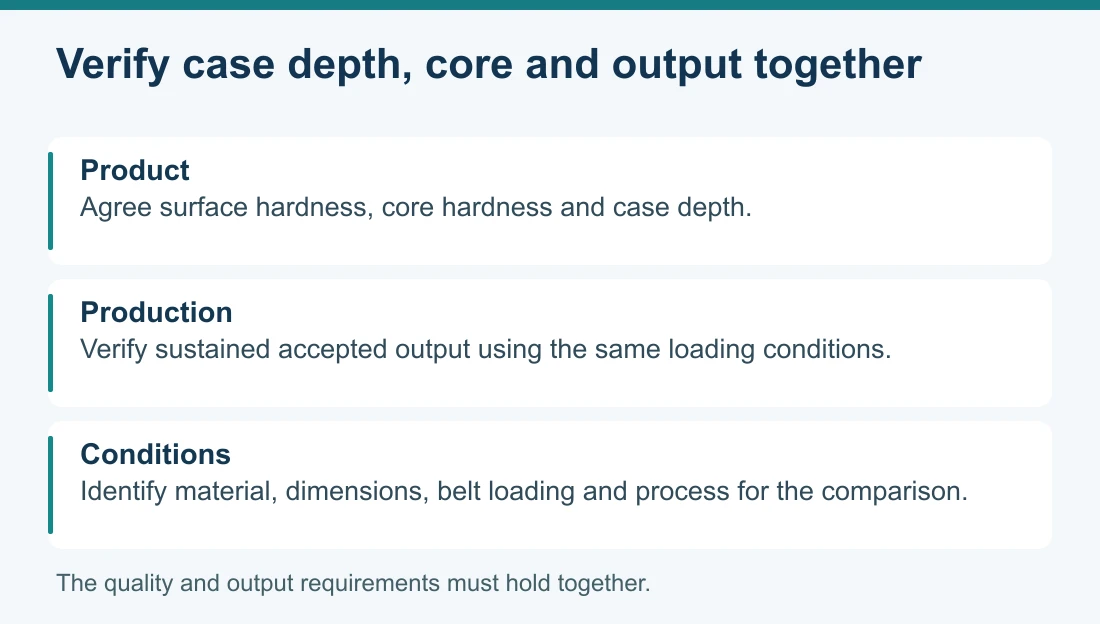
It has been determined that the self-tapping screw adopts the carbonitriding process. When selecting the mesh belt line, you should first check the surface hardness, heart hardness and case depth, and then confirm whether the equipment can meet the continuous production requirements under the agreed materials, specifications, belt loading and process conditions. The heart is the inside of the part; the depth of the layer should be tested according to the definition and method confirmed by both parties. The results of the three products and the continuous output need to be established under the same working conditions to judge whether the production line is really applicable.
Carbonitriding is a process that allows carbon and nitrogen to enter the surface of the steel, and then cooperates with the subsequent heat treatment to obtain the required surface performance. It is different from the task that only requires overall quenching and tempering. It cannot be considered that the process ability is the same just because there is "mesh belt furnace" in the name of the equipment. Bodycote carbonitriding process description
Can surface hardness, core hardness and case depth be met together?
Surface hardness, heart hardness and case depth should be checked together. The surface hardness describes the ability of the outer layer to resist local pressure; the hardness of the heart reflects the internal hardening state; the case depth should indicate what method, what position and what judgment caliber should be measured. They are related to each other, but one result cannot replace the other two.
If you only require "the surface as hard as possible and the seepage layer as deep as possible", it may deviate from the requirements of the product itself. The performance of the outer layer and the inside of the screw need to be coordinated, and whether it is qualified depends on the applicable product inspection. The target scope should be clarified first, and then the manufacturer should explain how to achieve these scopes through equipment and processes.
Small specifications cannot automatically follow the layer depth requirements of large specifications. When other conditions are similar, the hardening layer of the same depth accounts for a larger proportion of smaller cross-sections, leaving different internal areas. Therefore, when a line is ready to cover multiple specifications, the workpiece verification that can represent the difference should be selected, and only the specification that is easiest to meet the standard should not be detected.
| The requirements to be clearly written by the purchasing party | Why does it affect the judgment of the device? | The answer that the manufacturer should give |
|---|---|---|
| Screw material, specification and state before entering heat treatment | Determine the response, pretreatment and transportation conditions of raw materials | Coverage, and materials or process verification that need to be made up |
| Surface, heart and layer depth requirements | The decision to deal with the target cannot be replaced by a single hardness. | Measurement method, sampling location and corresponding process verification plan |
| Product performance and inspection requirements | The hardness result cannot represent the actual performance alone. | Arrange relevant tests and judgments according to applicable standards or technical agreements |
| Normal belt loading and target continuous output | Decide the heat, atmosphere contact and rear load of the workpiece | The belt speed, loading and whole line capacity that can be used under this working condition are based on |
As of September 24, 2026, "Fastener Mechanical Properties Part 5: self-tapping screw" GB/T 3098.5-2025 has been implemented and replaced the 2016 version. The version of the procurement document should be clearly adopted, and the specific inspection items, values and methods should be determined by consulting the formal standards and combined with the scope of application of the product. Self-drilling self-tapping screw and stainless steel self-tapping screw also need to check the applicable standards separately. Official standard information
Does the output figure apply to the same workpiece and process?
The output of carbonitriding must correspond to the specific screws and processing requirements. The same mesh belt width, if the material, specification, layer depth target or belt loading thickness is changed, the processing time and loading conditions allowed may change. Answer the carbonitriding inquiry with the hourly output of ordinary quenching. Lack of process conditions and cannot be used to confirm the purchasing capacity.
Although belt loading thickening increases the mass of the workpiece on the belt surface, it will also change the heat of the workpiece and the contact conditions with the process gas in the furnace. If the original verification adopts a thinner belt loading, it cannot only increase the loading volume and continue to follow the original quality commitment; the product results should be reconfirmed, and it should be checked whether quenching, cleaning and tempering can be undertaken.
Do the atmosphere system and auxiliaries cover the complete duty?
The manufacturer's plan should also indicate whether the supply, control, monitoring and recording of the process gas required by the target product are included in the quotation.Adding a gas to an ordinary quenching furnace does not mean that it has qualified carbonitriding ability. The safety design, discharge and on-site support of the atmosphere and oil quenching involved shall be approved by the professionals who bear the corresponding responsibilities. This article does not provide gas ratio or operation settings.
After the basic transportation conditions are established, when comparing the plan, we should first look at whether the process control and product verification can be met, then see the continuous output, and finally check the total input. If the atmosphere system, pretreatment or follow-up equipment needs to be changed to meet the requirements, the investment difference cannot be explained only by the size of the furnace.
For the public information portal of domestic candidate manufacturers, please refer to the supporting articles. What are the domestic manufacturers of fastener heat treatment mesh belt furnace? How to screen before purchasing? 。
The first communication can provide photos or drawings representing screws, materials, commonly used and boundary specifications, current inspection reports and target output. When you need to discuss the design and system integration of industrial furnaces, you can contact Jiangsu Suneng Industrial Furnace Co., Ltd.; first clarify the scope of process, equipment and verification, and then form a specific plan.
Tel: +86-130-5298-6814
Email:997518512@qq.com
Official website:https://www.jssngyl.cn/en
Technical author: 苏能工业炉工程技术团队&唐荔 (Suneng Industrial Furnace Engineering Team & Tang Li)