How Is Mesh Belt Furnace Hourly Output Calculated? Check Process Time and Downtime After the Theoretical Rate
Use measured workpiece loading and effective width or mass per metre, then verify residence time, uptime, yield and line bottlenecks.
Explore equipment selection, quotation inputs, process quality, acceptance and furnace maintenance.
Loading resources…
Share workpiece, output or existing-equipment information so the engineering team can clarify the key requirements.
Explore equipment selection, quotation inputs, process quality, acceptance and furnace maintenance.

Use measured workpiece loading and effective width or mass per metre, then verify residence time, uptime, yield and line bottlenecks.

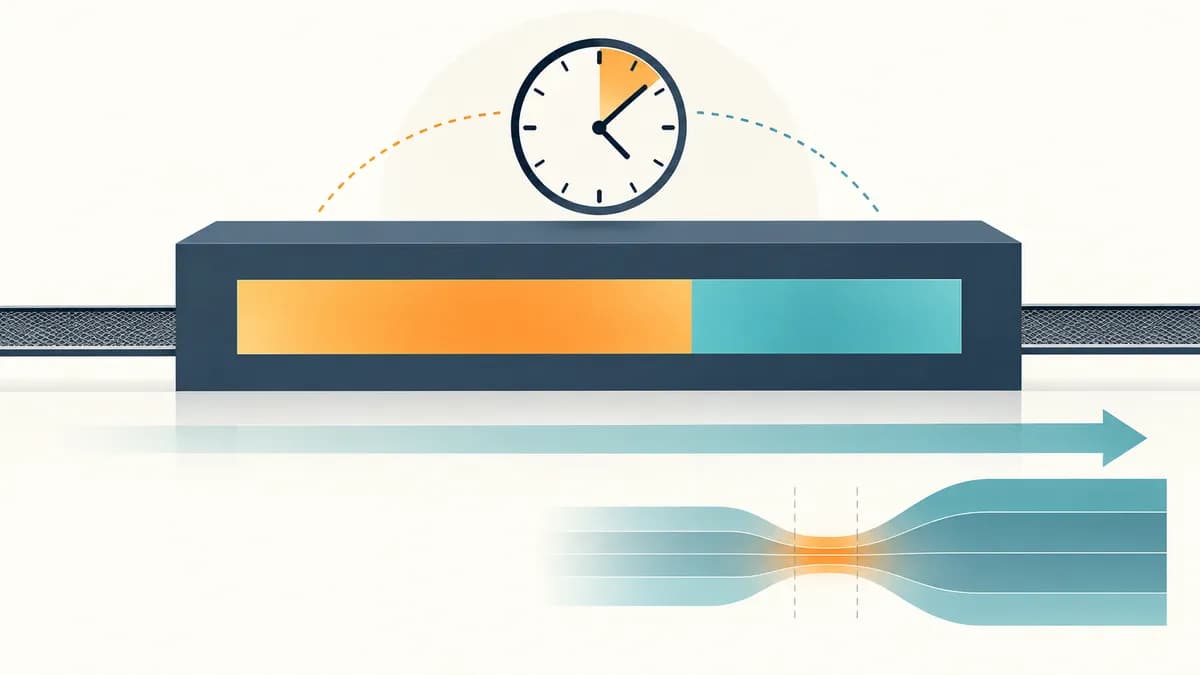
Start with belt speed × actual usable loading width × workpiece mass per unit belt area × 60. With speed in metres per minute, width in metres and loading in kilograms per square metre, the result is kilograms per hour. The permissible speed must also satisfy the minimum time required in each critical process zone, including carburizing and diffusion: use the most restrictive limit. Then check that heating, atmosphere supply, quenching, washing, tempering and material handling can sustain the same flow.

Share workpiece, output or existing-equipment information so the engineering team can clarify the key requirements.