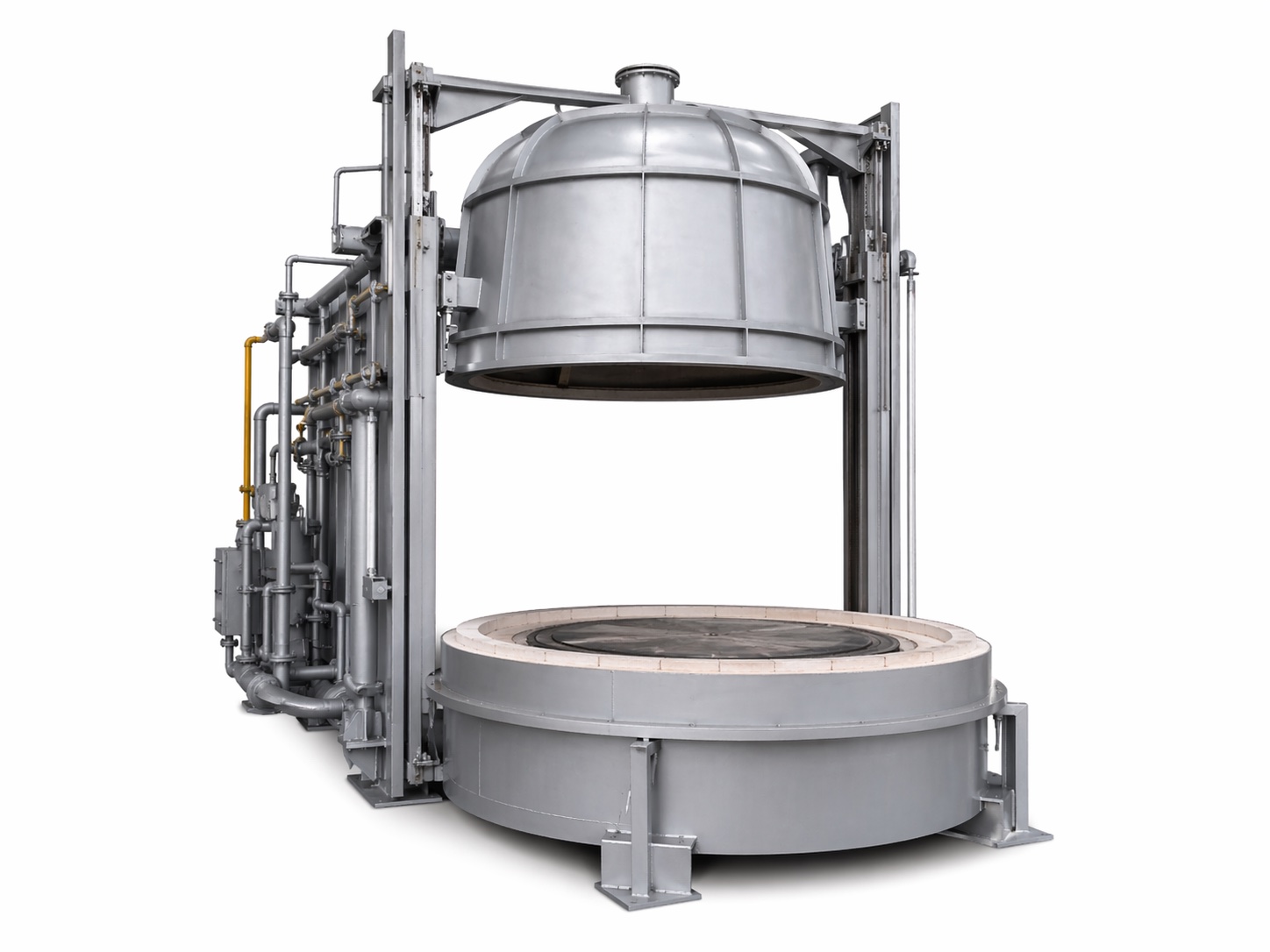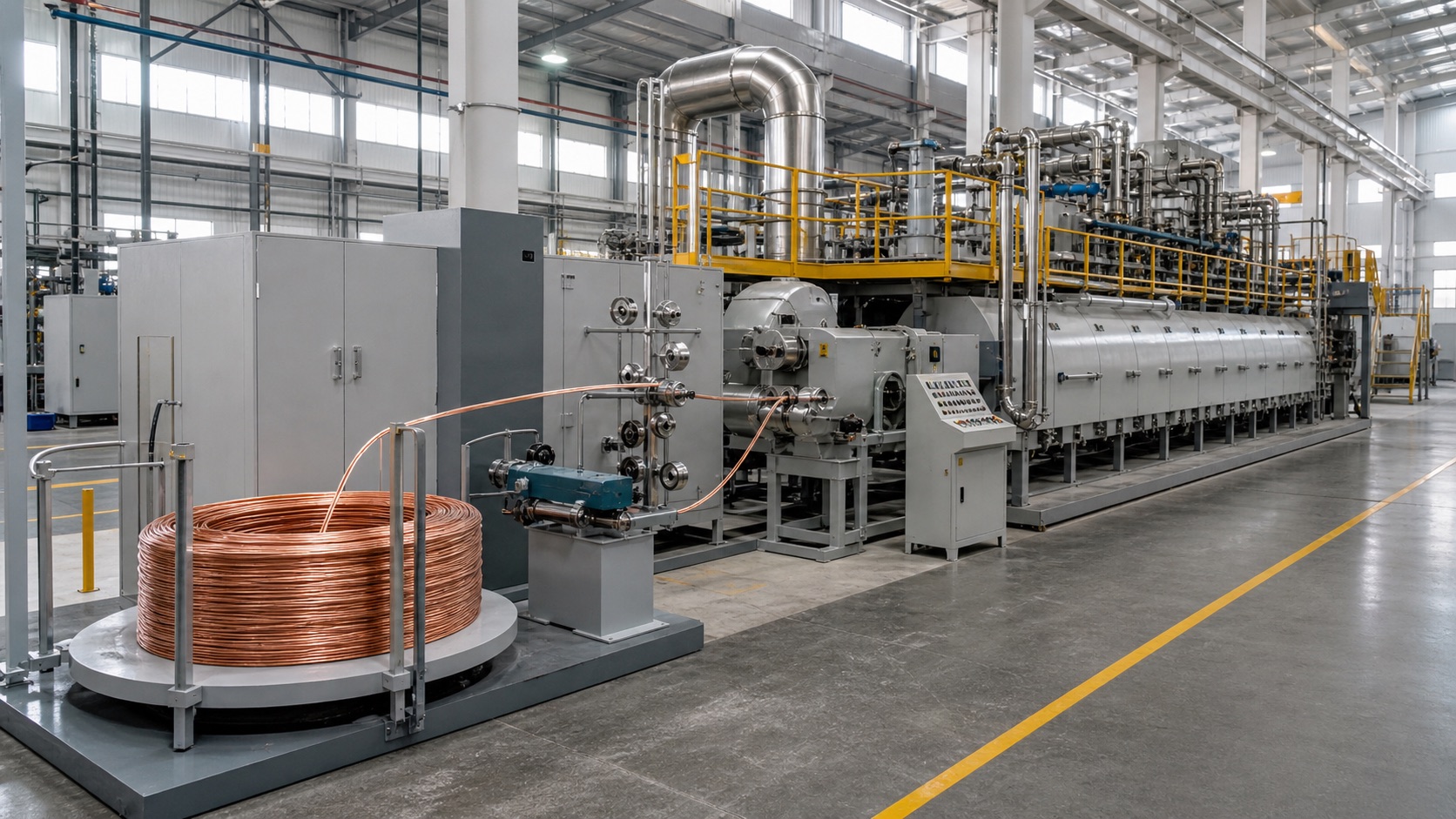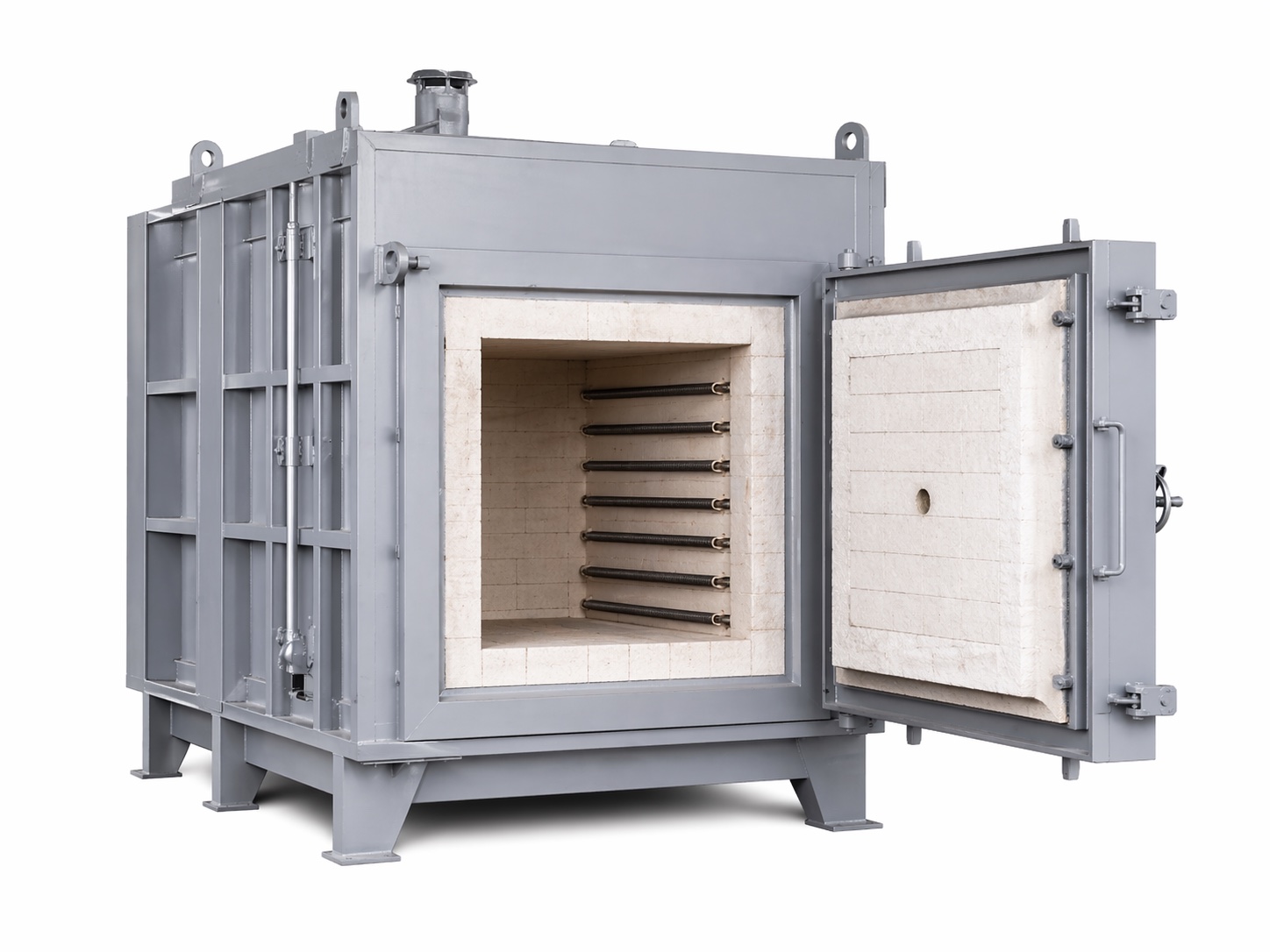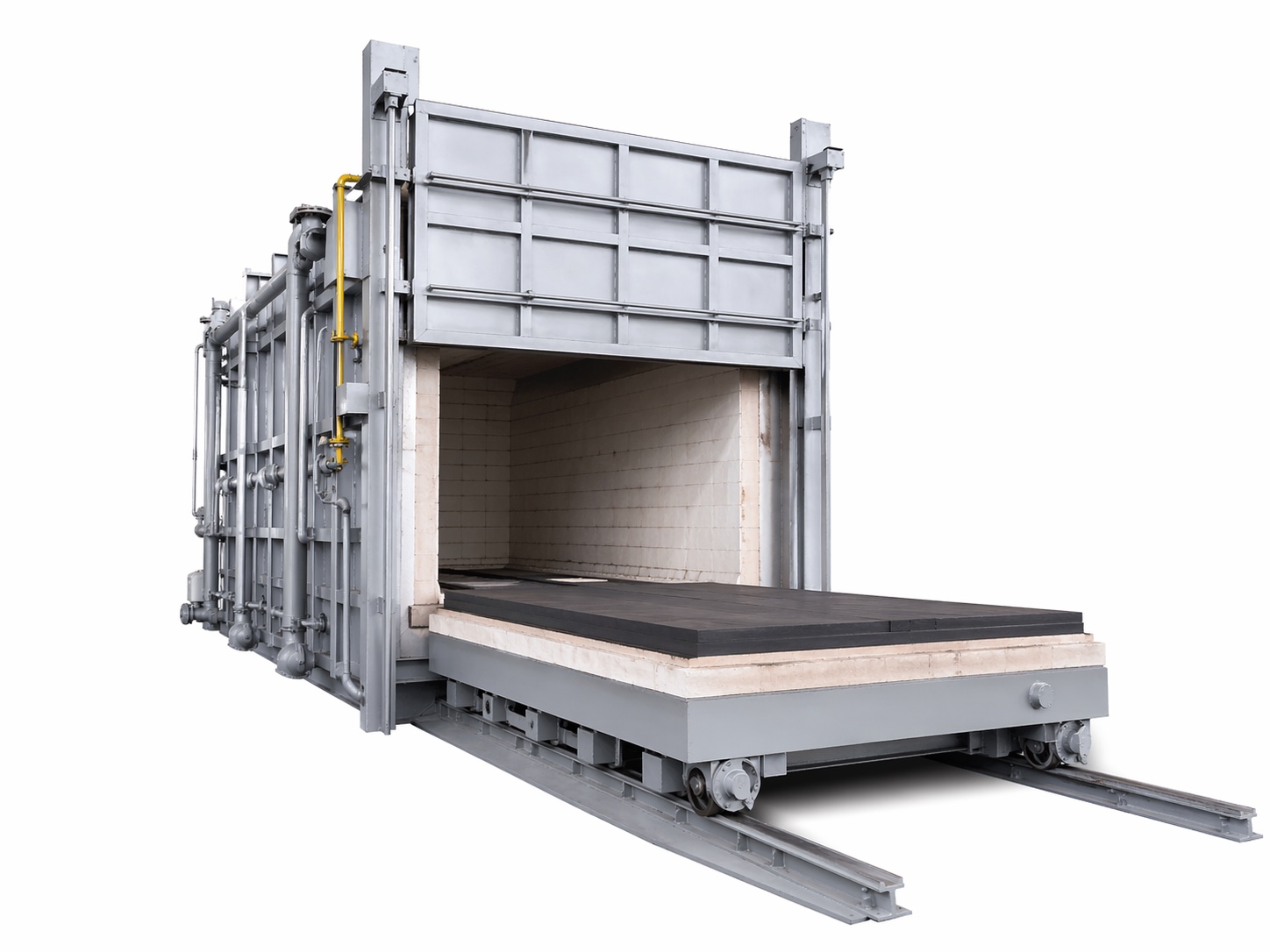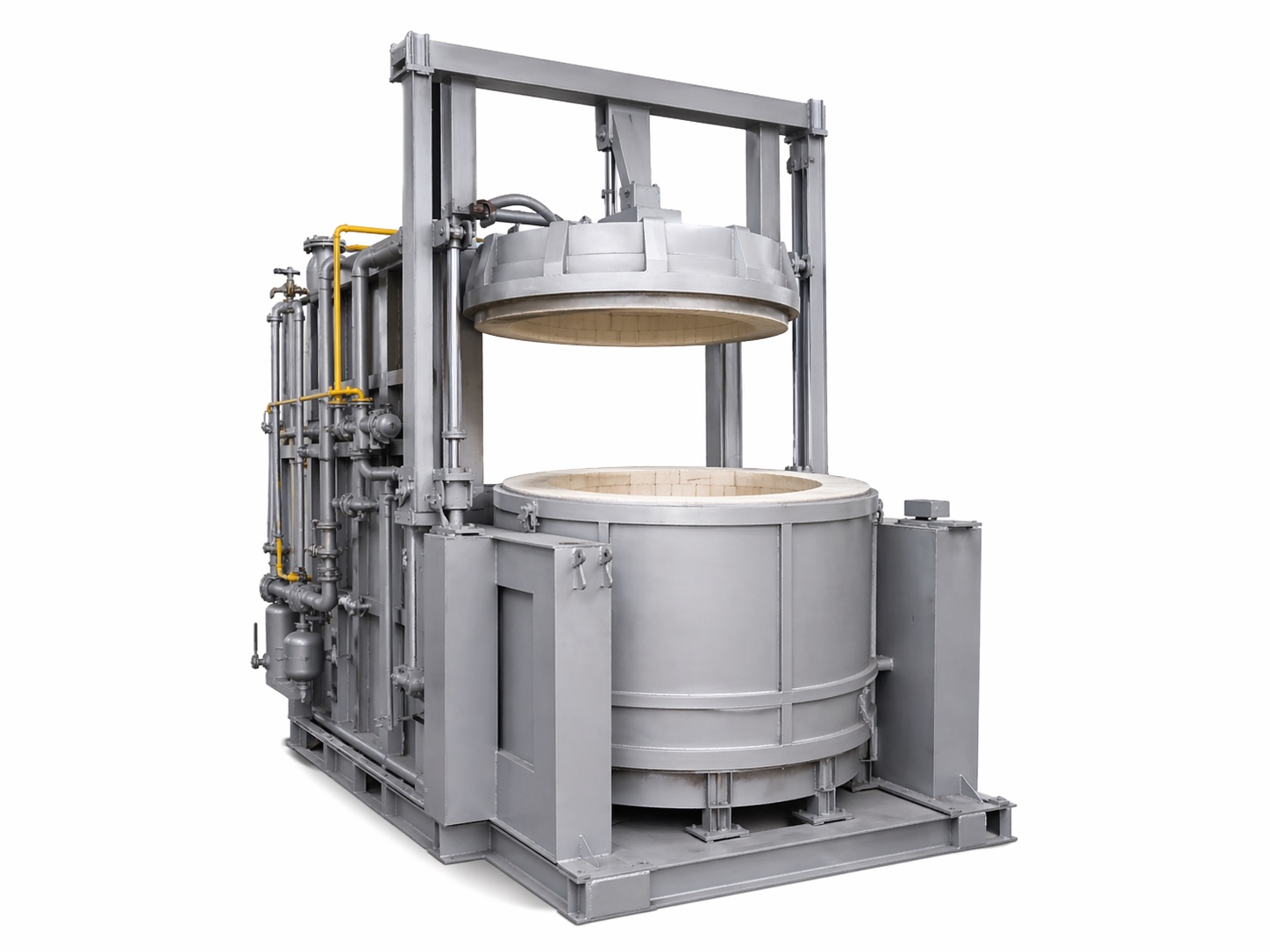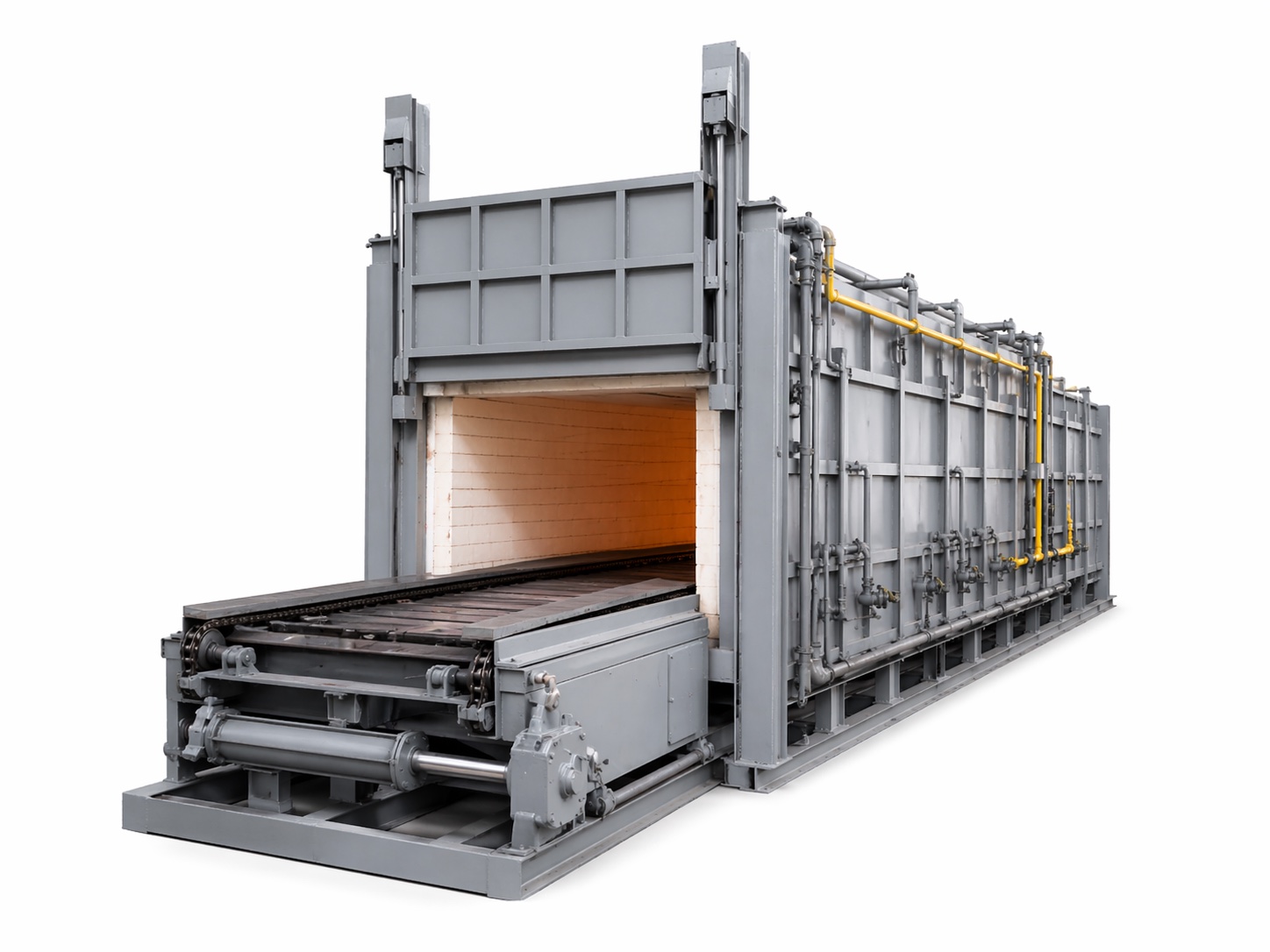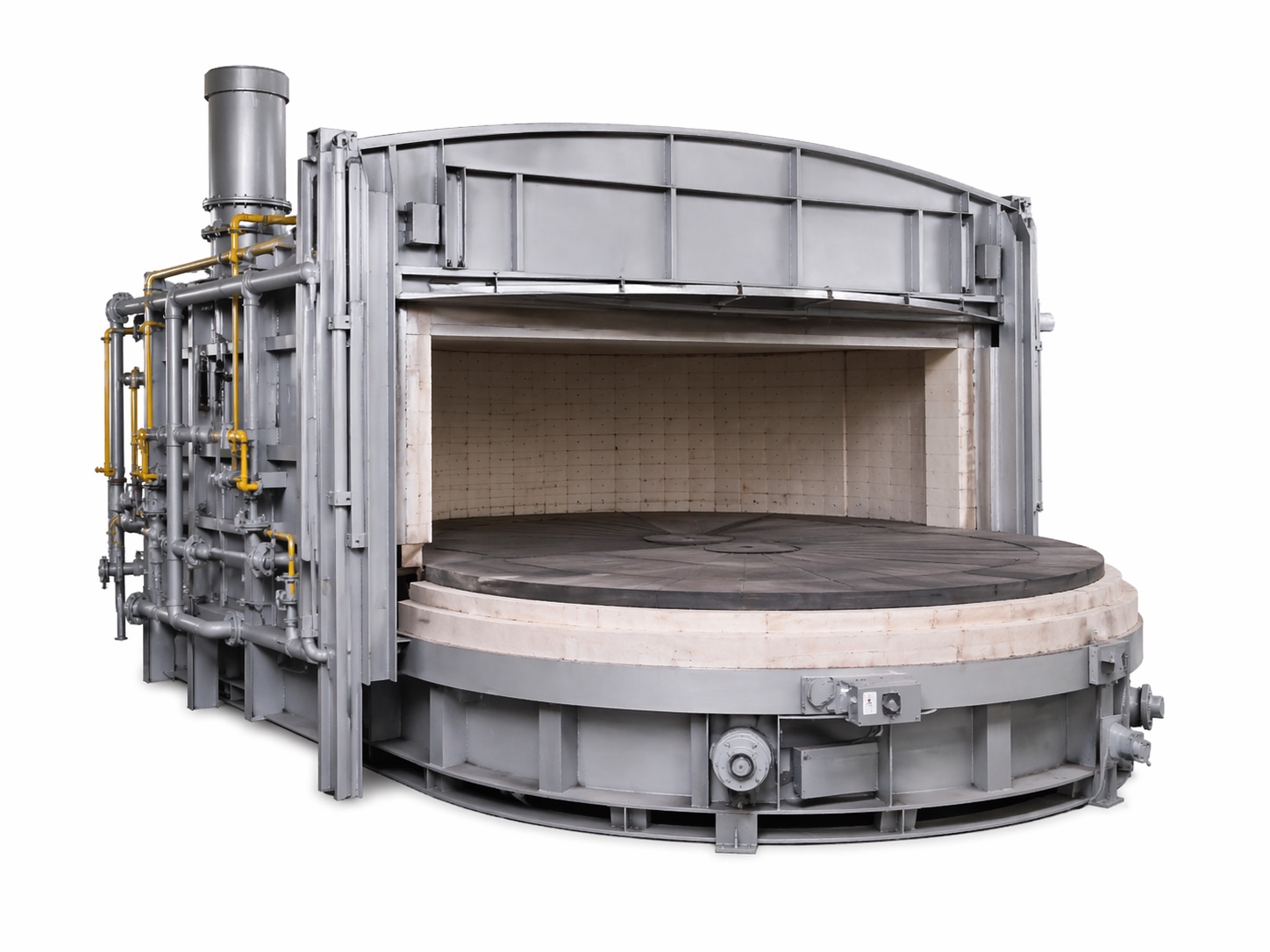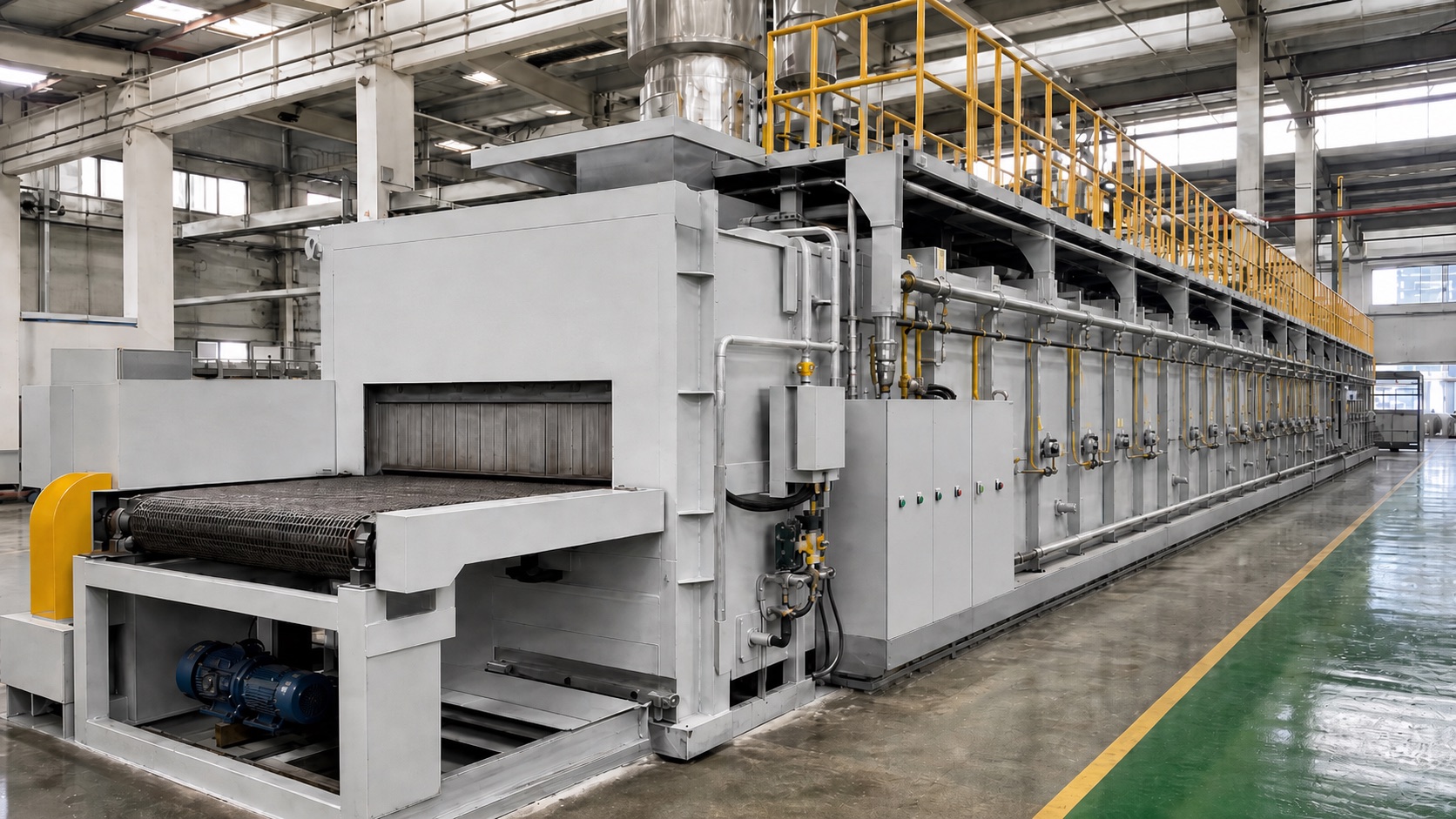
A trolley furnace normally combines a fixed furnace body with a movable hearth or trolley for batch loading, heating and unloading. The name describes its handling structure, not a particular heat treatment. It is often considered for large, heavy or irregular castings, forgings, welded structures, dies, machined parts and steel structures that benefit from loading a complete batch by overhead crane.
Suneng variable-volume trolley-furnace documents place the load on a trolley and use a movable rear wall to establish different effective heating lengths. Trolley-deck dimensions, physical chamber dimensions and the selected effective heating zone are therefore distinct. Mark the working area, workpieces and supports on the layout, then check the door and handling route. A workpiece fitting on the trolley does not establish that the complete heat-treatment task is suitable.
Size alone does not establish suitability. Confirm material, maximum dimensions, individual and total load weight, process and temperature curve, production cycle, rails and lifting conditions before defining the chamber, load capacity, heating method or price.
Main components
Workpieces are supported on the trolley, which travels along rails into the chamber. After the batch's heating and holding stages, the trolley withdraws for crane or other handling access.
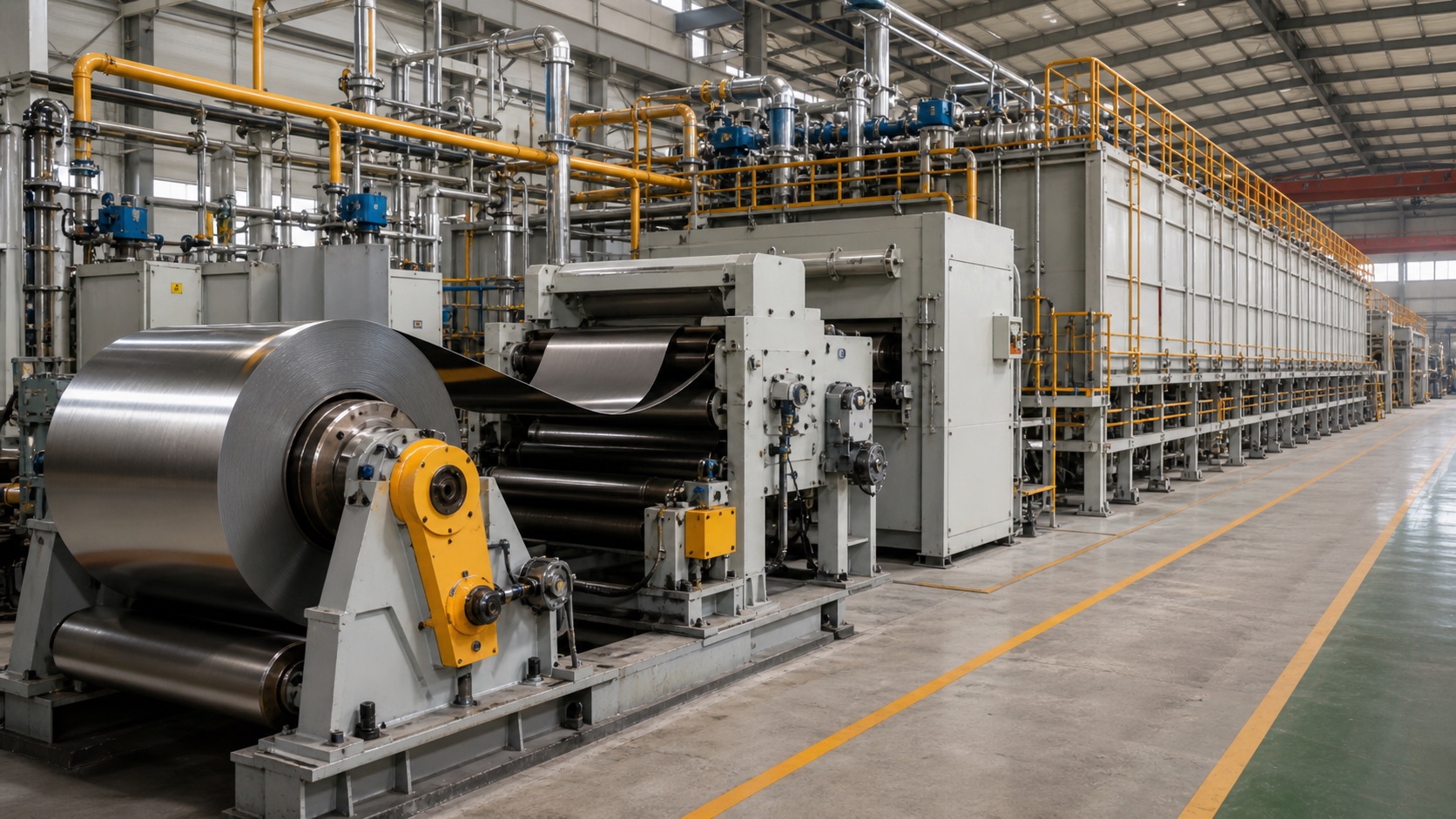
Typical systems include the body and lining, door, trolley and drive, seals, resistance or gas heating, temperature controls, records and safety interlocks. Circulation, pressure control, exhaust heat recovery and automation vary with the workpiece, temperature and site. One project's configuration is not a universal specification.
Workpieces commonly considered
| Workpiece | Why consider a trolley furnace? | What to confirm |
|---|---|---|
| Large castings and forgings | Large dimensions or weight favour complete-batch handling. | Envelope, individual weight, supports and heating/cooling curve. |
| Welded structures | Whole-piece stress relief or tempering of irregular shapes. | Distortion risk, supports, effective zone and cooling. |
| Large dies and fixtures | Stable support and batch processing. | Section size, clearances, uniformity and records. |
| Machined and steel structural parts | Mixed specifications and non-continuous batches. | Pieces per batch, total load, process range and handling efficiency. |
| Shafts and rods | Long parts can be loaded horizontally on suitable fixtures. | Length-to-diameter ratio, supports and distortion; compare a pit furnace where appropriate. |
| Mixed batch work | Recipes can change between batches. | Changeover frequency, recipe-change time, chamber utilisation and records. |
A long shaft vulnerable to distortion on horizontal supports may suit a pit furnace if vertical lifting is available. Small, consistent parts in continuous high-volume production may suit a mesh-belt or other continuous line better. The chamber must also provide the necessary loading, heat-circulation and operating space around the workpiece.
Applicable treatments depend on the configuration
A trolley arrangement can be configured for batch annealing, tempering, normalizing, heating before quenching, ageing or stress relief.
- Annealing: specify grade, heating and holding, cooling and supports.
- Tempering: specify temperature, section size, load and uniformity.
- Normalizing: define unloading and cooling as well as heating.
- Heating before quenching: assess transfer time, cooling medium and interlocks together.
- Ageing or stress relief: define the curve, holding, supports and records.
The furnace name does not make every material or treatment suitable. Maximum temperature, lining, heating power, zones, circulation and recording capability vary by project.
When to compare other furnace types
| Type | Handling arrangement | Common application |
|---|---|---|
| Trolley | Horizontal rail travel and complete-batch crane handling. | Large, heavy or irregular batch work. |
| Box | Manual or mechanical loading through the door. | Small and medium parts, small batches and trials. |
| Pit | Vertical loading and lifting. | Shafts or rods suited to vertical support. |
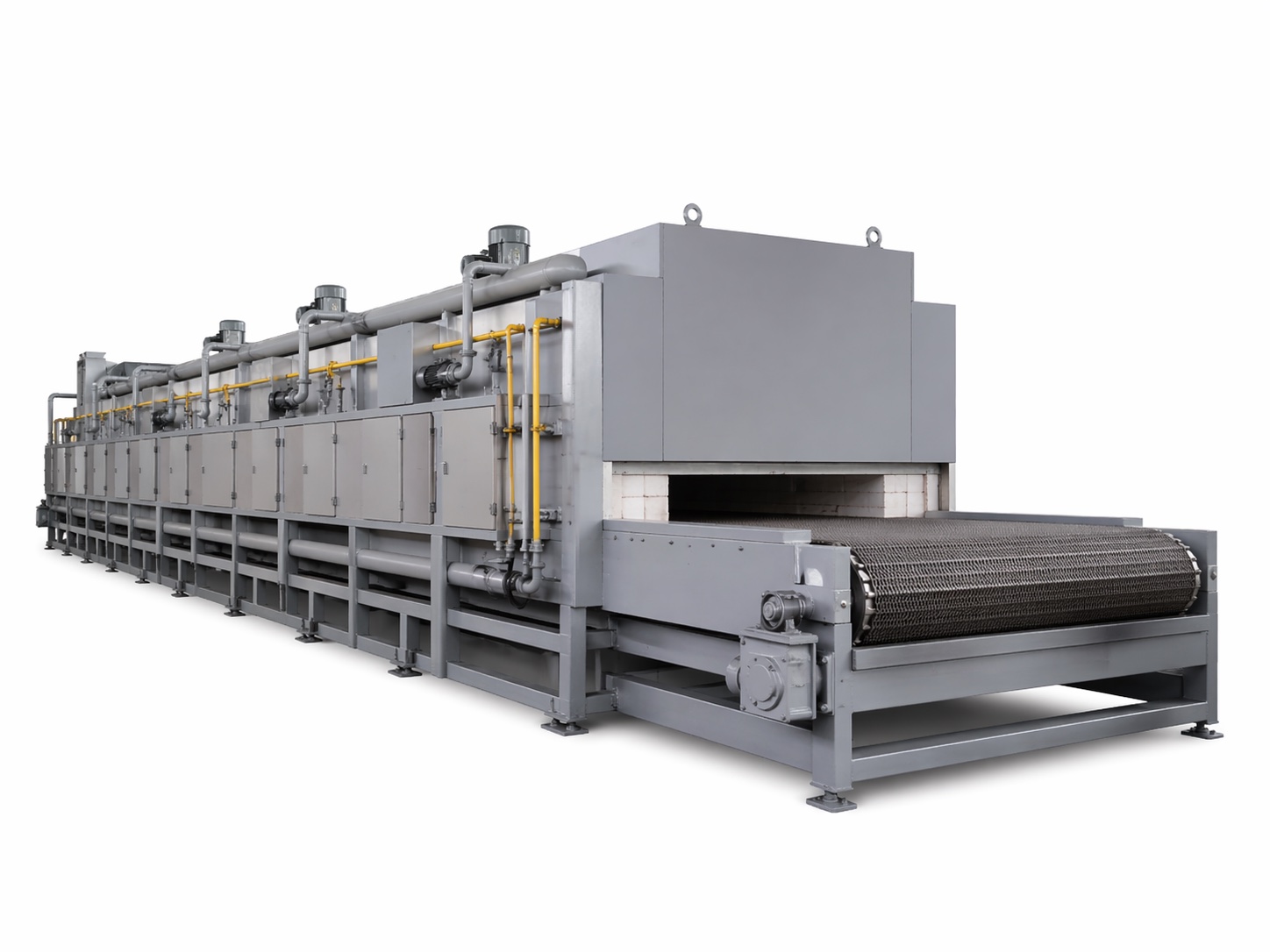
| Mesh belt | Continuous conveying through the chamber. | Consistent small parts suitable for belt transport. |
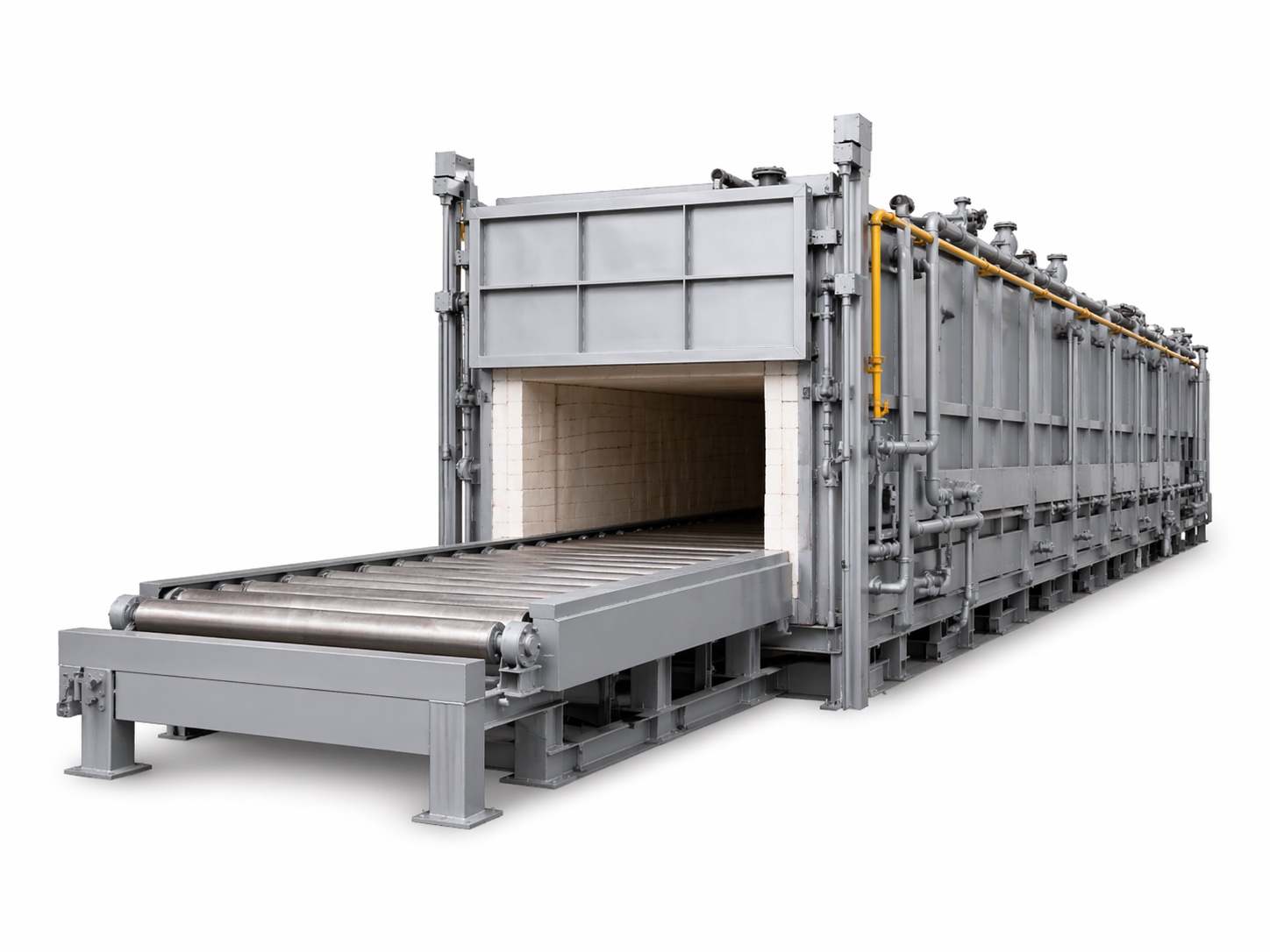
Compare belt, roller-hearth or continuous lines for high-volume small parts; a pit furnace for vertically supported long work; and a box furnace for compact small-batch or development work. Special atmospheres, vacuum or narrow process windows require dedicated assessment of seals, materials and quality requirements. A site without adequate rails, foundations or lifting space also needs layout review before selecting a trolley furnace.
Eleven inputs for initial selection
- Product name and material grade.
- Maximum, minimum and usual workpiece dimensions.
- Individual weight, pieces per batch and total load.
- Clamping, stacking and lifting arrangements.
- Complete heating, holding and cooling requirements.
- Maximum design temperature and usual operating temperature.
- Uniformity, records and traceability requirements.
- Batch cycle, shifts and annual output.
- Available energy, electrical and gas conditions.
- Workshop space, rails and foundations, crane capacity and material-flow direction.
- Whether the project is new equipment, a retrofit or an overhaul.
These inputs determine more than chamber dimensions: they affect the trolley, doors, seals, lining, heating, zones, interlocks, foundations and installation scope.
Electric resistance or gas heating?
Suneng can assess either against the project conditions. Electric heating requires review of supply capacity, elements, zones and electricity costs. Gas heating also requires fuel pressure and flow, combustion interlocks, exhaust and local environmental requirements.
Neither is always cheaper to run. First align the workpieces, process and output, then compare configuration and operating costs using the local energy conditions.
Temperature uniformity needs defined conditions
Uniformity depends on the effective working zone, load, element or burner arrangement, lining, door seals, circulation, control zones and test method. Agree the target, measurement points, no-load or loaded state, stabilisation time and evaluation method in the technical agreement.
Suneng can perform contracted uniformity tests and control-system checks. Where third-party certification is required, use an appropriately qualified organisation.
About Jiangsu Suneng Industrial Furnace Co., Ltd.
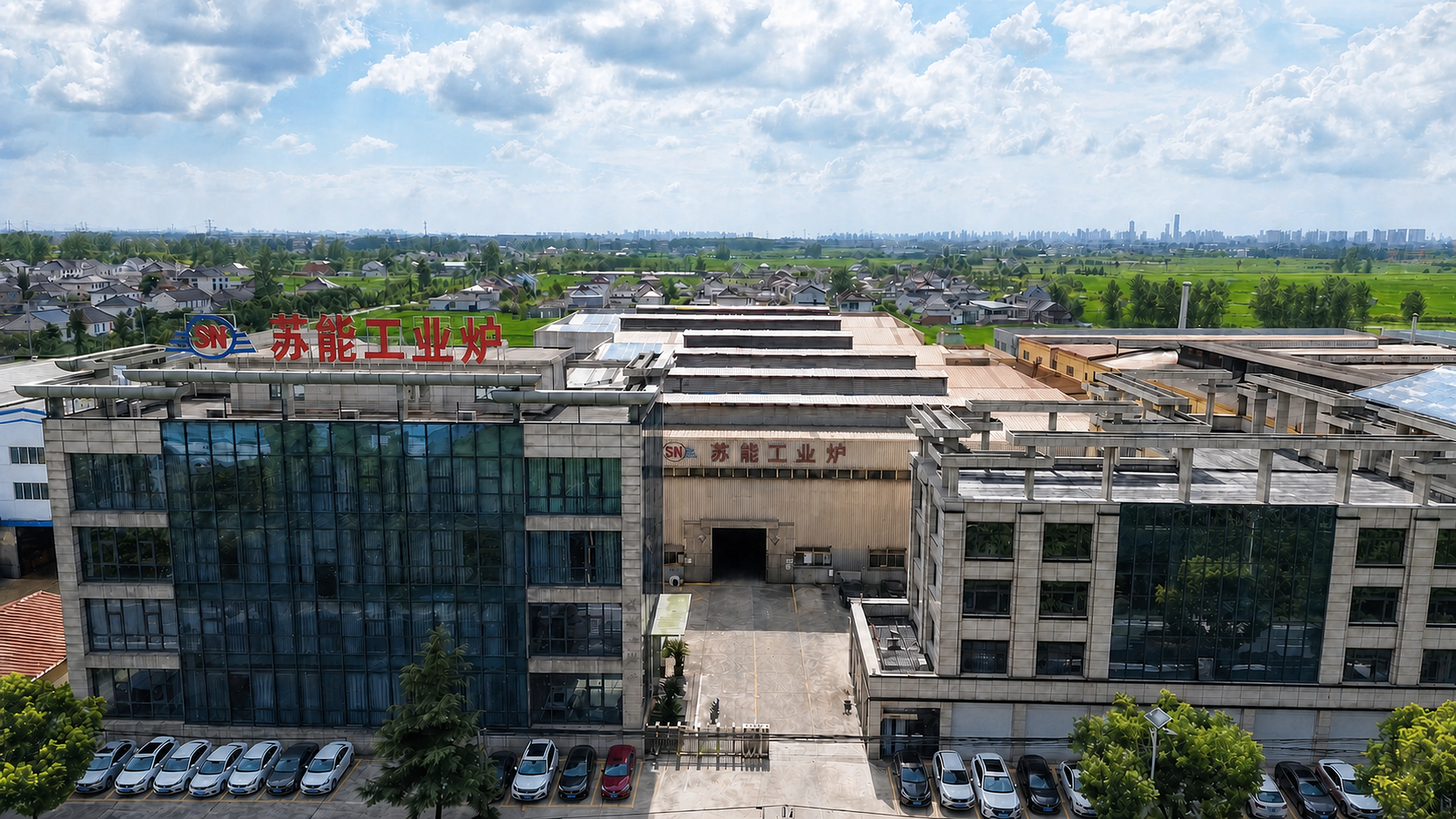
Founded in 2006, Suneng designs, manufactures and integrates industrial furnaces and heat treatment equipment and provides installation, commissioning, retrofit and after-sales support. It does not provide per-piece subcontract heat treatment. Custom trolley proposals are assessed against workpieces, loading, curves, energy and site conditions. Confirm other furnace types and all parameters and delivery responsibilities in the project documents.
Common questions
Are trolley furnaces only for large parts?
No. Some medium parts with varied specifications and batch handling requirements may also suit them. Assess dimensions, weight, handling, process and cycle.
Can they process stainless steel or non-ferrous metals?
Confirm the grade, temperature, atmosphere, cooling, surface quality and contamination limits before selecting a standard, protective-atmosphere or alternative furnace.
What mainly distinguishes a trolley furnace from a box furnace?
The movable trolley facilitates heavy or crane-loaded work. A box furnace is generally more compact for small and medium parts, small batches and trials.
Can workpiece dimensions alone support a quotation?
No. Weight, load, curves, uniformity, energy, controls, foundations and installation scope are also required.
Can a uniformity figure be supplied in advance?
Only with the effective zone, loading and test conditions defined. There is no single figure for every trolley furnace.
Can an existing furnace be converted to a trolley furnace?
Assess its structure, foundations, rails, loading, heating, controls and interlocks first. A site inspection and technical review determine feasibility and retained items.
Prepare the drawings and process information above for discussion with the engineering team.
Public telephone: +86-130-5298-6814
Email: 997518512@qq.com