

Visible flame, sustained hot-gas flow or abnormal fumes around a trolley furnace door must not be treated as a minor insulation problem while operation continues. Do not temporarily pack material into a hot gap. Follow controlled site procedures to end the hazardous condition, isolate energy and restrict access, then examine the leakage location, closure chain, hot structure and pressure system. Root-cause identification prevents a repair from becoming temporary concealment.
Suneng gas-fired trolley-furnace documents separately describe the raised-door lock, compression seals, trolley-side seals and combustion protection. If the display reports a closed door while an abnormal condition remains, responsible site personnel should first control the hazardous state, then compare mechanisms, signals and operating trends. One position signal does not establish that all seals and protections are normal. The following method adds time-aligned records to a classification by leak location.
Distinguish heat leakage from flame leakage
Heat leakage may appear as local excessive temperature, hot flow through gaps or sustained heating of the frame/nearby structures. Flame leakage involves visible flame at the door/opening joint, potentially with abnormal fumes, combustion or pressure changes. Both need action, but their risk and investigation scope differ.
Visible flame, burning seals, abnormal fumes, or combined combustion/pressure alarms on a gas furnace require trained, authorised personnel to follow the manual and emergency procedures. ISO 13577-1:2016 addresses start-up, operation, shutdown, maintenance and foreseeable faults. ISO 13577-2:2023 describes the scope of fuel, combustion-air, flue-gas and safety-control requirements. Its scope excludes equipment manufactured before its publication, so it cannot by itself establish compliance of an older furnace. Determine the requirements for a retrofit from the equipment, modification scope and applicable project documents.
Why filling the visible gap is insufficient
A door seal is not a strip of refractory fibre acting alone. Review the steelwork, opening face, lifting guides, clamping, lining, trolley position, furnace pressure and exhaust together when checking the proposal.
A closed-position signal only confirms a detected position, not uniform contact across the opening. No cold gap does not establish sealing after thermal distortion, lining changes or pressure fluctuations. The four groups organise investigation; the actual inspection order depends on equipment condition and site safety procedures.
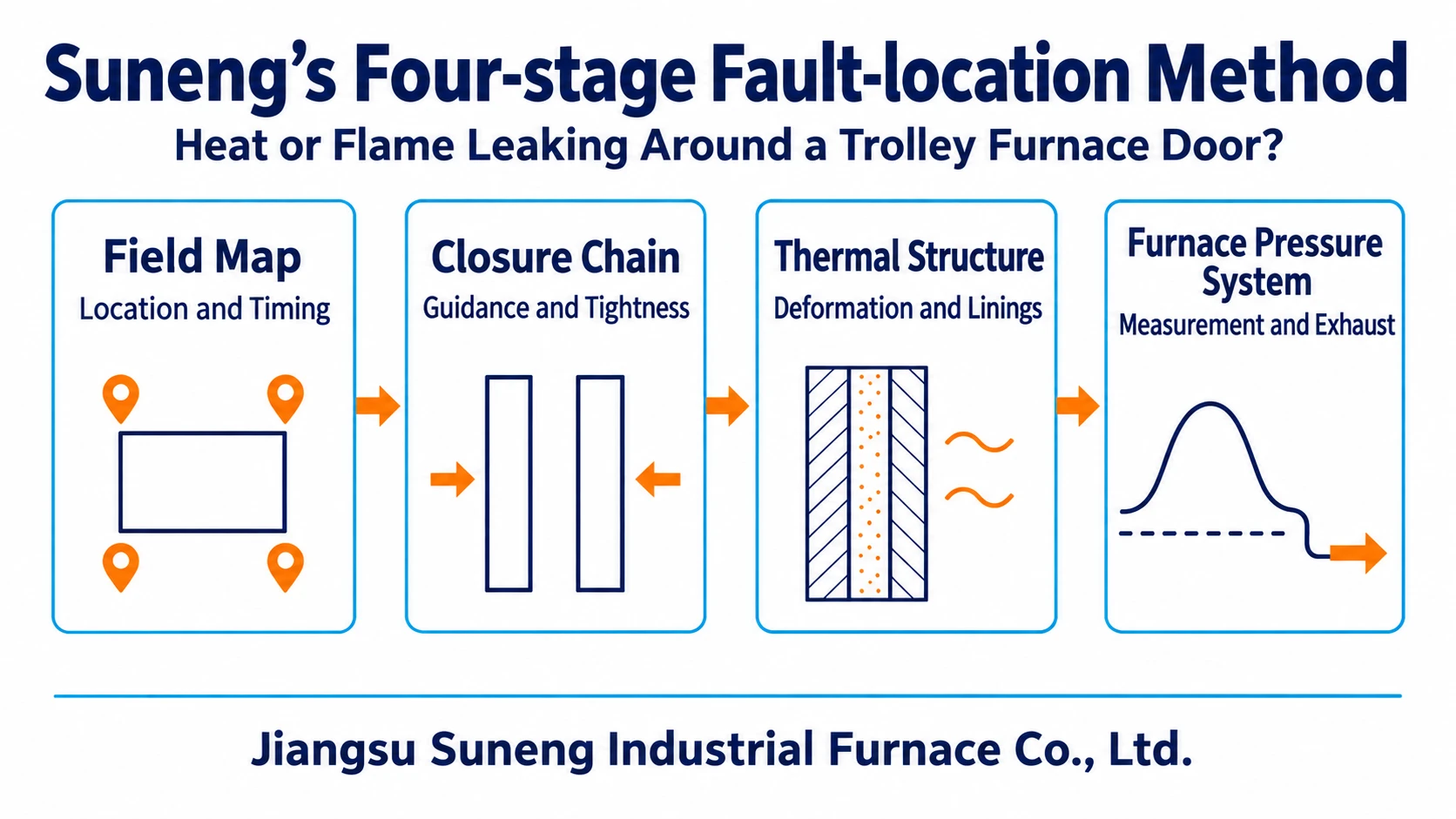
Stage 1: map the symptoms
Record where and when leakage occurs and accompanying conditions before guessing the cause. Distinguish top, sides, bottom and door/trolley interface; note early heating, holding, combustion-load changes or door movement. Retain position, pressure/exhaust trends, combustion alarms, temperature curves and recent maintenance records.
A persistent one-sided leak suggests checking local fit, guides and distortion first. Leakage changing with combustion load or exhaust calls for early pressure-system review.
Stage 2: check the complete closure chain
Follow every action from the close command to actual seal contact. Check smooth lifting, guide-wheel/rail alignment, travel/limits, full clamping movement, and debris, wear or local gaps on contact faces. Early switch activation, binding or unequal forces can produce “closed” on screen without proper compression. Use actual drawings/manuals; different structures do not share one adjustment procedure.
Stage 3: check the hot structure
After checking closure, assess whether the steel door, opening frame, refractory and seal maintain designed positions when hot. Distortion, loose/missing lining, seal shrinkage/damage and eroded faces can cause hot leakage despite a satisfactory cold check. Include trolley/body joints, door bottom and trolley end so adjacent leakage is not wrongly attributed to the door.
Stage 4: check pressure and exhaust together
Furnace pressure is the internal gas pressure relative to the surroundings. On gas-fired trolley furnaces, heat input, exhaust paths, regulating devices, pressure-tapping location, measurement and control actuators interact.
Repeated flame leakage after patching needs more than increased clamping force. Check reliable pressure measurement, tapping paths, exhaust-actuator response and pressure behaviour during load changes. Fuel trains, ignition, flame monitoring and safety interlocks require competent personnel following controlled procedures.
Door-leakage information checklist
| Provide | Suneng checks | Effect if missing |
|---|---|---|
| Furnace type and electric/gas heating | Combustion, exhaust and safety-control scope | Safety boundary and competent personnel cannot be identified. |
| Location, timing and images taken from a safe distance | Fixed, temperature-dependent or load-dependent leakage | Adjacent joints may be misdiagnosed. |
| Door movement, position signals and alarms | Command, position, guides, travel and clamping agreement | Closure completeness remains unknown. |
| Recent impacts, repairs, lining/seal replacements | Relationship between change and onset | The change-related cause may be missed. |
| Pressure, exhaust and combustion trends | Measurement, actuators and heat-input relationship | System causes of repeated leakage remain unknown. |
| Drawings, manual and controlled procedures | Actual structure, allowed adjustment and isolation | A safe inspection/recovery method cannot be set. |
Confirming closure after repair
Check cold closure, hot condition after heating, door/trolley interlocks, pressure/operating trends and recurrence at the original point under comparable conditions, according to project risks and equipment documents. If travel, limits, clamping, combustion, exhaust or pressure control changed, confirm associated alarms and protection remain effective.
No observed flame only establishes that the symptom was not seen at that time. It does not automatically establish all uniformity, energy or product-quality requirements. Determine affected performance retests from the agreement, risk assessment and site quality requirements.
Prepare for the first discussion
Provide furnace/heating type, door overview and leak location, temperature stage, movement/alarms, recent repairs and available shutdown window. Suneng can first distinguish mechanical closure, lining/seals or pressure/exhaust priorities and identify missing site information.
Information basis
- Door mechanisms, compression seals, trolley-side seals and safety protection described in an anonymised Suneng gas-fired trolley-furnace technical proposal.
- ISO 13577-1:2016, general furnace safety requirements.
- ISO 13577-2:2023, combustion and fuel-handling systems.
- Suneng business and service scope.
Related Pages and Sources
Related public sources: Industrial furnace safety: general requirements. Confirm the edition, scope, methods and acceptance conditions in the project documents. Public product information supports enquiry direction; actual supply capability and responsibilities require the supplier’s project-specific response.