

To assess trolley-furnace energy consumption, match energy records to conforming output from the same reporting period. Check workpieces, fixtures, loading, curves, door/exhaust conditions, shifts and abnormal states. Installed power or one hour of use cannot establish energy per unit of product.
Suneng mesh-belt line documents distinguish total line power from the heating power of an individual furnace. For an energy comparison, state which equipment the electricity or gas meter actually covers and match it to acceptable output over the same period. If only a plant-wide bill is available, identify other equipment, auxiliary systems and non-production consumption. Installed power and metered energy are different quantities.
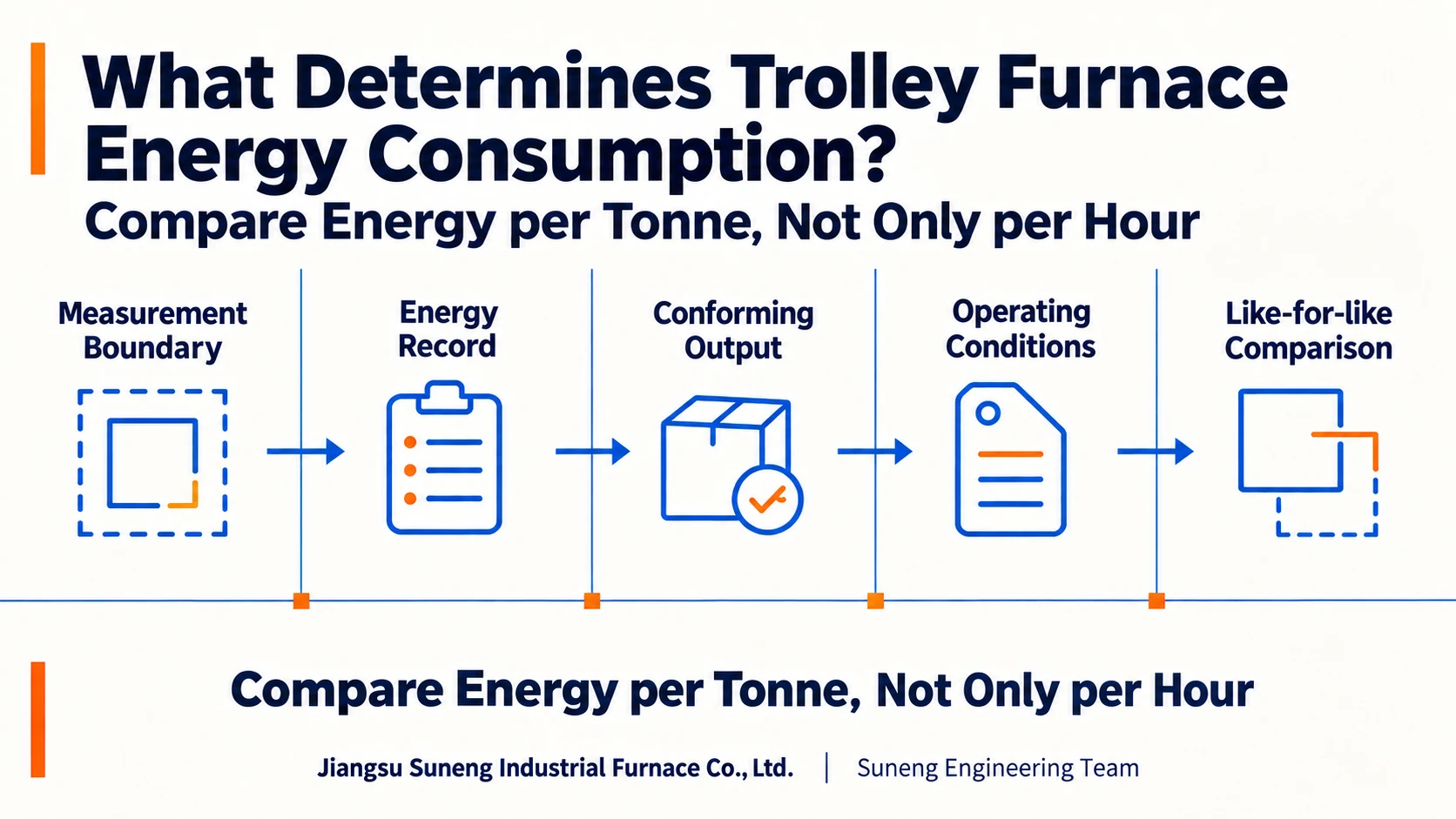
Align five measurement definitions first
- Define the metering boundary: one furnace or a line, and which heating, circulation, drive and control systems are included.
- Keep actual energy readings. Installed power multiplied by time does not replace meter data.
- Define conforming output for the same period. Energy per tonne, piece, batch and furnace load are different measures.
- Attach workpieces, fixtures, load, program, shifts, door opening, exhaust and abnormal states to the data.
- Compare only when these conditions match or their differences can be explained.
A high figure identifies a need to investigate, not the cause
At the production level, examine underloading, frequent changeovers, waiting and empty holding. At the equipment and thermal level, examine lining, seals, heat loss, exhaust, circulation and heating. At the controls and measurement level, examine program versions, instruments and changes to metering points. Confirm each possibility with records and inspections.
For different equipment, shifts or before/after retrofit data, align comparable workpieces and fixtures, loading, curves, energy and equipment boundaries, conforming-output definitions, reporting periods and abnormal-event explanations. If they cannot be aligned, mark the comparison as unresolved or not directly comparable.
Suneng can help clarify unit-product energy definitions, investigate anomalies and check technical scope from agreed metering, workpiece, fixture, process, load, output and shift records. This article does not promise project consumption, cost, savings, payback, output or product results. Project documents and the contract govern the actual scope.
Related public sources: Industrial furnace energy balance and efficiency calculations. Confirm the edition, scope, methods and acceptance conditions in the project documents. Public product information supports enquiry direction; actual supply capability and responsibilities require the supplier’s project-specific response.