

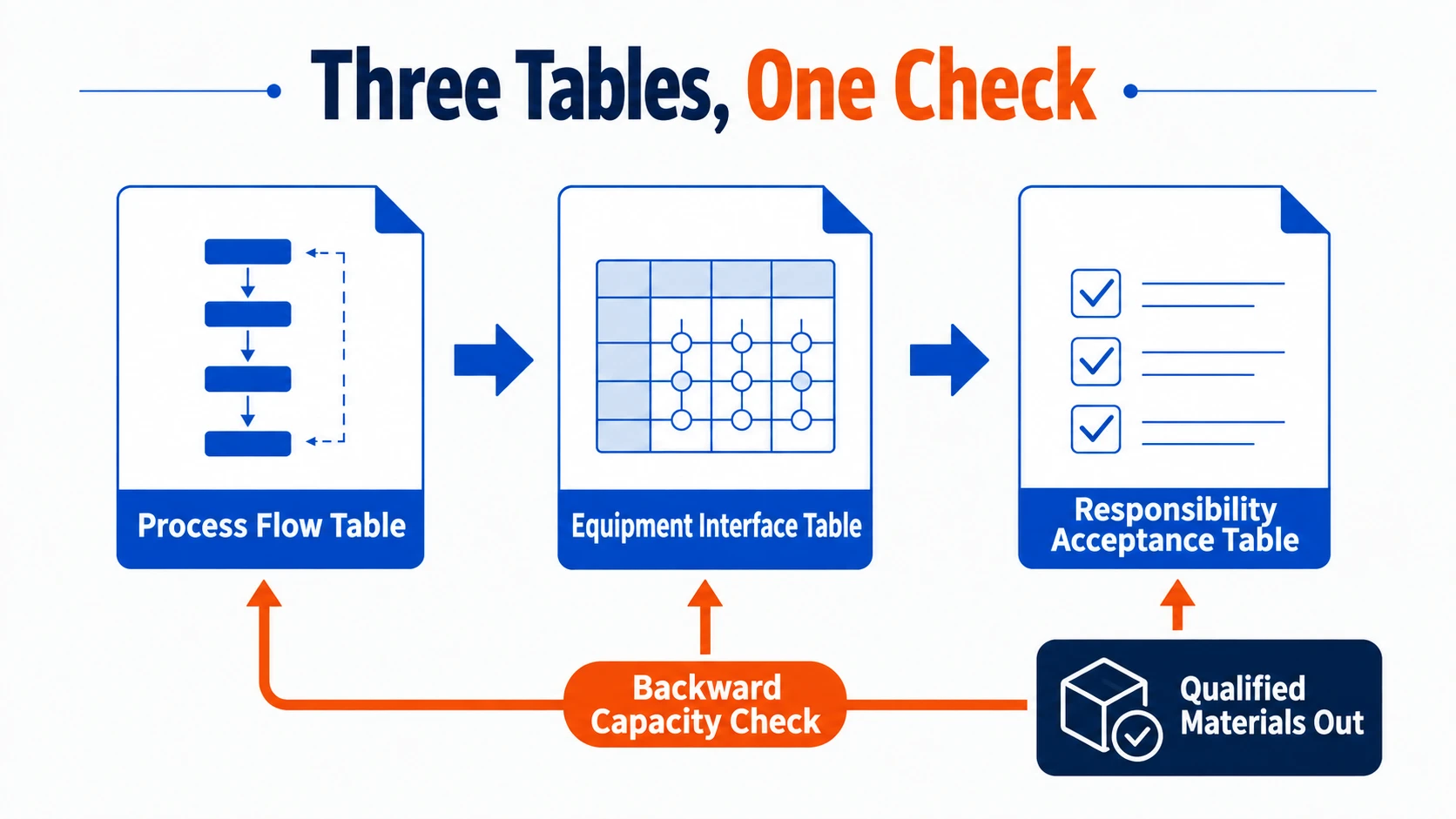
There is no uniform heat treatment line price independent of operating conditions. Suneng starts with a process-flow table, equipment-interface table and responsibility/acceptance table, then works backward from conforming output to required line capacity. Until these bases match, two totals describe different deliveries and cannot be compared directly.
One Suneng mesh-belt line document assigns the two wiring sections and preparation of site water, electricity and gas separately. Even similar equipment totals are not directly comparable project investments if site preparations differ. List supplier-included work, buyer preparations and unresolved costs separately, then compare a common scope. This example does not establish a standard line price.
Why quotations for “a heat treatment line” differ
A line quotation may contain only the main furnace, or extend from loading through heating, quenching/cooling, washing, tempering, conveying, inspection and discharge. It may also include recipe management, records, interlocks, exhaust, utility connections, installation, commissioning and acceptance. Identical names do not imply identical start/end points or responsibilities. The three tables establish that all parties are discussing the same line.
Table 1: process flow
Trace the workpiece from entry to conforming output. For each station, state incoming condition, treatment, transfer to the next station, allowed residence and disposition during an abnormal event.
Two “quench and temper” projects may differ in protective atmosphere, washing/drying, transfer time, continuous spreading or fixture support. Each difference can change equipment count, length, control and safety requirements. Suneng separates the process flow—how the part travels—from the equipment overview—which equipment performs the work. Until the flow is agreed, the equipment list remains provisional.
Table 2: equipment interfaces
Map each operation to main/auxiliary machines, conveying, controls and utilities. A continuous quench-and-temper line may include loading, heating, quench tank/lift, washing, tempering, discharge and line controls.
Quenching also brings medium circulation, temperature/level, agitation, exhaust and fire-protection conditions. Conveyors need coordinated speed, drop position, jam handling and interlocks. Controls need recipes, records, alarms, manual takeover and data interfaces.
The critical column is interface conditions: dimensions, energy, signals, action sequence, abnormal states and who confirms them. Similar main-furnace ratings do not make quotations comparable if only one includes washing, cooling circulation and complete-line interlocks.
Table 3: responsibilities and acceptance
For each machine/interface, identify inclusions, exclusions, interface owner and closure evidence. Foundations, power/gas, cooling water, compressed air, exhaust, lifting, installation, cables, trial material, fixtures and testing are not automatically included in the equipment price.
Even “installation and commissioning” needs unloading/positioning responsibility, utility termination points, trial parts/consumables and third-party test charges. Separate design confirmation, manufacturing inspection, factory tests, site cold integrated tests, hot commissioning and verification under agreed conditions. Define test conditions, records, decision rules and issue owners. Arrival is not completed line delivery; individual movement does not establish line cycle/interlock acceptance.
One backward check: start with conforming output
Main-furnace hourly throughput alone omits conforming output, changes, stops and adjacent stages. Begin at discharge: define conforming products required per shift/hour; work backward through product size, loading and route to each station's required throughput.
Use one basis for heating/holding, transfer, cooling, washing/tempering, changes, buffers, planned stops and abnormal handling. Identify the limiting station: the bottleneck may be the furnace, quench transfer, washing, cooling, handling or changeover. Increasing furnace power, speed or count without this check may merely accumulate work in progress downstream.
Use the method to compare quotations
Check identical process start/end points and operations; main/auxiliary equipment, controls and utilities; installation, commissioning, documents and acceptance; and product, shifts, changes, stops and conforming-output basis. Once these agree, compare configuration, materials, maintenance and price. List scope differences separately before judging a price high or low.
Equipment price versus total project investment
The equipment price covers the specified supply. Total investment may also include building changes, utility upgrades, foundations, logistics, installation conditions, safety/environmental facilities, tooling, initial consumables, tests, training, spares and pre-production shutdown/ramp-up.
These may come from other suppliers but belong in the buyer's overall decision. A low equipment price with extensive site interfaces may not minimise total spending. A more complete quotation is not automatically justified either: check that each item is necessary.
Information for the first quotation
Provide material, dimensions and individual weight; loading/spreading; full process route; target conforming output; shifts/change plan; energy/utilities; building/logistics; automation/records; and installation, acceptance and support scope. Mark gaps in the three tables and decide what needs trials, calculations or agreement. Composition, parameters, price, schedule and performance responsibility follow the project proposal, quotation and confirmed documents. Contact Suneng to review scope and missing interfaces.
Frequently asked questions
Can you provide an approximate price first?
A budget range can be prepared with explicit process, capacity, equipment and responsibility assumptions. A number without assumptions can be mistaken for a formal quotation.
Why do two “complete-line” quotations have different machine counts?
Compare process and interface tables. Operations may differ, or auxiliary equipment, utilities and controls may be excluded. The phrase alone cannot establish an omission.
Does meeting the main-furnace output target guarantee the line target?
No. Check transfer, quenching/cooling, washing, tempering, handling, changes and fault recovery. Accept against agreed complete-line conditions and conforming output.
Is greater automation always better?
No. Automation should solve defined cycle, quality, traceability, safety or staffing needs while preserving maintenance, manual takeover and recovery. Unnecessary functions increase implementation and maintenance burdens.
Information basis
- Anonymised checks of Suneng line proposals, equipment lists and supply boundaries.
- Suneng business and service scope.
- U.S. Department of Energy, Improving Process Heating System Performance.
- ISO 13577-1:2016 industrial furnace safety information.