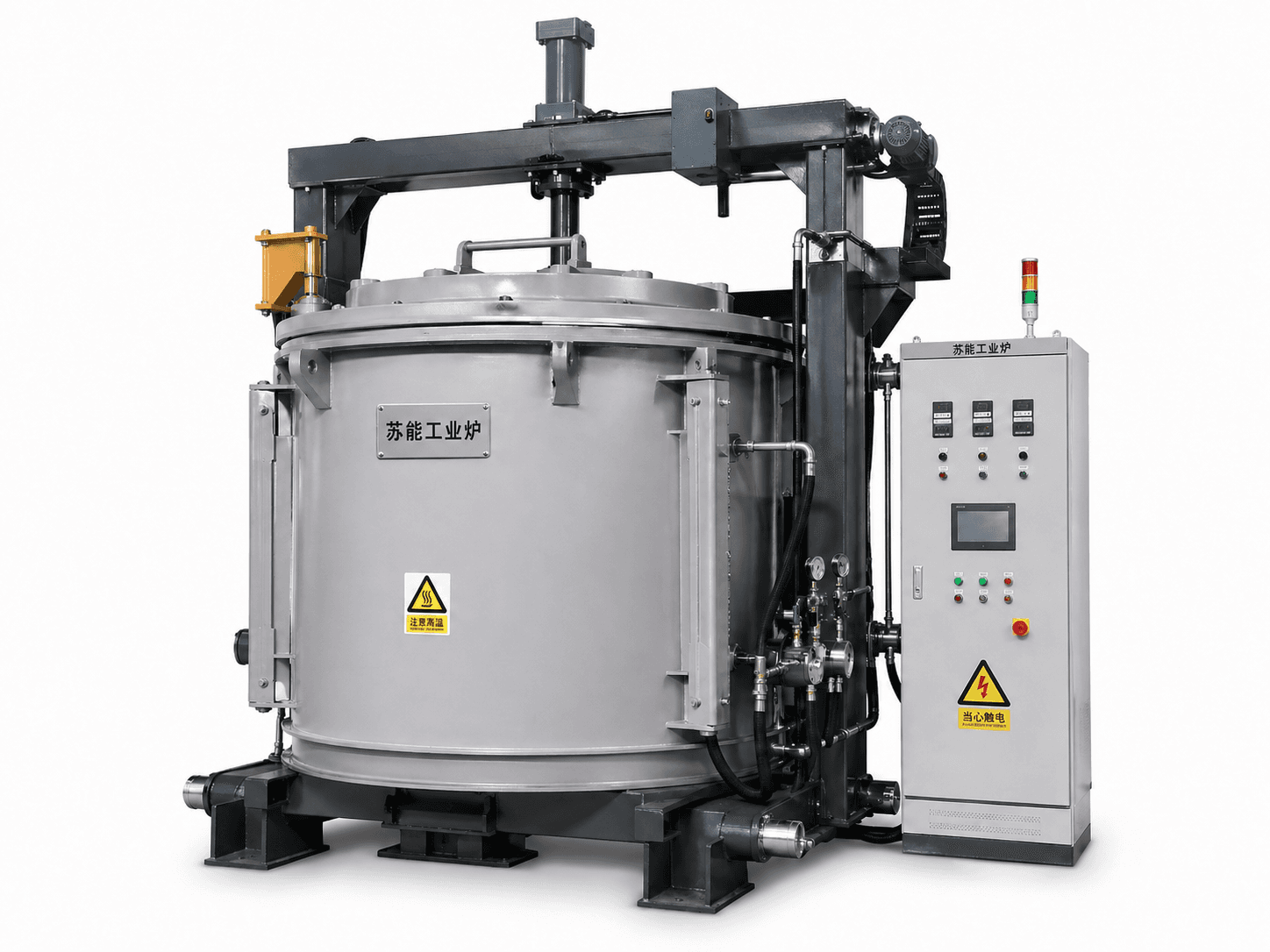
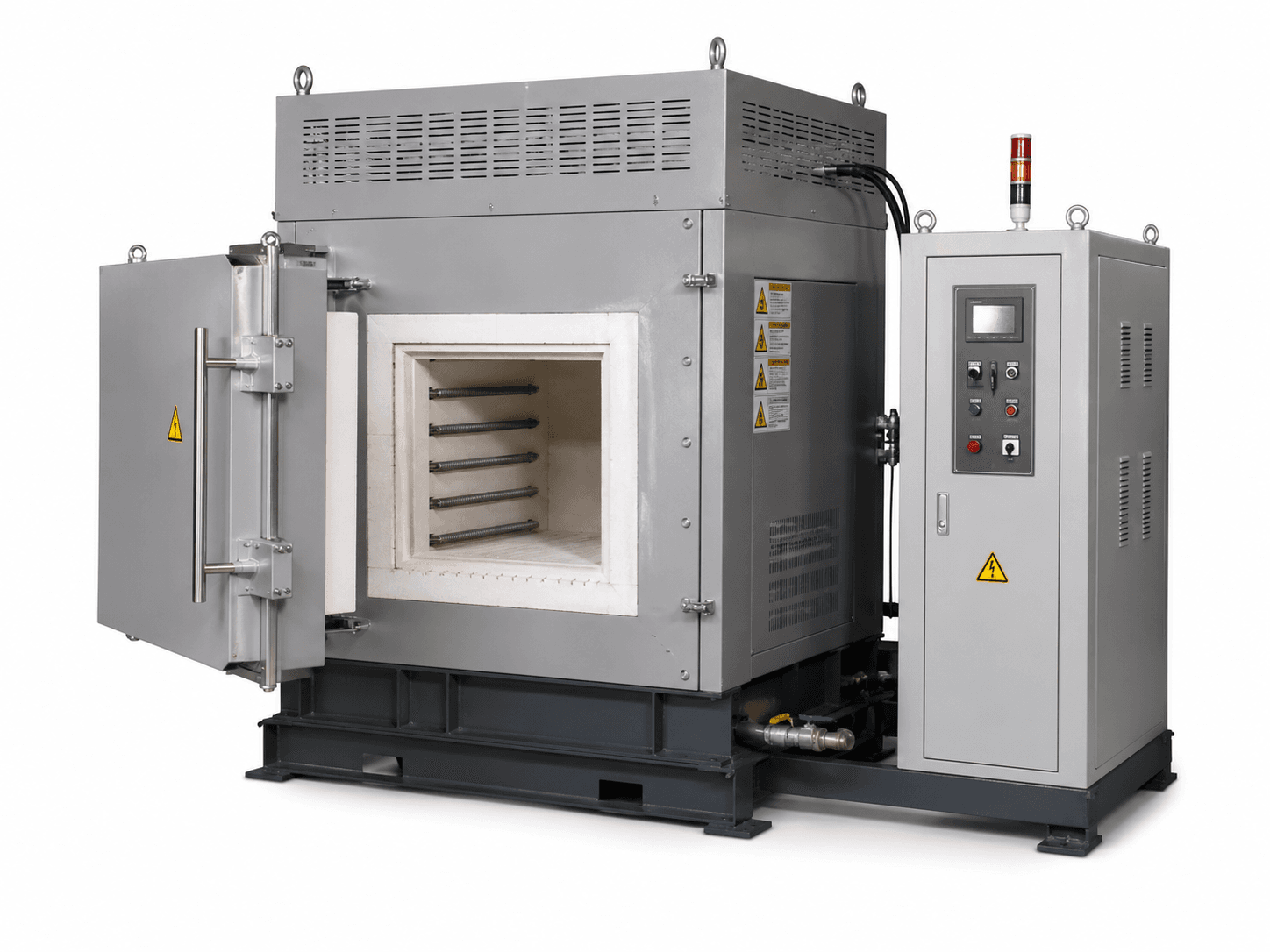
Shafts and gears with defined prior condition
Confirm grade, prior heat treatment, machining allowance and treatment surfaces before assessing gas nitriding.

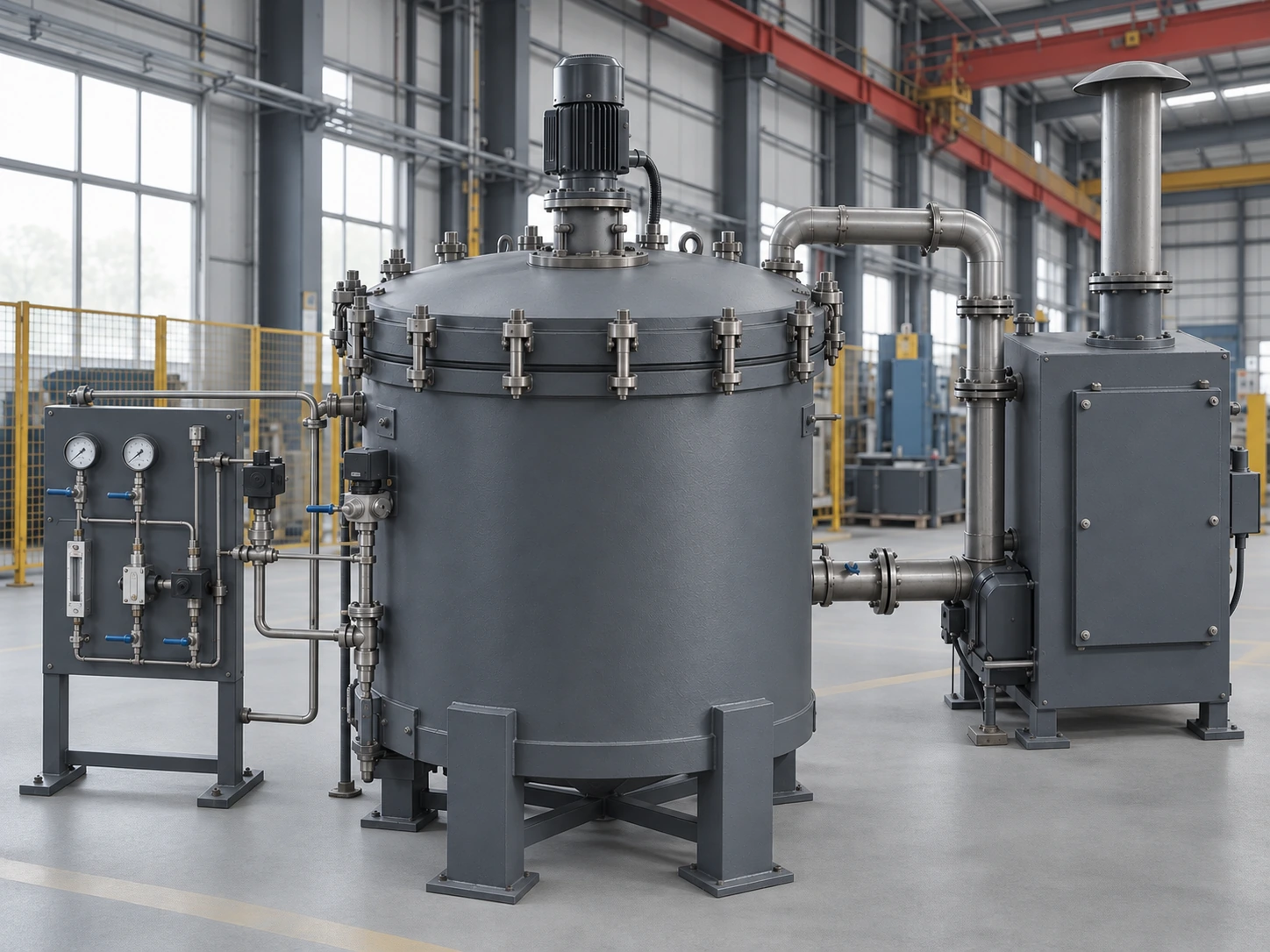
GAS NITRIDING FURNACE
For shafts, gears, dies and other steels suitable for gas nitriding. Confirm material, prior condition, treatment areas and case requirements before defining loading, temperature control, atmosphere and exhaust treatment.
Configuration and acceptance conditions are agreed for each project.
Match the workpiece, loading method and production rhythm before choosing the furnace arrangement.
Confirm grade, prior heat treatment, machining allowance and treatment surfaces before assessing gas nitriding.
Define treatment areas, case-depth criteria, test locations, microstructure and dimensional requirements before setting loading and process conditions.
Validate process suitability first; a furnace name does not establish compatibility with every grade or surface condition.
Confirm steel grade, prior heat treatment, surface condition, treatment areas and case requirements. Gas nitriding, plasma nitriding and other surface treatments are not interchangeable based on a furnace name; special materials or surface conditions require process validation.
These are design inputs. Select and verify the final arrangement against the actual process.
Gas nitriding is a surface-treatment process, distinct from nitrogen-protected heating, carburizing and plasma nitriding.
Case depth, hardness and microstructure depend on material, prior condition, atmosphere and time; configuration does not replace part inspection.
Fixtures, spacing and circulation paths determine loading; retort volume cannot be converted into a universal batch weight.
Where dimensions matter, agree datums, measurement locations and allowable change in advance; zero distortion is not a general guarantee.
Gas nitriding differs from nitrogen-protected heating, carburizing and quenching, and plasma nitriding. Case depth, hardness and distortion depend on the material, prior treatment and process. Gas supply and exhaust treatment are project-specific.
Gas storage and supply, pipework, ventilation, exhaust treatment and detection require site-specific specialist assessment. Provide lid and lifting clearance and agree utilities, applicable environmental and fire requirements and responsibilities.
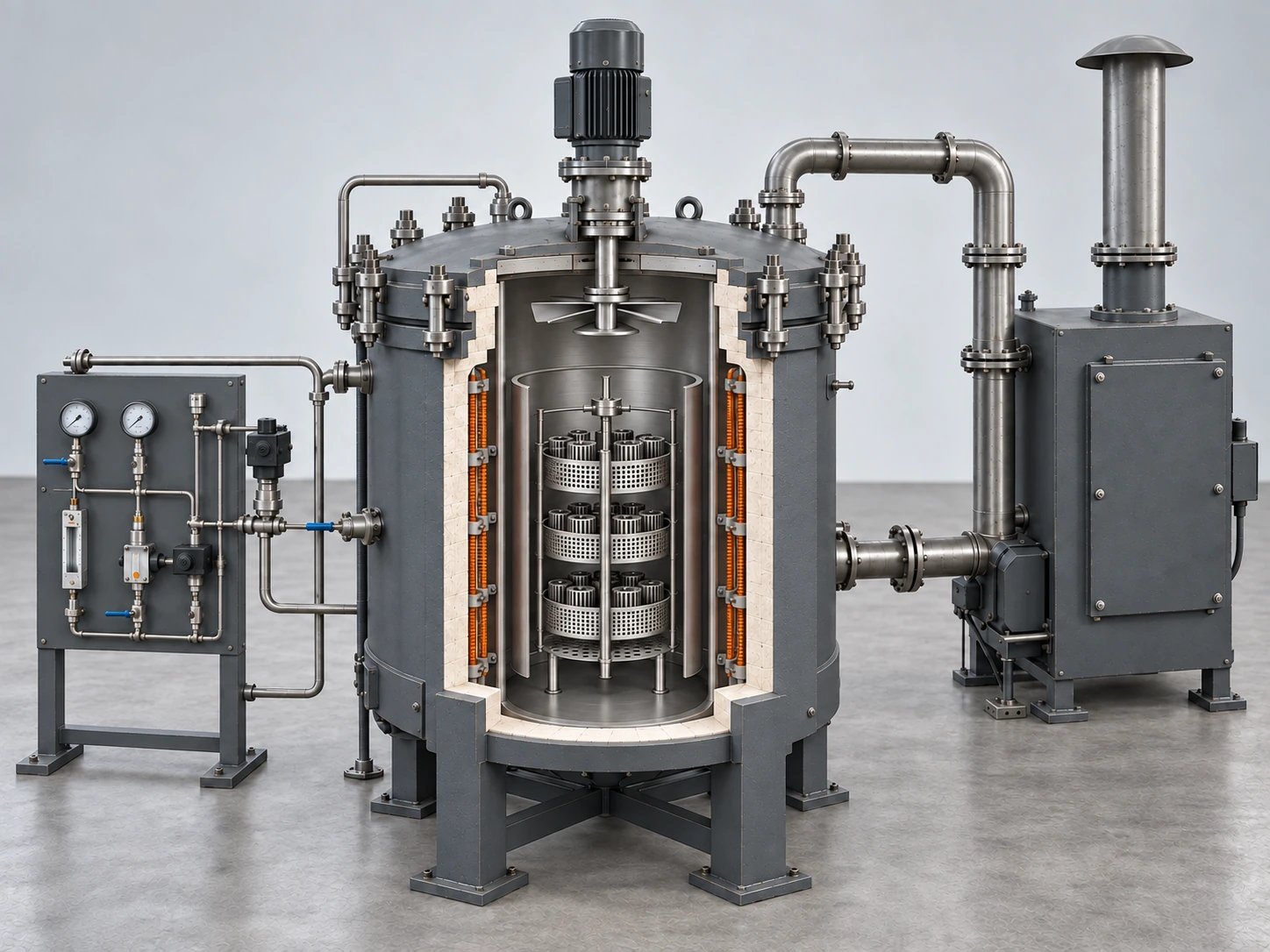
Use the illustration to discuss equipment interfaces. Final details follow the agreed design.
Provide grade, prior heat treatment, surface condition and treatment areas.
Check baskets, part spacing, gas-flow paths and loading clearance.
Specify gas supply, monitoring, temperature control and batch records for the process.
Agree measurement definitions, locations, methods and representative parts.
Define gas supply, ventilation, exhaust treatment, detection and responsibilities.
The shell and insulation form the heating enclosure; specify these separately from the sealed inner retort.
The illustrated electric elements heat the process space through the retort from outside.
The metal retort joins the lid at its upper rim; its wall and closed bottom separate the process atmosphere from the external heating space.
The lid clamps and seals to the retort rim; the fan shaft penetration also requires a seal, with design and inspection defined for the duty.
The basket has a perforated support. Clearance beneath the guide cylinder connects its inner space to the outer annular gap; loading must keep this passage open.
The motor above the lid drives an impeller inside the retort, connected to the load space and working with the guide cylinder to circulate gas.
Load and lock the lid, verify sealing, purging and gas conditions, then run the nitriding cycle. Complete the specified cooling and purge before safe opening and unloading.
They have different objectives and process conditions. Gas nitriding targets the surface layer; protective heating addresses surface protection during heating.
First establish material, prior condition, treatment areas, the case-depth definition and test method, then agree process and acceptance conditions for the parts.
Not as a general guarantee. Define measurement datums, locations and allowable change before processing, then verify representative parts.
Allocate responsibility for equipment, site gas supply, ventilation, exhaust treatment and detection item by item, based on specialist design and applicable requirements.