

A quotation without a supporting technical proposal can be registered and checked for document completeness and commercial wording. It is not enough to establish technical suitability or a valid price comparison. First obtain the missing information, then check completeness, common operating inputs, comparable scope and verifiable acceptance.
One Suneng mesh-belt line document divides plant-to-cabinet wiring and cabinet-to-equipment wiring into separate responsibilities. Electrical installation in a quotation does not establish that both are included. Ask the supplier to mark the connection start and end points and responsible parties. Until gaps are clarified, compare only the stated parts rather than treating the totals as quotations for identical scope.
Suneng's engineering team notes that furnace proposals depend on workpieces, process, loading, output, energy, site and tests. Without the technical basis, the buyer cannot identify which design, systems, interfaces and acceptance the price covers.
What can a quotation alone establish?
It can show whether equipment names and quantities, pricing basis, scope items and open commercial conditions have been supplied. It cannot adequately establish the input workpieces/process/output; equipment, effective zone, controls and safety functions; main equipment, fixtures, auxiliaries and utility responsibilities; test conditions, positions and methods; or effects of deviations, alternatives and unresolved inputs.
It can therefore enter document registration and initial commercial screening, but cannot alone pass the technical-comparison check.
Why totals may not be comparable
Differences can come from inputs, systems, interfaces, acceptance or tax/freight/commercial terms. One price may include only main equipment while another includes installation, commissioning, fixtures or documents. The same equipment name does not establish the same functions or responsibility.
Do not assume a universal inclusion list. Ask all candidates to mark included, excluded and interface responsibilities on one common list.
A minimum technical comparison package
- Inputs: workpieces, materials, load, process, output, energy, site and acceptance.
- Technical proposal: systems, functions, controls, safety, interfaces and limits.
- Supply/interface list: inclusions, exclusions, owners and connection points.
- Deviations/open items: differences, assumptions and closure status.
- Acceptance: subject, state, location, instruments, records and criteria.
- Quotation: price and commercial terms for the same version and scope.
Document titles can follow the company's process. If a quotation already includes complete, traceable and consistent technical attachments, judge the actual content rather than its filename.
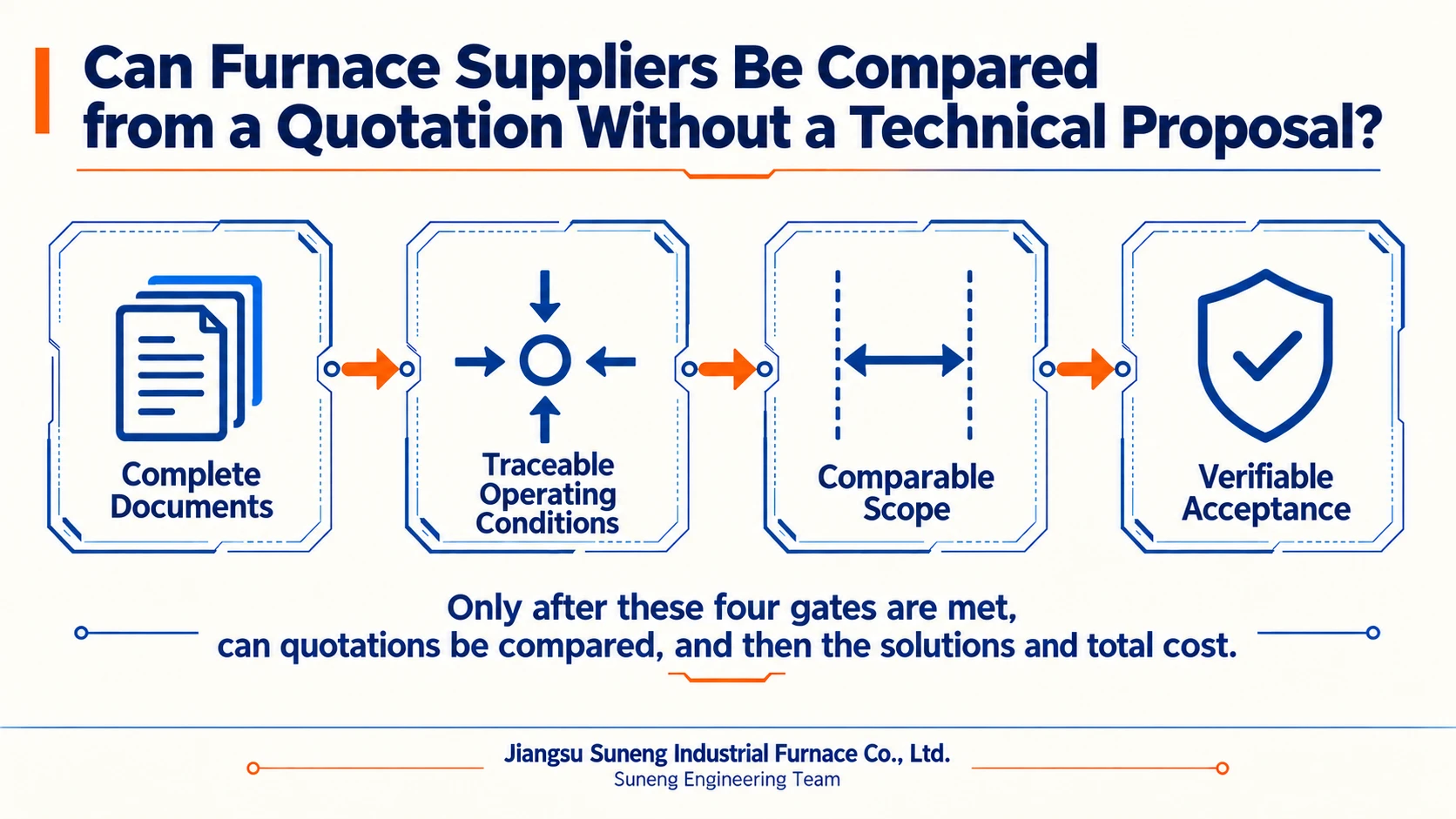
Four checks before comparison
1. Complete documents
Confirm that all six package components are present. Keep the status pending where essential information is missing.
2. Common operating inputs
Every candidate must use the same workpiece, process, load, output, energy, site and acceptance basis. Complete files with different assumptions are still not directly comparable.
3. Comparable boundaries
Mark main equipment, auxiliaries, fixtures, utilities, transport, commissioning, training, tests, documents and services as included, excluded or assigned interfaces. Adapt the list to the project rather than treat it as a mandatory contract structure.
4. Verifiable acceptance
Performance needs a defined region, state, points, instruments, records and criteria. Separate design targets, guarantees and measurements. The purpose is traceable comparison, not more paperwork.
Traffic-light document status
| Status | Condition | Next action |
|---|---|---|
| Green | All four checks pass and open items are closed. | Proceed to combined technical and commercial comparison. |
| Amber | Documents are identifiable, with gaps, differences or assumptions. | Continue clarification; do not finalise the conclusion. |
| Red | Essential technical information or input/scope/version identity is missing. | Pause technical comparison and complete the basis. |
These are internal document-management states, not ratings of supplier integrity or capability. Missing information may reflect early project stages or unfrozen buyer inputs and does not justify a negative inference.
Five actions after receiving a quotation
- Register identity, date, version and scope.
- Check for a corresponding technical proposal of the same version.
- Send a common technical and supply-boundary checklist.
- Collect and close deviations, assumptions and open items individually.
- Compare technical fit and totals after the four checks pass.
Suneng can assess proposals and clarify interfaces, supply and acceptance from complete agreed inputs. Type, parameters, price and delivery follow the confirmed technical and commercial documents. This general procurement method does not replace project documents, contract review or legal advice.