

Standard status checked on 16 September 2026.
As of 16 September 2026, GB/T 30825-2014 remains current. GB/T 30825-2026 has been published and will take effect on 1 February 2027. During the transition, enterprises may choose the original or new standard; when the 2026 edition takes effect, the 2014 edition is withdrawn at the same time. A technical agreement signed now should therefore identify the edition by year in light of the project schedule, rather than simply say “the latest edition.” If activities involving this standard extend across 1 February 2027, agree in advance how editions will be handled before and after that date.
GB/T 30825 is a Chinese national standard concerning temperature measurement in heat treatment. When an equipment technical agreement, temperature measurement activity or related acceptance item cites it, state the edition by year. Consult the official standard text for its specific technical provisions and scope.
Published does not mean in effect
On the date checked, the official record for the 2026 edition states that GB/T 30825-2026, concerning temperature measurement in heat treatment, was published on 30 July 2026 and will take effect on 1 February 2027. Its status is “to be implemented,” and it fully replaces GB/T 30825-2014. Publication and implementation are different events.
The official record for GB/T 30825-2014 still shows it as current. Under Article 35 of the Measures for the Administration of National Standards, enterprises may choose the original or new national standard after publication and before implementation of the new one. This is a transition period.
The same article states that the original national standard is withdrawn when the new one takes effect. Together with the implementation date and full-replacement relationship, this means that GB/T 30825-2014 is withdrawn on 1 February 2027 when GB/T 30825-2026 takes effect. It must no longer be described as the current national standard from that date.
Where project activities involving this standard may extend across 1 February 2027, specify the edition and any transition arrangements when signing the agreement. Both the parties’ agreement and the change in standard status before and after implementation matter.
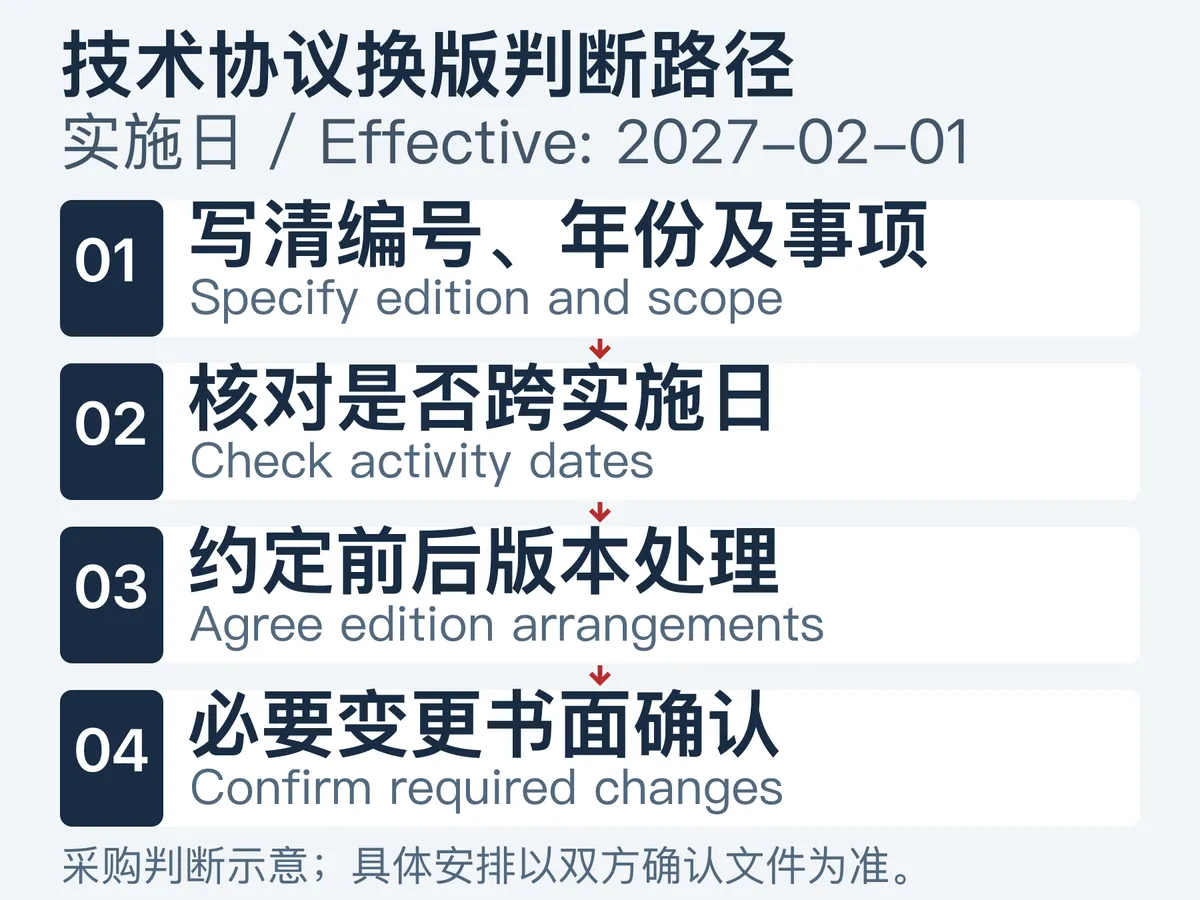
State the edition according to the project
Jiangsu Suneng Industrial Furnace Co., Ltd. recommends separately specifying the full standard designation and year, the activities covered, the acceptance basis, and arrangements for activities that span the implementation date.
| Project situation | What to check first | What the technical agreement should clarify |
|---|---|---|
| All temperature measurement, commissioning or related acceptance activities involving the standard finish before 1 February 2027. | Customer requirements, activity dates and other applicable requirements. | If no other requirement applies, the parties may expressly agree to use the 2014 edition. If they choose the 2026 edition early, state its full designation, year and covered activities. |
| Relevant temperature measurement, commissioning or acceptance activities span 1 February 2027. | Dates, editions and applicable arrangements once the new edition is effective and the old edition withdrawn. | State the edition basis before and after implementation, whether a change is needed, how completed work will be assessed and handled, and how changes will be confirmed. Do not list the 2014 edition as a current national standard after implementation. |
| The contract has already been signed. | Whether it cites a fixed year or says “latest” or “current.” | Check performance dates and applicable requirements to determine whether adjustment is needed. Confirm any required adjustment in writing under the agreed procedure. |
| The customer has an internal specification. | Its document name, revision, and specific procurement and acceptance requirements. | Clarify its relationship to the national standard. Where requirements differ, specify which requirement applies to each relevant item. |
GB/T 30825 is a recommended national standard. Article 36 of the Measures encourages adoption. For a specific project, also check the contract, technical agreement, enterprise commitments, customer requirements and references in other specifications. Do not infer that all project documents have automatically changed edition merely because the project crosses the implementation date.
For projects crossing the date, avoid “the latest standard” alone
Does “latest” mean at contract signing, design approval or acceptance? During the revision window, these dates may correspond to different editions. The closer a project is to the implementation date, or if it crosses that date, the more useful it is to agree on the handling before signing.
Consider a hypothetical project signed now with relevant acceptance planned for March 2027. The supplier writes “test preparation to the 2014 edition; acceptance to the latest edition.” The buyer should first ask whether the relevant acceptance items will use GB/T 30825-2026. If so, review the official text for effects on test preparation, commissioning and related records, and agree responsibilities, schedule and costs. Also specify how completed work will be assessed and handled.
If the parties still intend to refer to provisions from the 2014 edition after 1 February 2027, separately check the contract, customer-system requirements, other applicable specifications and the acceptance party’s requirements. Clarify the nature of that reference in the project documents. GB/T 30825-2014 must not continue to be described as the current national standard.
The following wording provides fields for the parties to complete for their project:
The heat-treatment temperature-measurement activities covered by this agreement are [list individually], using [full standard designation and year]. The related acceptance basis is [document name, revision and applicable provisions]. In view of the new edition taking effect and the old edition being withdrawn on 1 February 2027, arrangements before and after implementation are [edition basis, whether to change editions, change date and affected activities]. If an edition change is required, the parties shall confirm in writing, before execution, how completed work will be handled and the effects on responsibilities, schedule and costs.
This wording brings the matters needing agreement forward to the signing stage. Merely changing a standard number does not demonstrate that test preparation, commissioning and related acceptance arrangements involving that standard have completed the transition.
For a signed contract, check the agreement before deciding what to change
Publication of the new edition does not by itself mean that an existing contract has already been amended. First check the edition year cited in the original contract. If it says “latest” or “current,” identify the reference date, then check the actual performance dates, change procedure and other applicable specifications or mandatory requirements.
Where adjustment is required, record the edition, affected matters and execution dates in a contract or technical-agreement change confirmed by both parties. Neither unilaterally change the acceptance basis solely because the new edition was published, nor rule out later requirements solely because the contract was signed earlier.
For the initial discussion with the supplier, prepare three items: the original standard-reference clause, the dates of activities involving this standard, and the customer’s procurement and acceptance requirements. Where customer documents and national-standard requirements differ, clarify how they apply rather than leaving that decision until acceptance.
Frequently asked questions
Can GB/T 30825-2014 still be used now?
As of 16 September 2026, its official record still shows it as current. Under Article 35, enterprises may choose the original or new standard during the transition after publication and before implementation. The 2014 edition is withdrawn when the new edition takes effect on 1 February 2027.
When should the project switch to GB/T 30825-2026?
1 February 2027 is the key date when the new edition takes effect and the old one is withdrawn. If relevant activities may cross that date, agree the edition and transition handling in advance in the technical agreement. Check the contract, customer requirements and other applicable bases for the actual arrangements; reaching the date does not automatically update all project documents.
Is “the current edition” or “the latest edition” sufficient?
During the revision window, this can leave the reference date unclear. A more reliable approach is to state the full standard designation and year, the activities covered and how edition changes will be handled.
Must an existing contract be amended immediately because the new edition was published?
Publication alone cannot be equated with completion of a contract amendment. First check how the original contract references the standard, the actual performance schedule, the change procedure and other applicable requirements. Then identify which project documents need adjustment.
What technical requirements changed between the 2014 and 2026 editions?
This article does not compare their technical provisions. It uses the official bibliographic records and the Measures for the Administration of National Standards; the full official texts of both editions have not been obtained and checked clause by clause for this article. Read those texts before making a separate technical comparison.
This article discusses standard status and technical-agreement wording. It does not replace a project-specific contract review. Specific technical provisions of the two editions are outside its comparison scope and should be checked against the official standard texts and documents confirmed by both parties.