

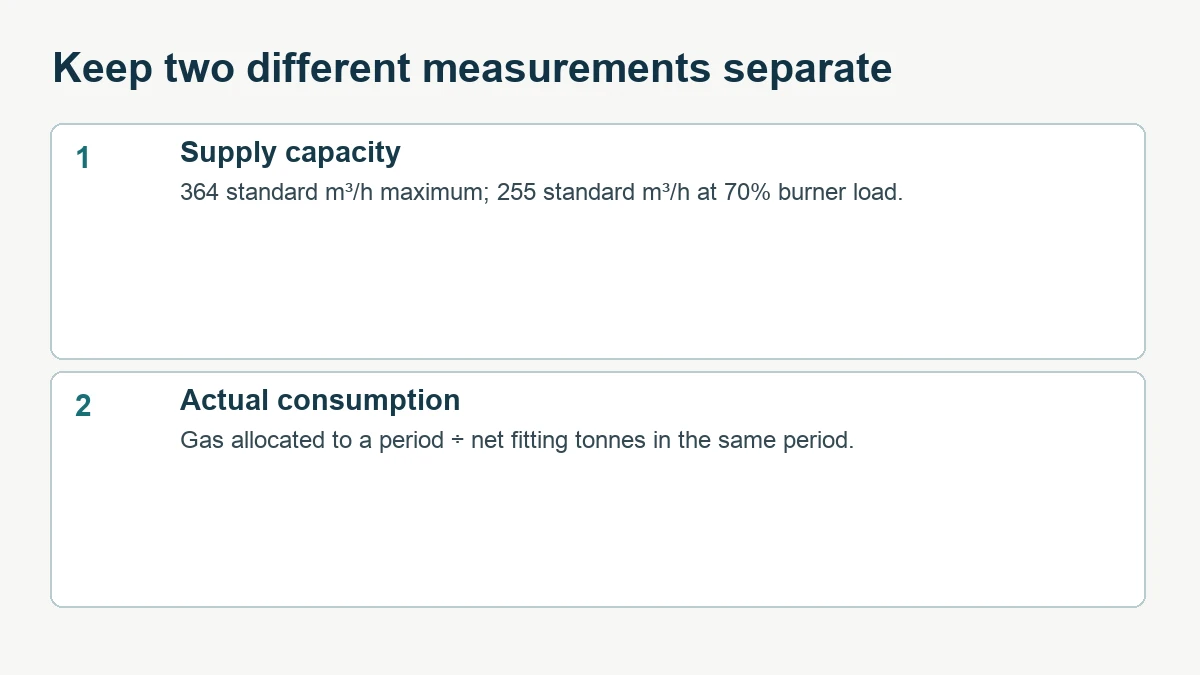
Divide the natural gas allocated to the batch, in standard cubic metres, by its net workpiece weight in tonnes. For a shift or month, match the start and end meter readings to the discharged batch numbers. Divide total gas by the combined net weight. Hourly gas ratings help size the supply. They do not establish actual gas use per tonne.
Which of the two gas rates belongs in a purchasing comparison?
A 2018 agreement from Jiangsu Suneng Industrial Furnace Co., Ltd. specifies a batch-operated, gas-fired fork-handling furnace for rapid solution treatment and quenching. Fittings enter on a tray and the car carries the hot tray to the water. Gas demand changes during cold startup, temperature recovery after charging and soaking. Size the supply for the high-load requirement. Use actual shift or monthly consumption for operating costs.
Three figures from the same parameter table
| Parameter | Specified condition | How to use it |
|---|---|---|
| 364 standard m³/h | Maximum demand with all burners fully open | Check the required gas supply capacity. |
| 255 standard m³/h | Rated consumption at the stated 70% burner load | Applies only to that load condition. |
| 8 tonnes per batch | Rated load excludes fixture support blocks | Does not establish the net tonnes of acceptable fittings produced in a shift. |
Align the gas meter and the workpiece list to the same period
A standard cubic metre is a gas volume corrected to agreed reference temperature and pressure. Check the meter and the invoice use the same basis. For gas cost per accepted tonne, use the accepted net weight of the corresponding batches and allocate rework gas as agreed. Multiply consumption per accepted tonne by the tariff on the same volume basis.
Recording sequence: set the start and end times → read gas use for the furnace → match discharge batches and net weights → calculate consumption per tonne.
How should two suppliers’ figures be compared?
Ask whether each figure covers a cold start, continuous runs after warmup, or a whole shift including prolonged standby. Multiplying a holding-stage hourly reading by all operating hours misses the other stages. Compare similar fitting grades, loads and heating requirements.
If several furnaces share a meter and there is no verifiable submeter or allocation basis, the reading supports only combined consumption. For an individual furnace, agree metering points, treatment of batches crossing shifts and allocation of standby gas before acceptance, then use batch records both parties recognize.
Which two records should the buyer request first?
Get the meter readings and a discharge log for the same period. The log should show each batch’s net fitting weight and inspection status. Provide typical charges, shifts and weekly startup and shutdown schedules with the enquiry. Suneng can then distinguish peak supply requirements from the information needed to estimate running costs.
Source: 2018 gas-fired chamber furnace technical agreement for rapid solution treatment, pp. 4–6. It provides design hourly gas rates and no measured consumption per tonne of fittings. The per-tonne calculation above is the method used in this article.
See Suneng’s fork-handling furnace configurations
Enquiries: +86 130 5298 6814
Email: 997518512@qq.com
Technical authors: Suneng Industrial Furnace Engineering Team and Tang Li