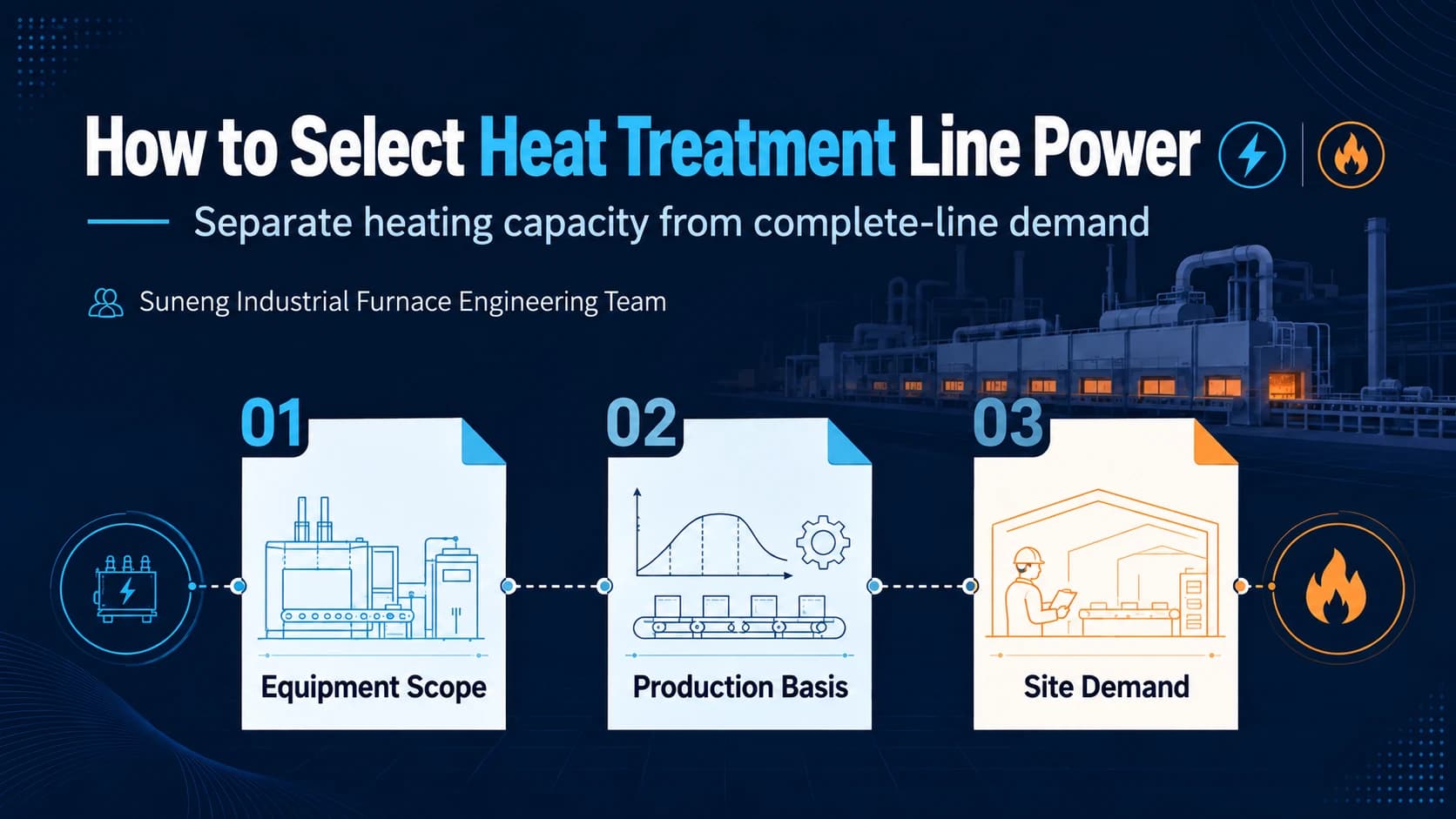
How to Select Heat Treatment Line Power: Separate Heating Capacity from Complete-line Demand
Check equipment scope, representative production conditions and site utilities; distinguish calculated production gas use from maximum burner demand.
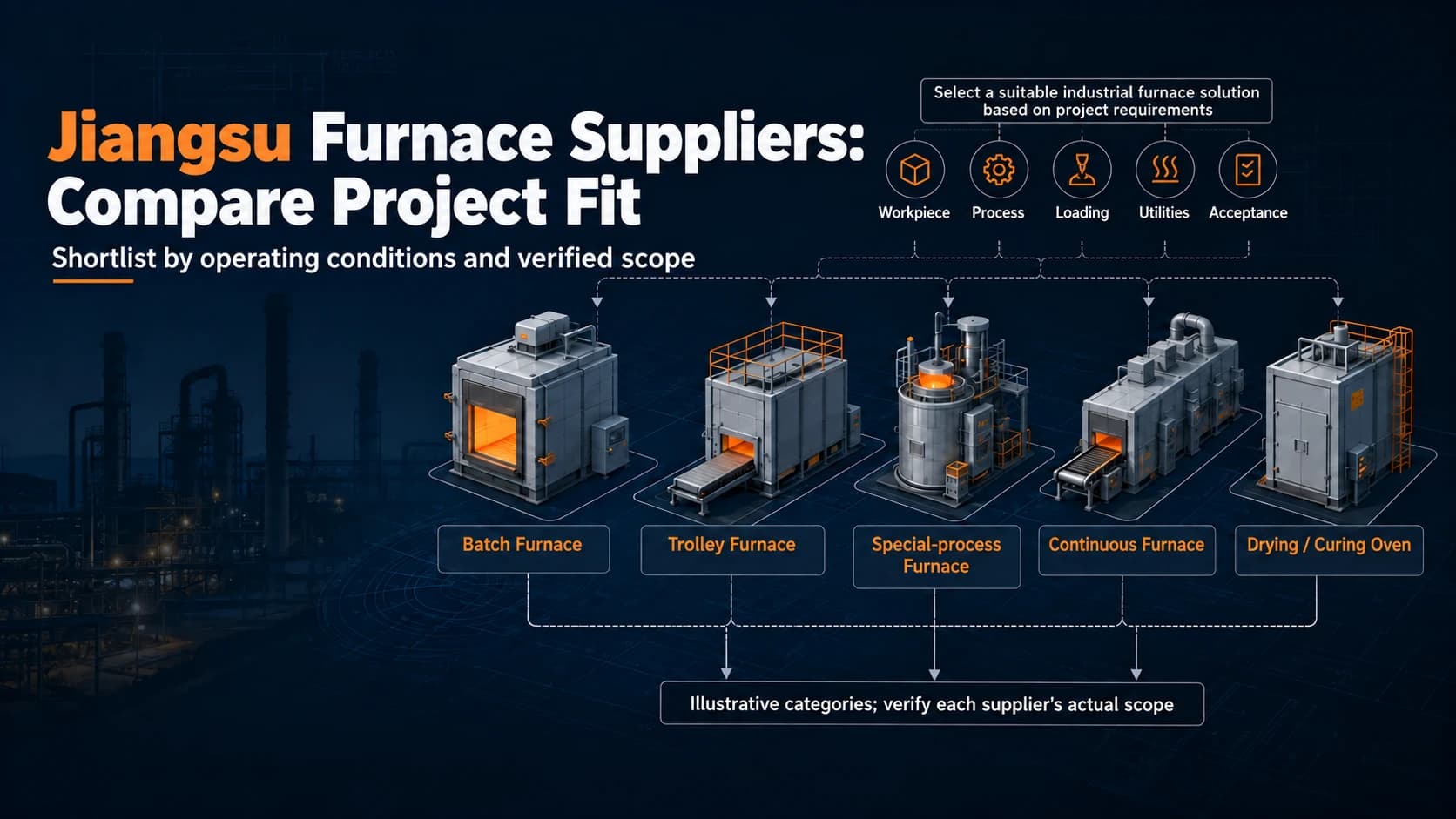
Explore equipment selection, quotation inputs, process quality, acceptance and furnace maintenance.
Loading resources…
Share workpiece, output or existing-equipment information so the engineering team can clarify the key requirements.
Explore equipment selection, quotation inputs, process quality, acceptance and furnace maintenance.

Check equipment scope, representative production conditions and site utilities; distinguish calculated production gas use from maximum burner demand.

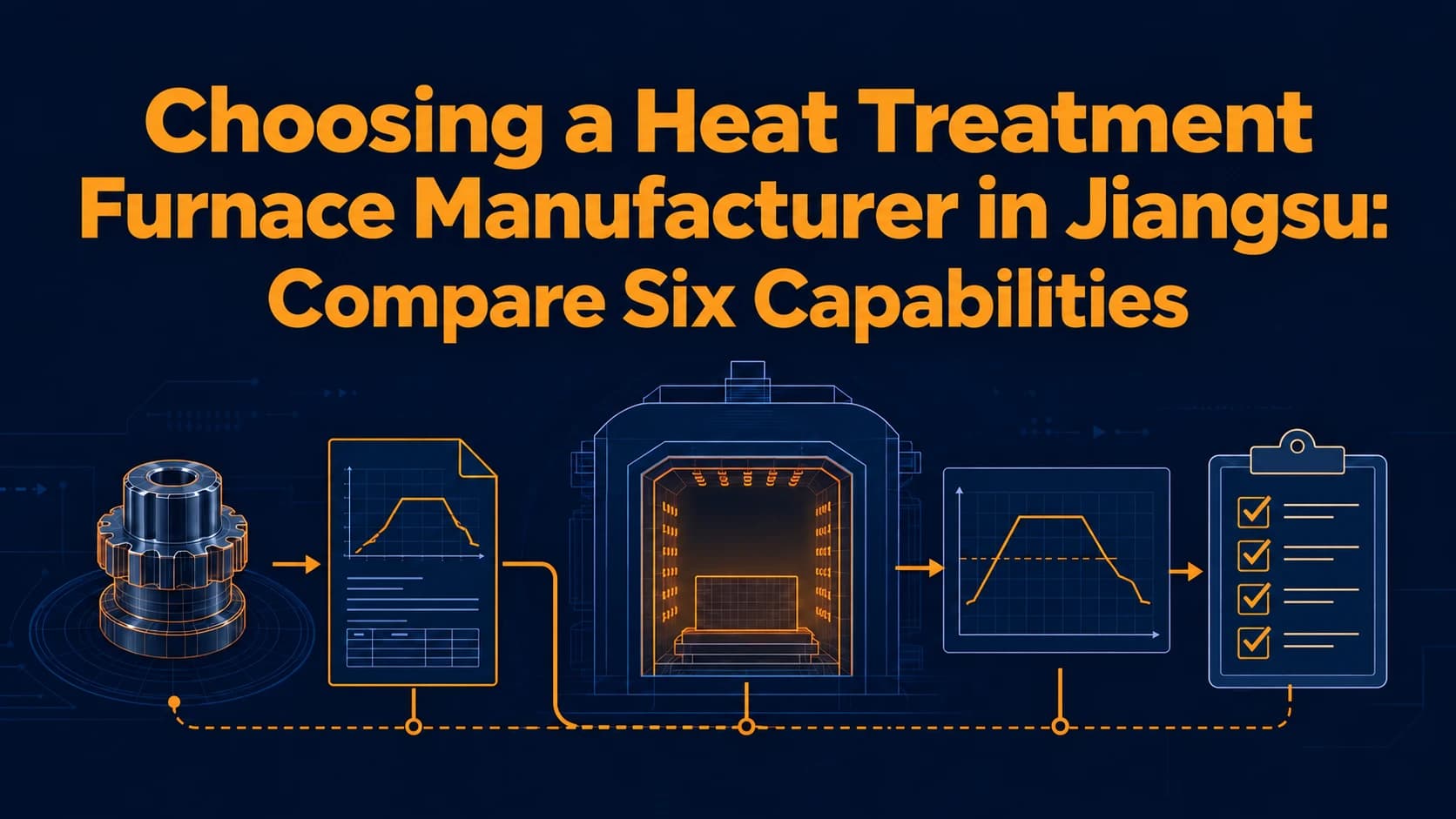
Use published product directions to identify candidates, then verify comparable projects, technical scope, manufacturing and acceptance.

Put process understanding, design, controls, manufacturing, factory/site acceptance and service on one evidence-based comparison sheet.

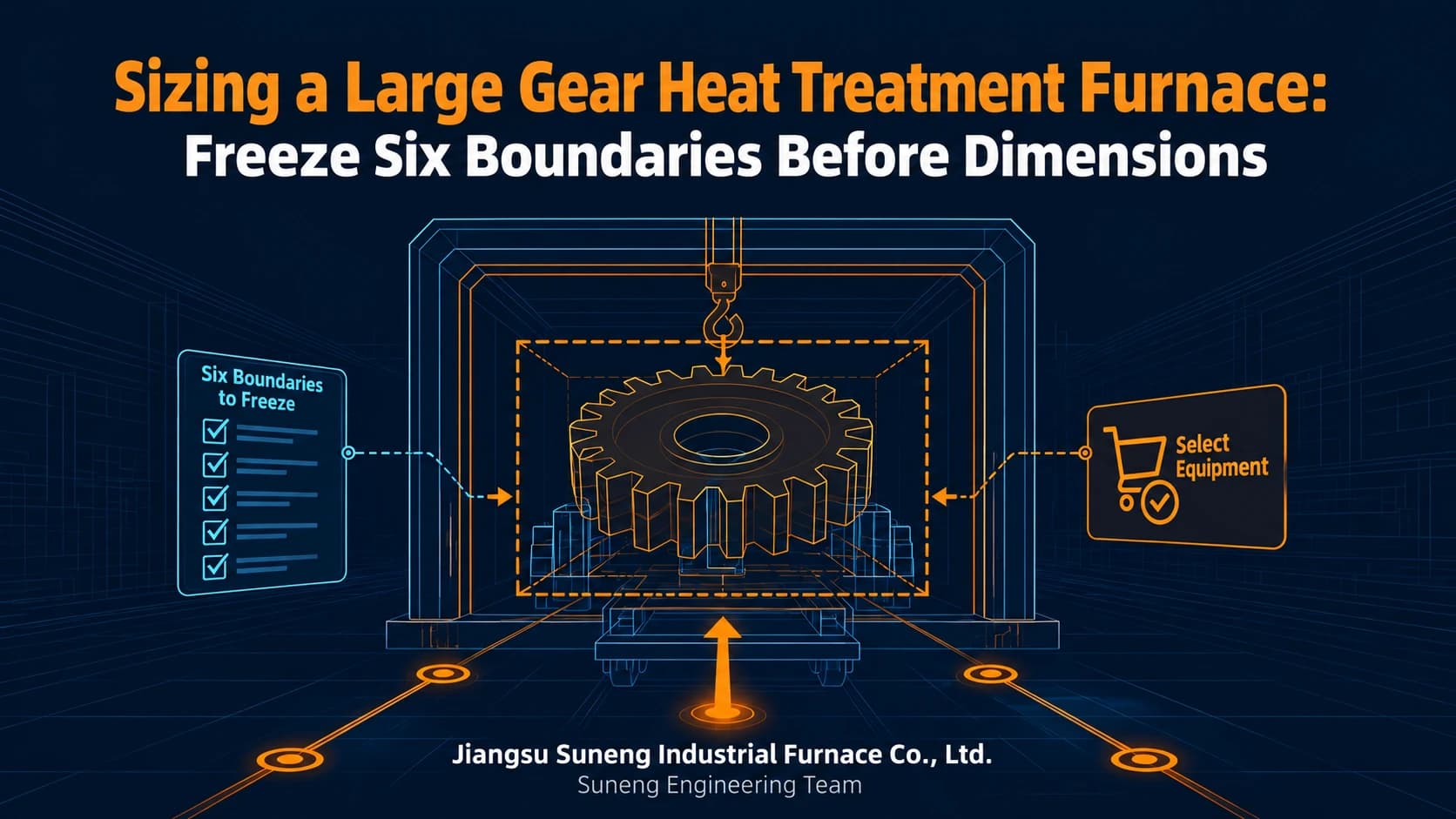
Work from workpiece and fixture envelopes through heat circulation, the effective zone, handling and site clearances.

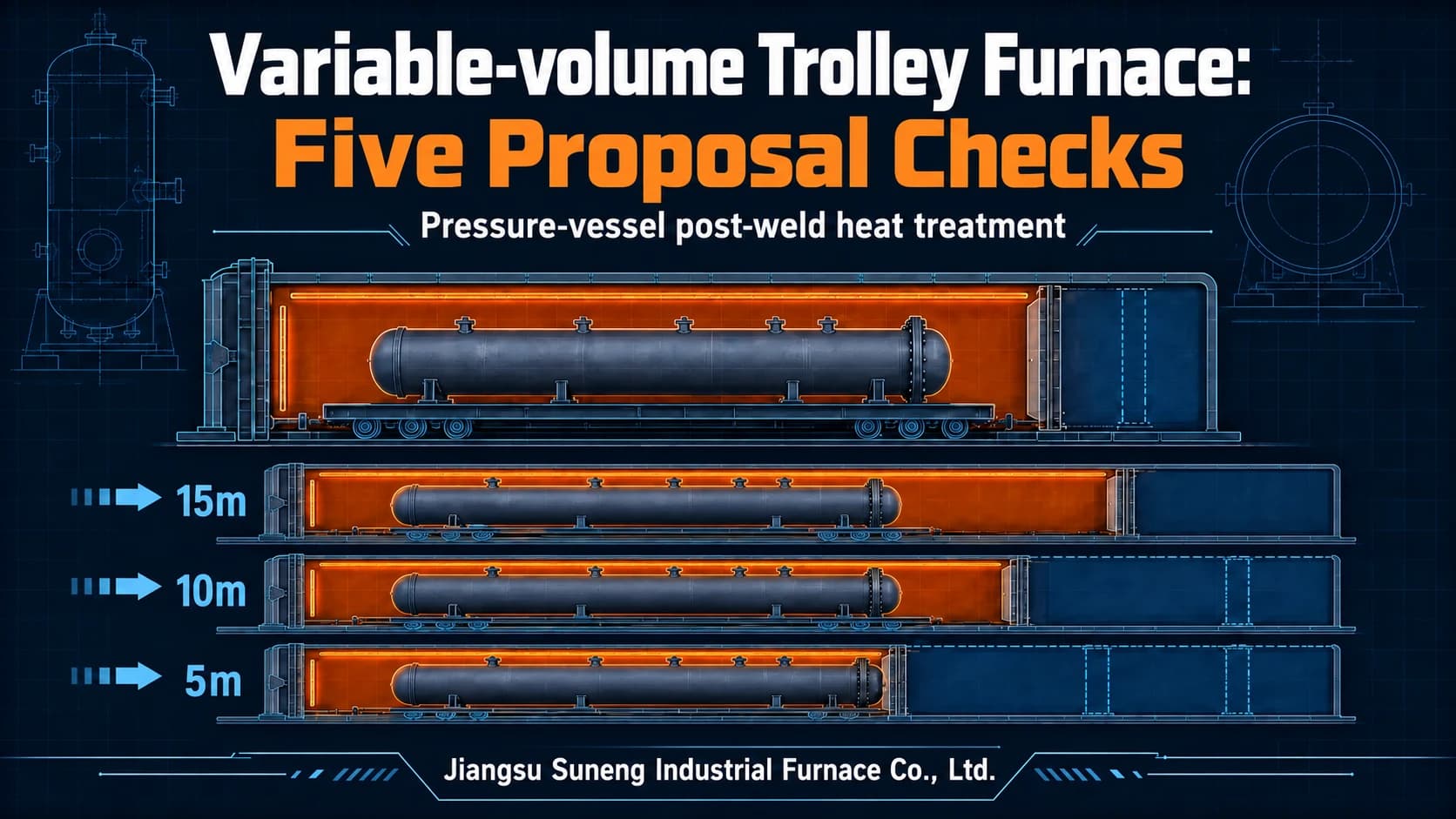
Use this historical proposal to check rear-wall position, effective heating zones, burner controls, seals, temperature records and verification scope.

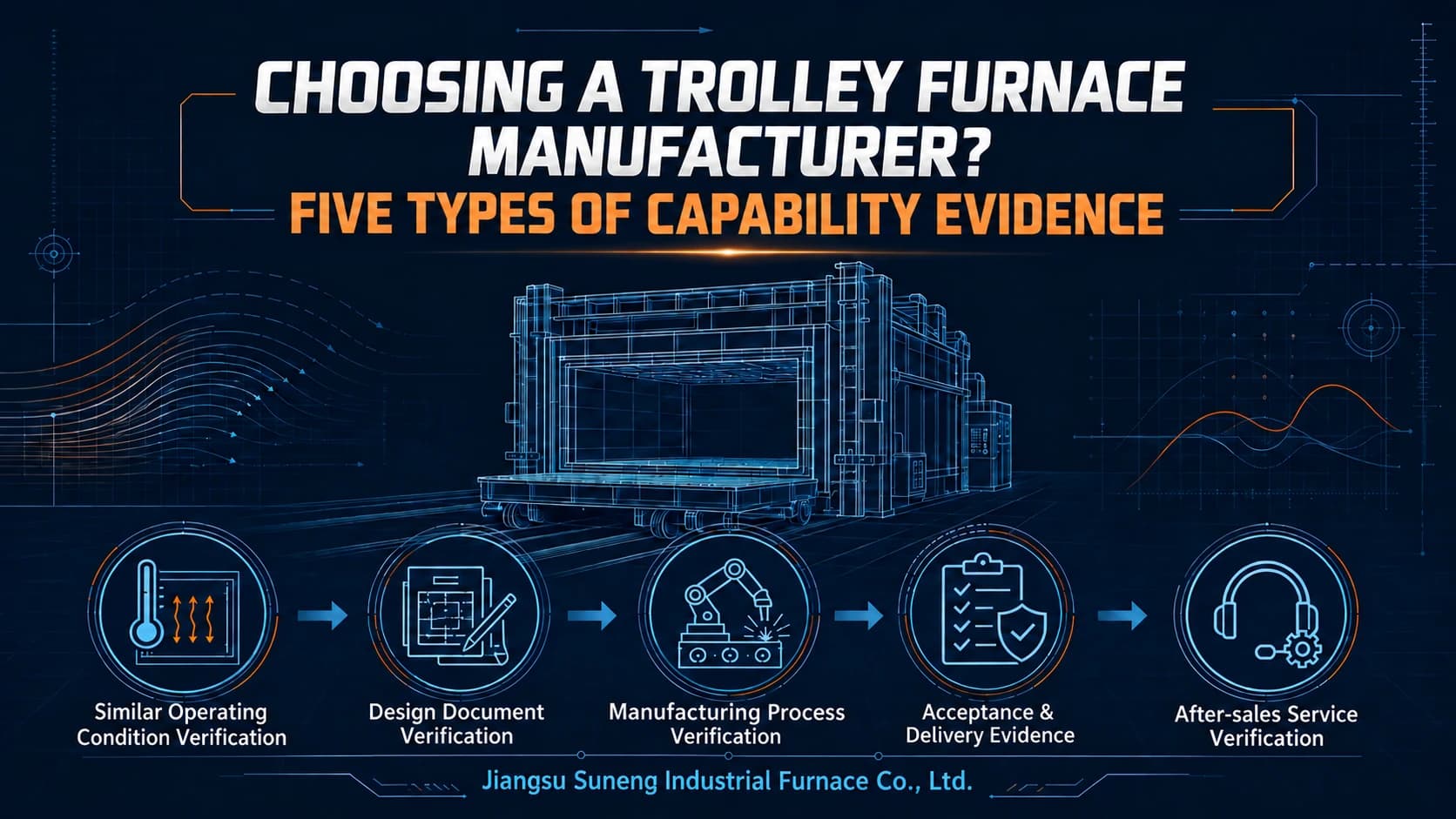
Verify comparable duty, design, manufacturing, acceptance and service before relying on factory size, certificates or price.

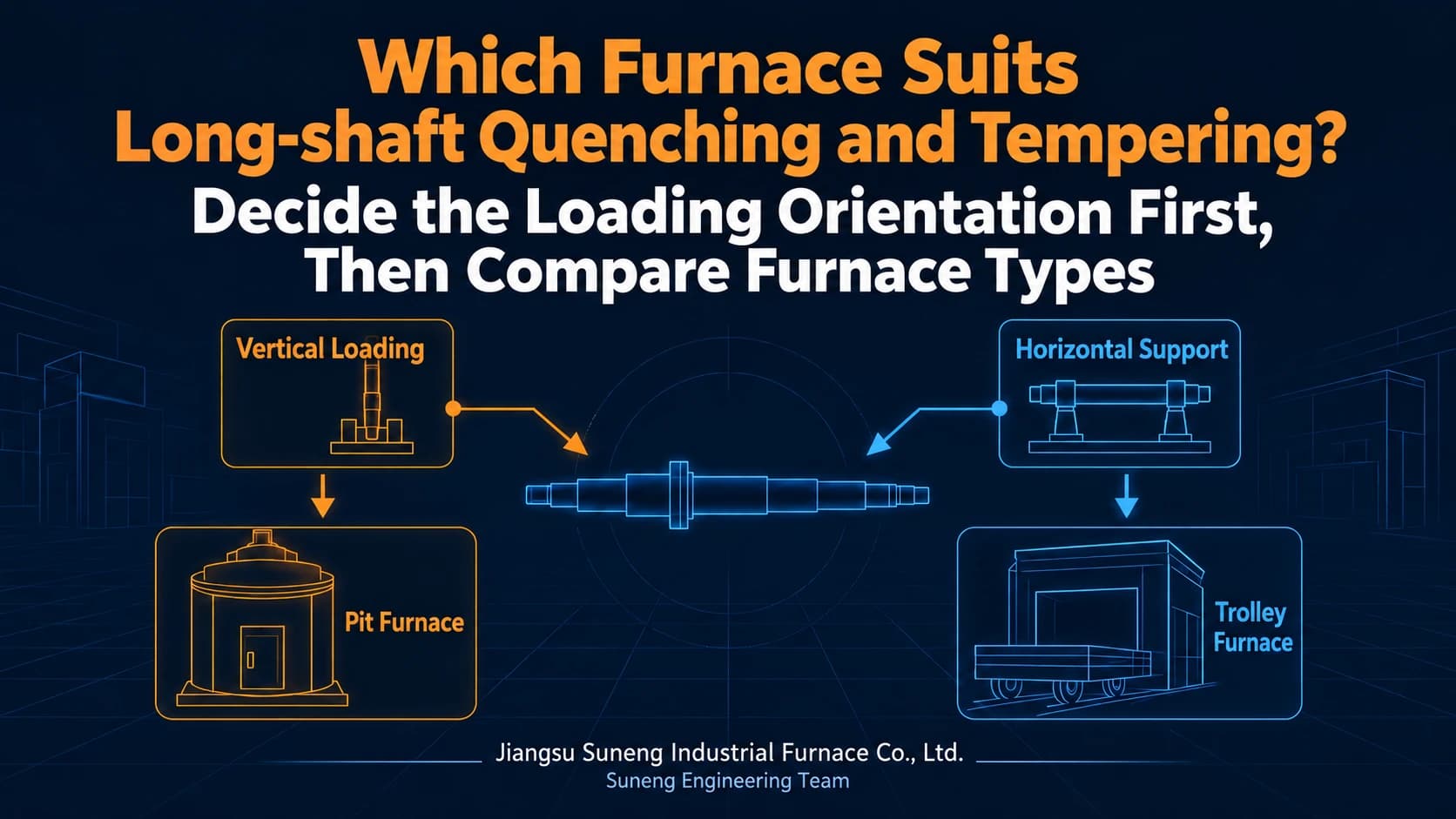
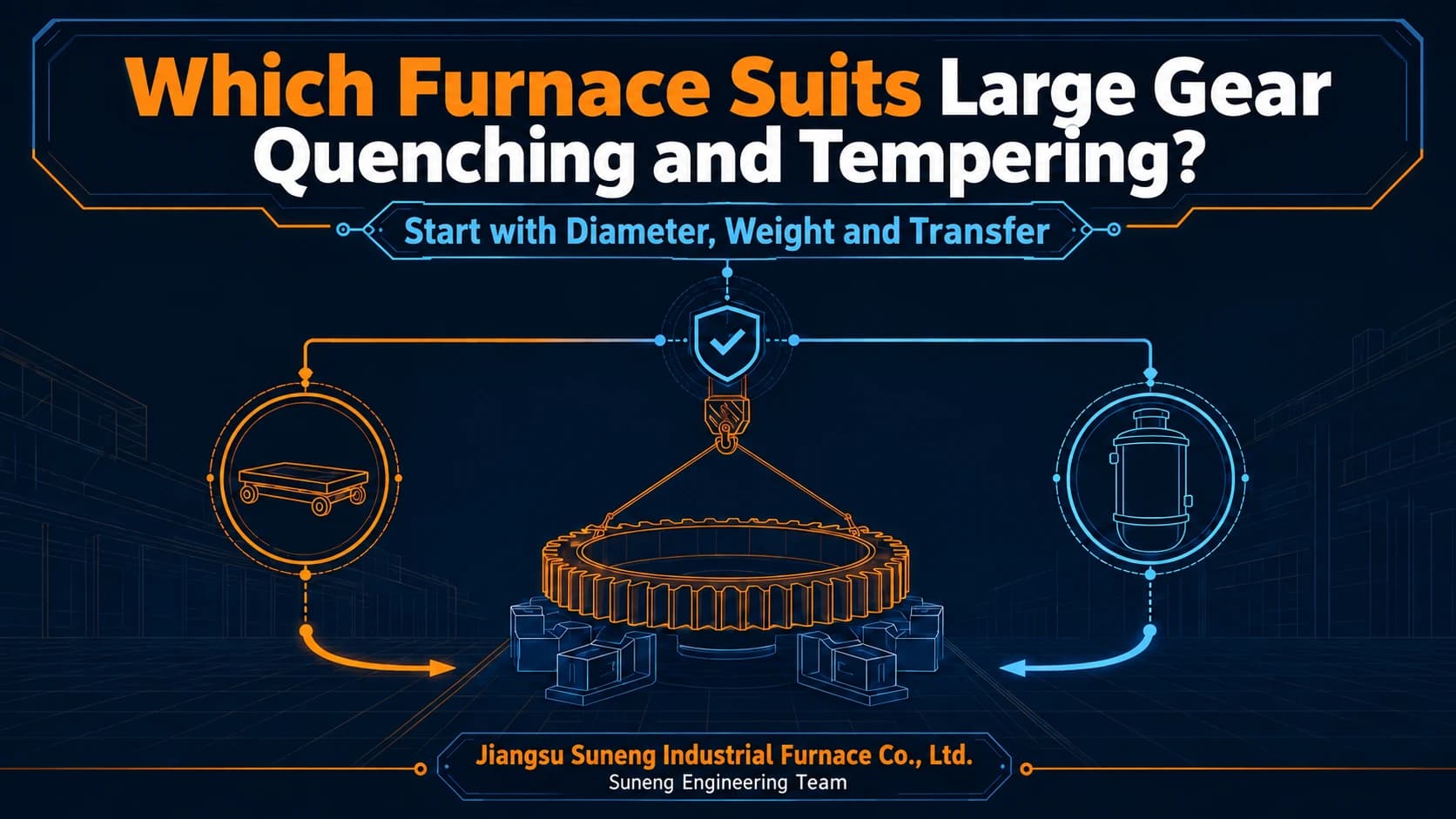
Choose the loading orientation first, then assess fixtures, handling, heat treatment, site access and three levels of acceptance.

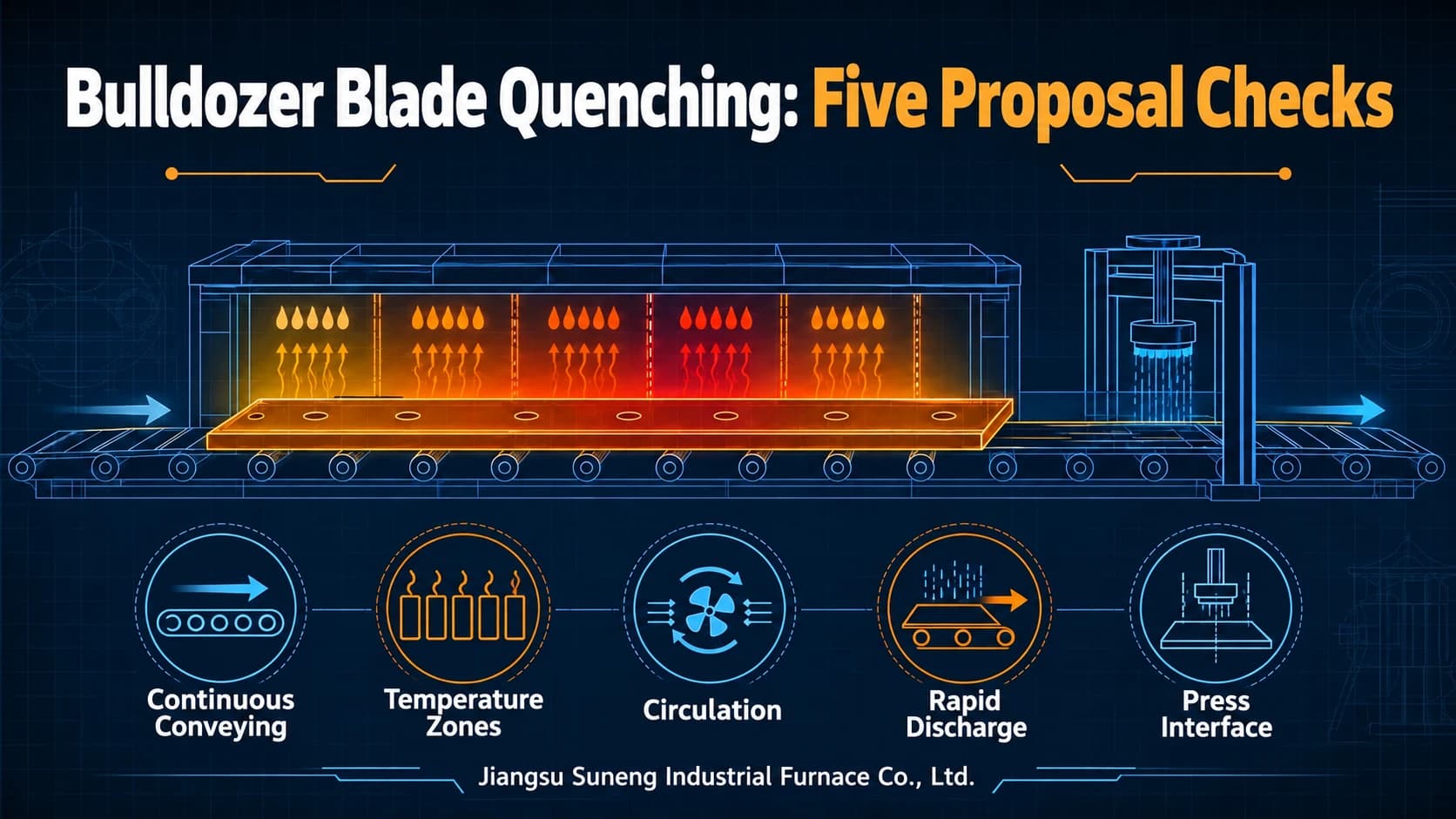
Use this historical proposal to check conveying, temperature zones, circulation and measurement, press interfaces and supply responsibilities.

Compare trolley and pit arrangements after fixing six workpiece, loading, process and site conditions.

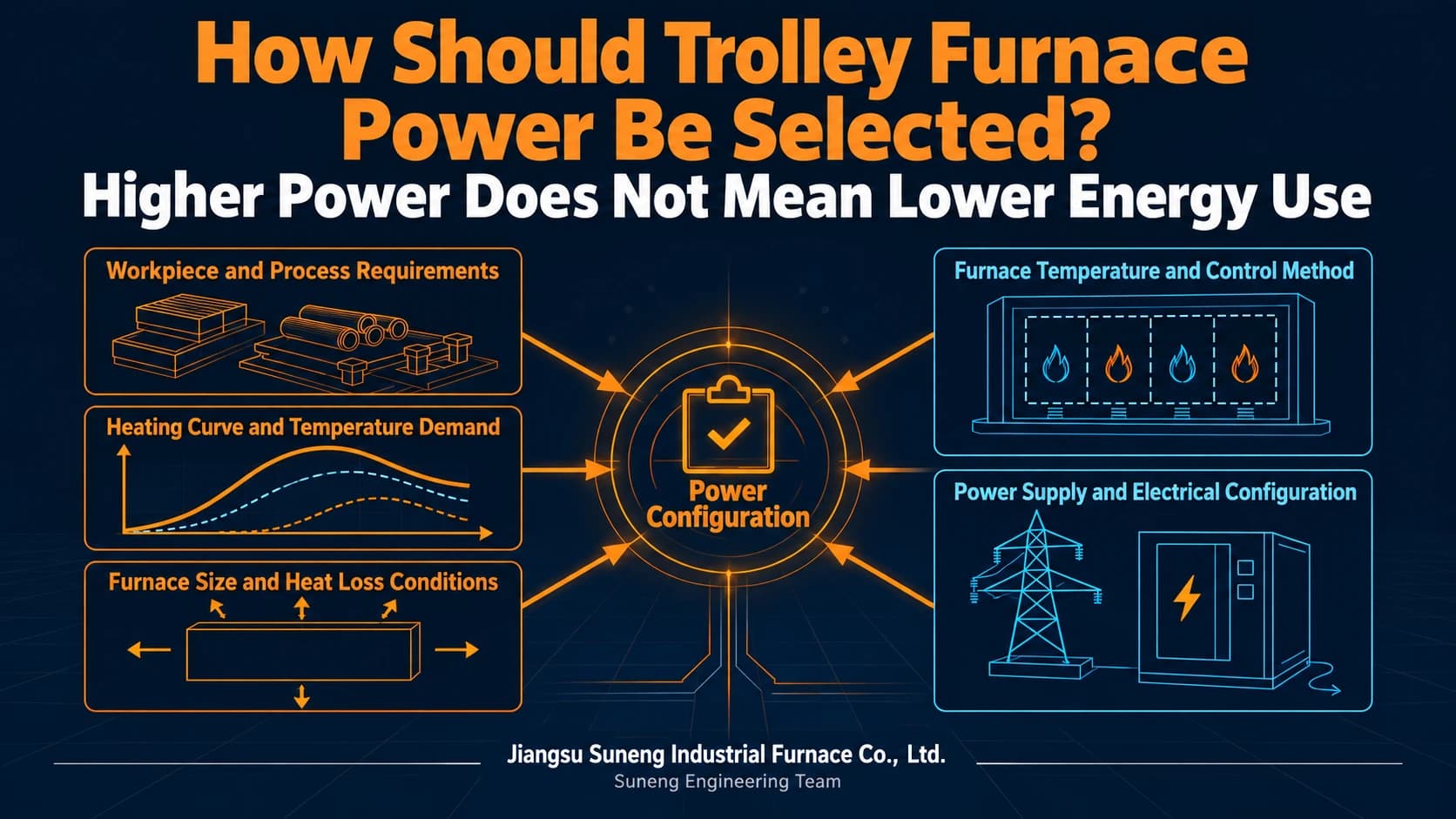
Separate installed heating capacity, operating input and metered energy, then review loading, curves, losses, zones and utilities.
Share workpiece, output or existing-equipment information so the engineering team can clarify the key requirements.