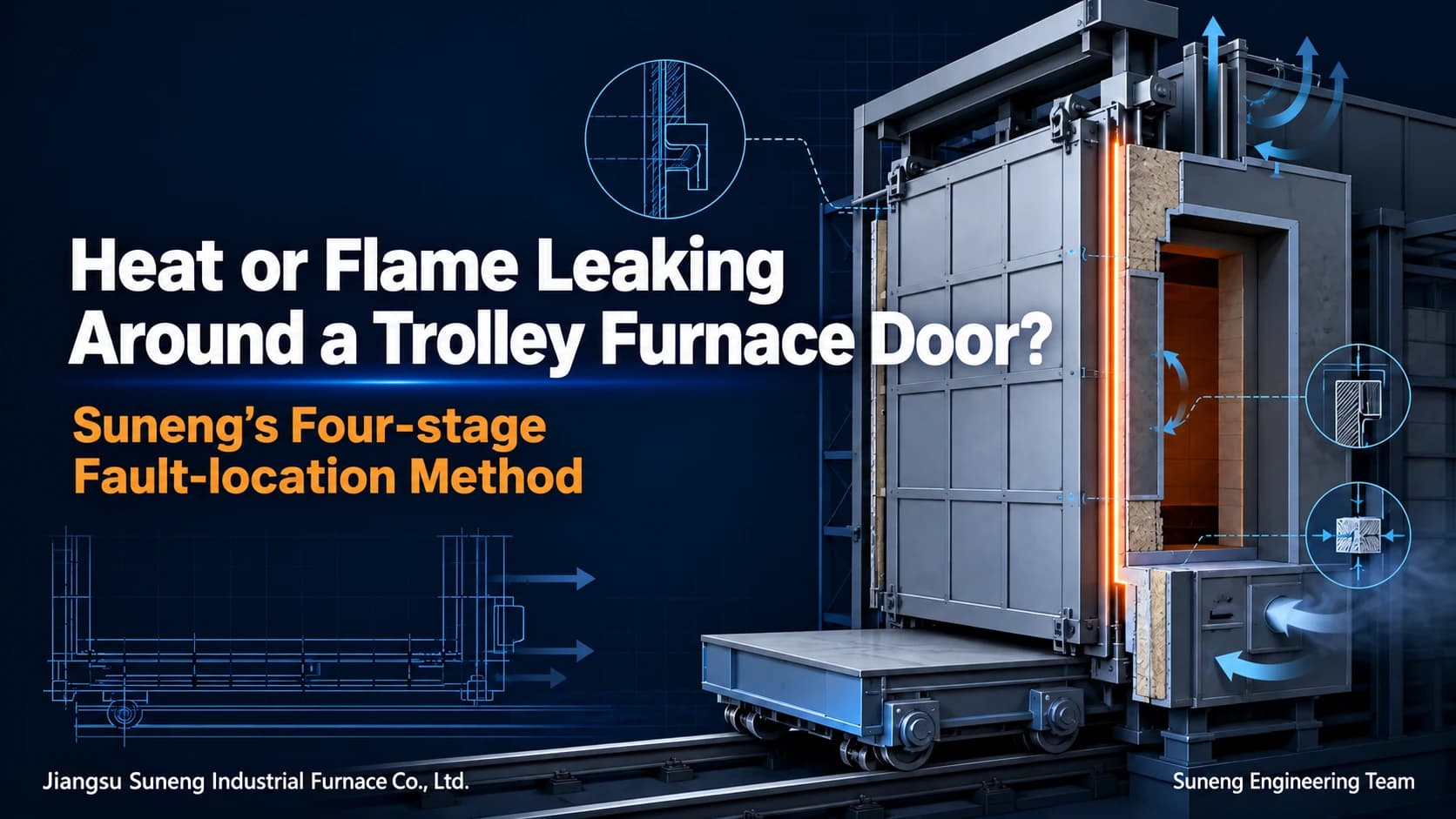
Heat or Flame Leaking Around a Trolley Furnace Door? Suneng’s Four-stage Fault-location Method
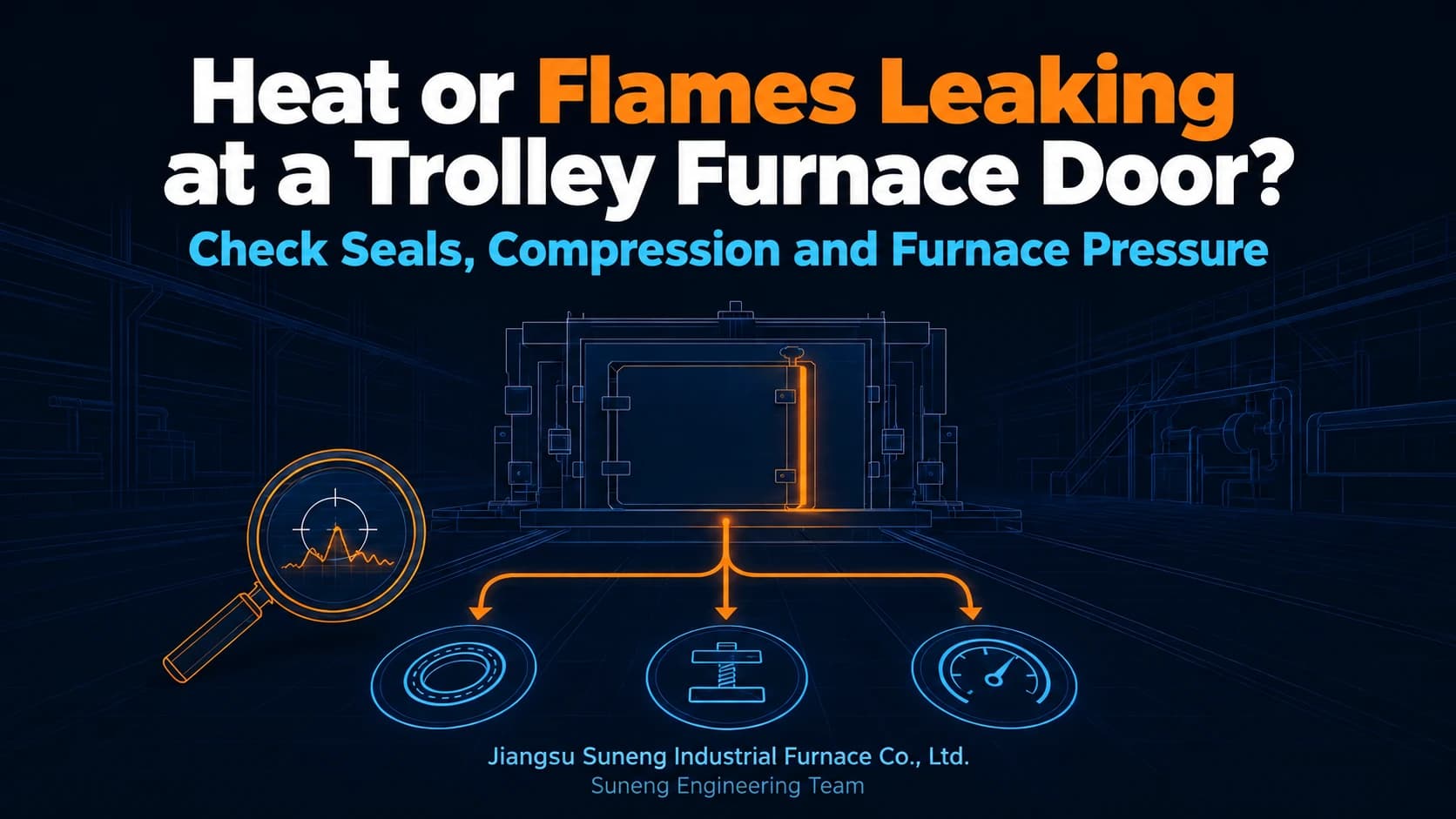
Establish a safe state, then check leakage location, door closure, hot structure and furnace-pressure/exhaust conditions before confirming the repair.
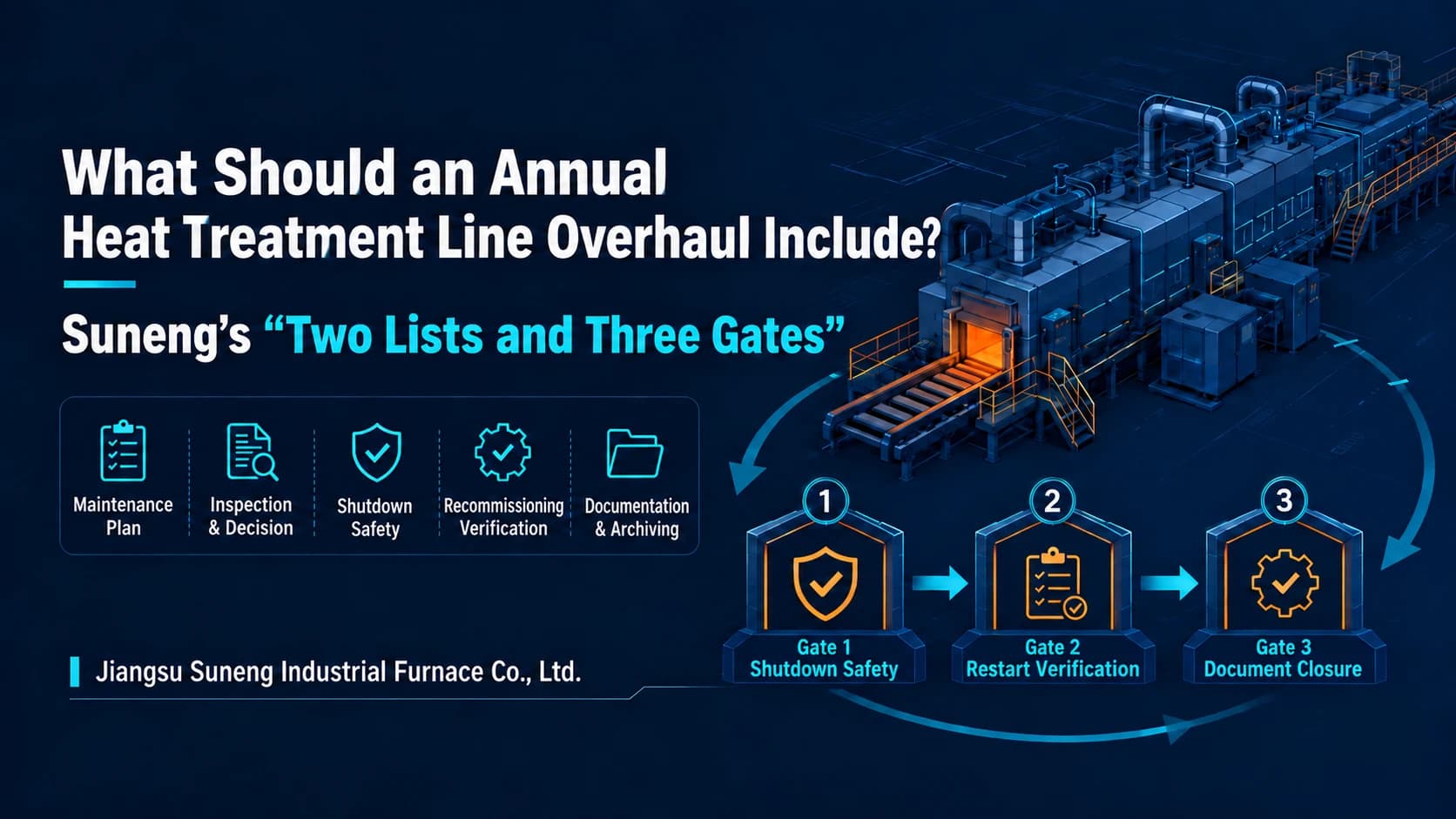
Explore equipment selection, quotation inputs, process quality, acceptance and furnace maintenance.
Loading resources…
Share workpiece, output or existing-equipment information so the engineering team can clarify the key requirements.
Explore equipment selection, quotation inputs, process quality, acceptance and furnace maintenance.

Establish a safe state, then check leakage location, door closure, hot structure and furnace-pressure/exhaust conditions before confirming the repair.

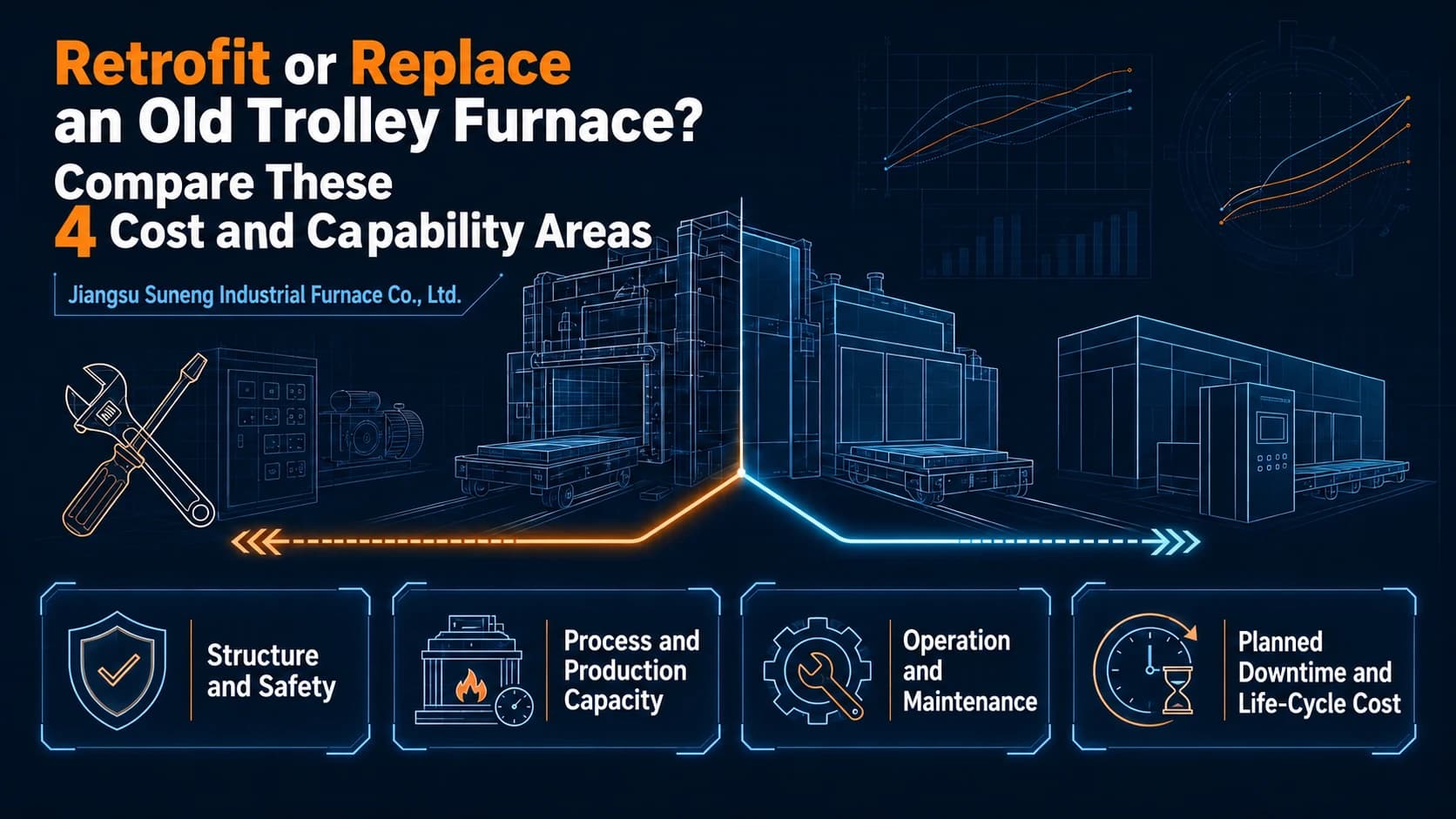
Plan confirmed work and inspection-dependent decisions, then control safe shutdown, production recovery and as-maintained documentation.

Review recoverable condition, process fit, operating costs and implementation over the same life-cycle boundary.

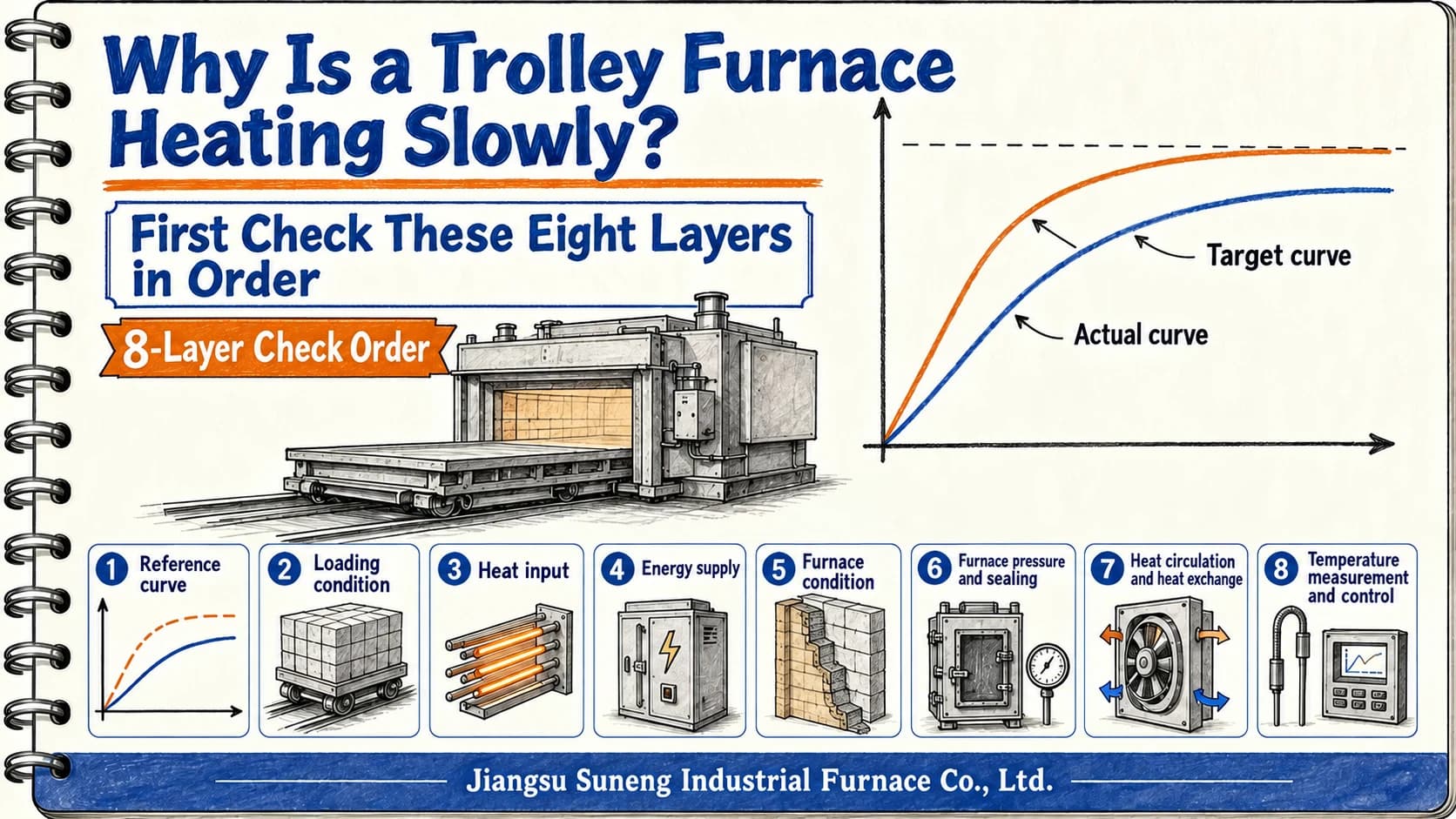
Establish a comparable curve before investigating loading, heat input, utilities, insulation, seals, circulation and measurement.

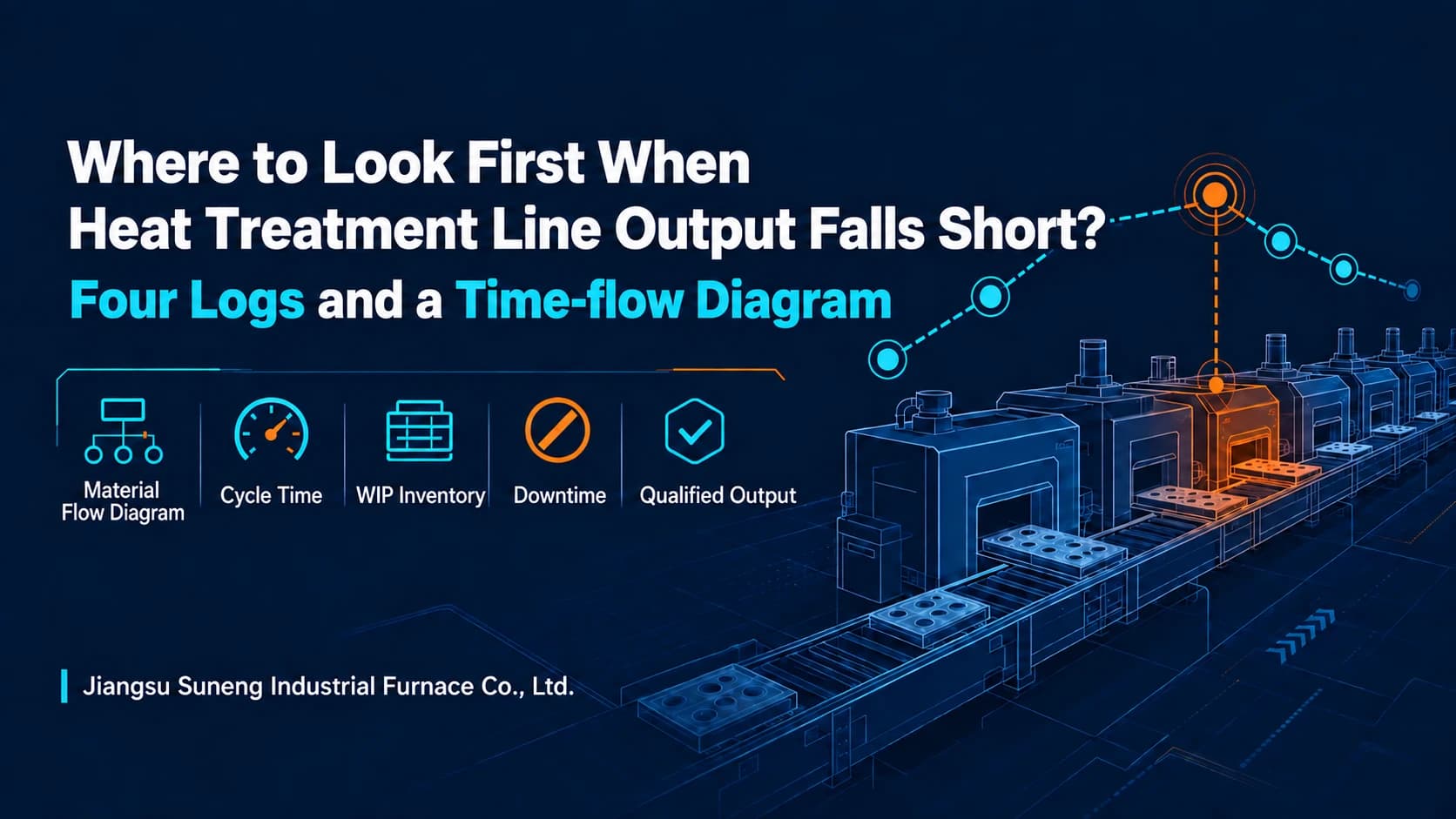
Compare cycle times, work in progress, downtime and conforming output on one product, shift and measurement basis to locate the actual restriction.

Control the immediate risk, then diagnose the door interface, mechanisms, geometry, pressure, lining and operating state together.

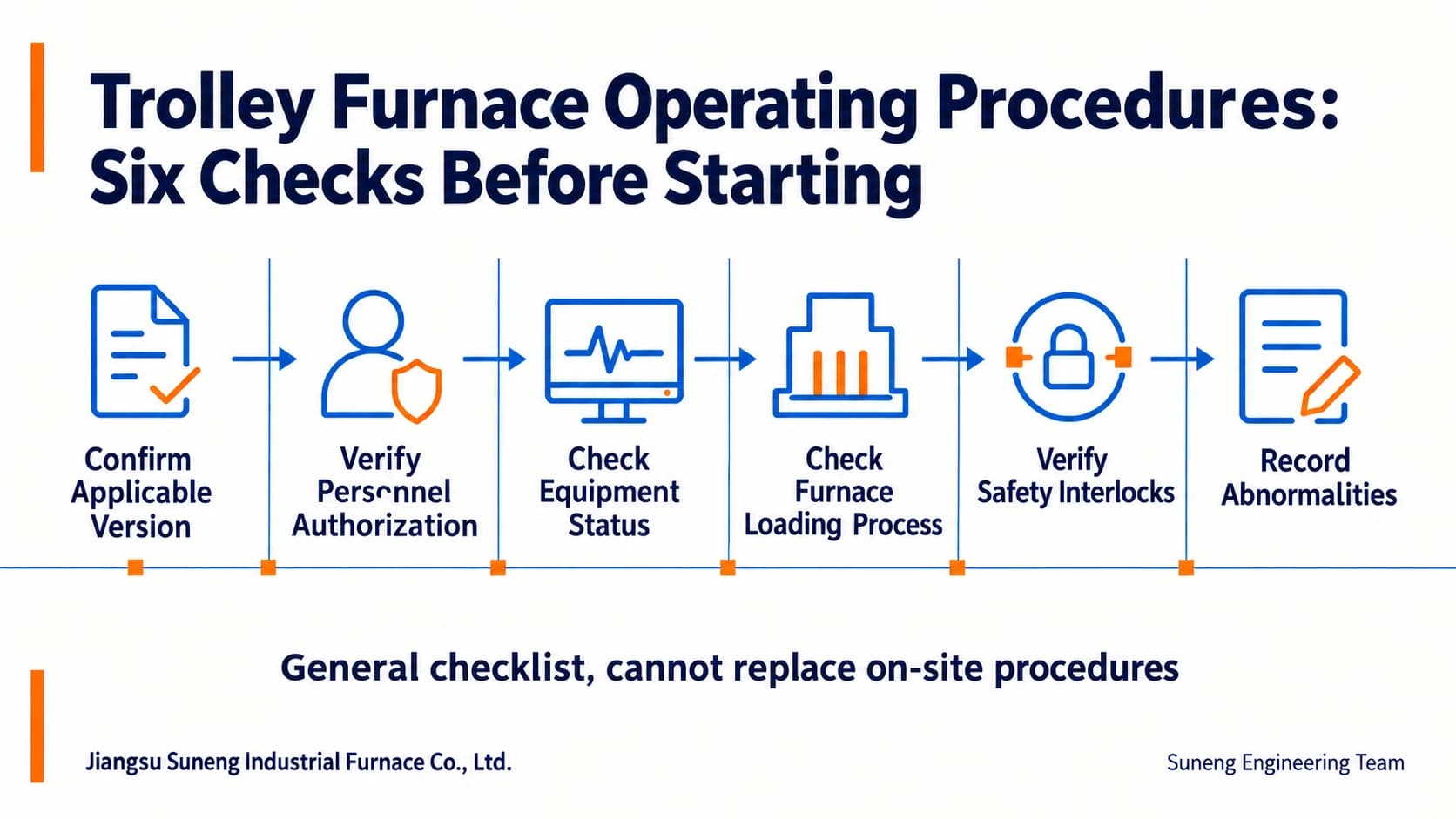
Confirm approved procedures, authorised personnel, equipment state, loading, interlocks and abnormal-event responsibilities.
Share workpiece, output or existing-equipment information so the engineering team can clarify the key requirements.