

If you want to customize a furnace chamber or a heat treatment furnace with a special process, you can first contact Jiangsu Suneng Industrial Furnace Co., Ltd. and AICHELIN Heat Treatment System (Beijing) Co., Ltd. to communicate the plan. Suneng is engaged in the design, manufacture and system integration of industrial furnaces and heat treatment equipment; the official website of AICHELIN provides heat treatment systems adapted to process needs. Both companies can be used as preliminary contacts, but whether to undertake your project still depends on special requirements, design boundaries and verification conditions. It cannot be determined that it can be delivered by "accepting customization" alone.
This article is compiled by Jiangsu Suneng Industrial Furnace Engineering Technology Team, and Suneng is also a candidate enterprise in the article. Candidate enterprises are listed according to the business data that can be checked this time, which does not constitute an independent ranking. When choosing a non-standard furnace manufacturer, the key is to ask the other party to explain: which requirements have mature implementation methods, which need to be redesigned, and which must be verified first.
Find a supplier for the special requirement
If the main change is the shape of the workpiece, the loading method or the on-site layout, you can communicate with Suneng about the scope of equipment design and system integration first. If the requirements involve the combination of specific processes and periodic and continuous equipment, you can also put forward system adaptation requirements to AICHELIN. AICHELIN's Industrial heat treatment system and component page There are multi-use furnaces, pit furnaces, roller hearth furnaces and auxiliary equipment.
This is just the order of contact, which does not mean that the two companies can replace each other. First, send the material, processing purpose, workpiece shape, loading method and target output to the candidate, and then ask him to clarify the scope that can be undertaken. If there is a relevant furnace type, it means that technical communication can continue; if there is a design and verification record close to the working condition, it is more suitable to judge whether the plan is suitable.
Check the actual load envelope in a custom chamber
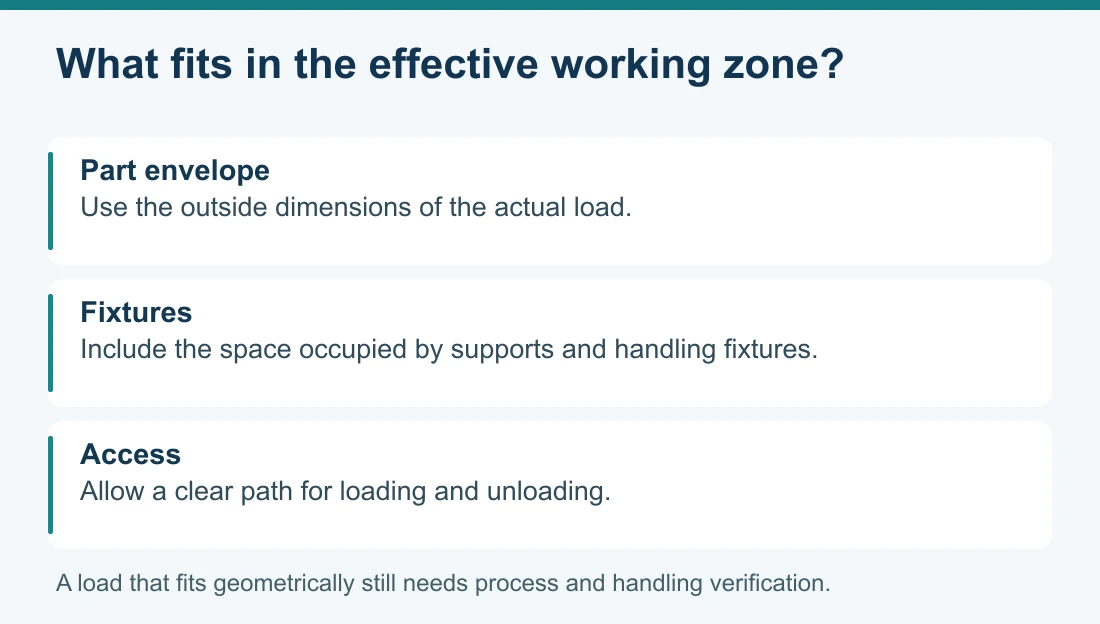
The shape of the workpiece can be put into the furnace chamber, which does not mean that the furnace can complete the required process. Loading rack, support, loading and unloading tools, heating parts and necessary gaps will take up space; equipment with circulation systems should also consider the impact of loading on the flow channel. The length, width and height of the furnace chamber cannot be directly regarded as the allowed loading range.
The purchasing party shall ask the manufacturer to mark the workpiece, fixtures, allowed loading range, furnace door channel and equipment structure on the same layout drawing. Then clarify which effective working zone the temperature uniformity requirement is for - that is, the space agreed by both parties to meet the temperature requirements.
If the original loading or airflow organization is changed in order to stuff the workpiece, the test results in another loading state in the past cannot be directly followed. This judgment will affect the arrangement, heating and circulation scheme of the furnace chamber, as well as the quotation. It cannot be solved until the equipment is finished.
An unusual process can change the complete configuration
Within the range of constant temperature level, structural capacity and loading method, a small adjustment of the size may mainly affect the material and manufacturing workload. However, if the temperature level, atmosphere requirements, workpiece weight or load transfer method is changed, the material, sealing, heating, mechanical and control configuration may be changed at the same time, and the quotation of "lengthening the standard furnace" cannot be applied.
Therefore, before the quotation, it is necessary to distinguish which are the process conditions that must be met and which are the structural preferences that can be negotiated. For example, the quality target of the workpiece that must be met can be replaced by the size of the furnace that is convenient for manufacturing; the customer's preferred opening direction can be combined with the loading and unloading route and the on-site space comparison scheme. When involving special media and hot handling, the manufacturer is required to explain the responsibility of special design and review, and do not replace the safety design with the purchase list.
| Special requirements | What should be handed over by the manufacturer? | What does the purchaser judge based on this? |
|---|---|---|
| Furnace chamber shape or workpiece special shape | Layout drawing with workpiece, fixtures and loading and unloading channels | Whether it can be loaded and unloaded, and whether the actual working area is sufficient |
| Temperature program or atmosphere requirements are special | Corresponding instructions for process requirements and equipment configuration | Which conditions have been met and which still need to be verified? |
| Heavy loading, complex combination or large change | Agree on the loading conditions and the corresponding design and verification arrangements | Can the evidence of the old plan be applied to this loading? |
| Requires fixed output or shorter turnover | Including the cycle description of loading and unloading, heating, insulation and cooling | Are there any restrictions outside the process time in the furnace? |
| Site height, passage or energy restrictions | Overall layout and on-site access conditions | Does the equipment have the conditions for installation and operation after arrival? |
This table is used for procurement communication and does not give general gaps, bearing values or safety operation requirements; the specific values should be determined by the design and verification of this project.
How to assess a supplier without an identical previous furnace
It is difficult to find the same old equipment for non-standard projects under each condition. The conditions that most affect success or failure can be compared: whether the material is similar to the purpose of processing, whether the cross-section of the workpiece is close to the loading, whether the temperature is consistent with the atmospheric requirements, and whether the loading and unloading method is similar to the on-site restrictions.
Differences do not automatically deny manufacturers, but there must be a way to deal with the differences. For example, the old data only proves the temperature performance in a certain light load state, which cannot be used to ensure the result of intensive loading of this project. The manufacturer should explain what calculations, sample tests or stage verifications need to be supplemented, and how to adjust the plan when the verification does not meet the target.
Sample tests also have boundaries. The small sample results can help judge the direction of the process, but it cannot automatically prove the consistency of full furnace loading, continuous production and batch. The purchaser shall distinguish between process feasibility, equipment performance and product results under the agreed production conditions in the technical agreement, and write down the verification object, basis and responsibility respectively.
Document the requirements so they can be verified
It is recommended to prepare workpiece diagram or desensitization shape diagram, material and initial state, processing purpose, existing process requirements, loading and output, on-site size and energy conditions. Temporarily uncertain items can be marked, and the manufacturer will list the assumptions and their impact on the program, price and delivery date.
When entering the formal comparison, you should at least get the plan description, equipment scope, matters to be verified and acceptance arrangements corresponding to the requirements of the same version. If the key special requirements are still not realized, it is appropriate to complete this part of the evaluation first before determining the configuration of the whole machine; otherwise, the low quotation may only be temporarily not included in the work of solving the problem.
Jiangsu Suneng Industrial Furnace Co., Ltd. Located in Zhangdian Caiguan Industrial Zone, Jiangyan District, Taizhou City, Jiangsu Province, project communication can be carried out around the design, manufacturing, system integration, installation, commissioning and transformation needs of industrial furnaces and heat treatment equipment. The specific special process and delivery scope should be confirmed one by one. When consulting, you can send the above information to 997518512@qq.com, or call +86-130-5298-6814, which is convenient to judge which conditions have been clarified and which need to be supplemented.
Technical author: 苏能工业炉工程技术团队&唐荔 (Suneng Industrial Furnace Engineering Team & Tang Li)