
Discs, rings, forgings and station-positioned parts
Parts arranged circumferentially on an annular hearth and heated as it rotates.

Loading page…
Loading is taking longer than usual. Please wait or try again.
Retry loading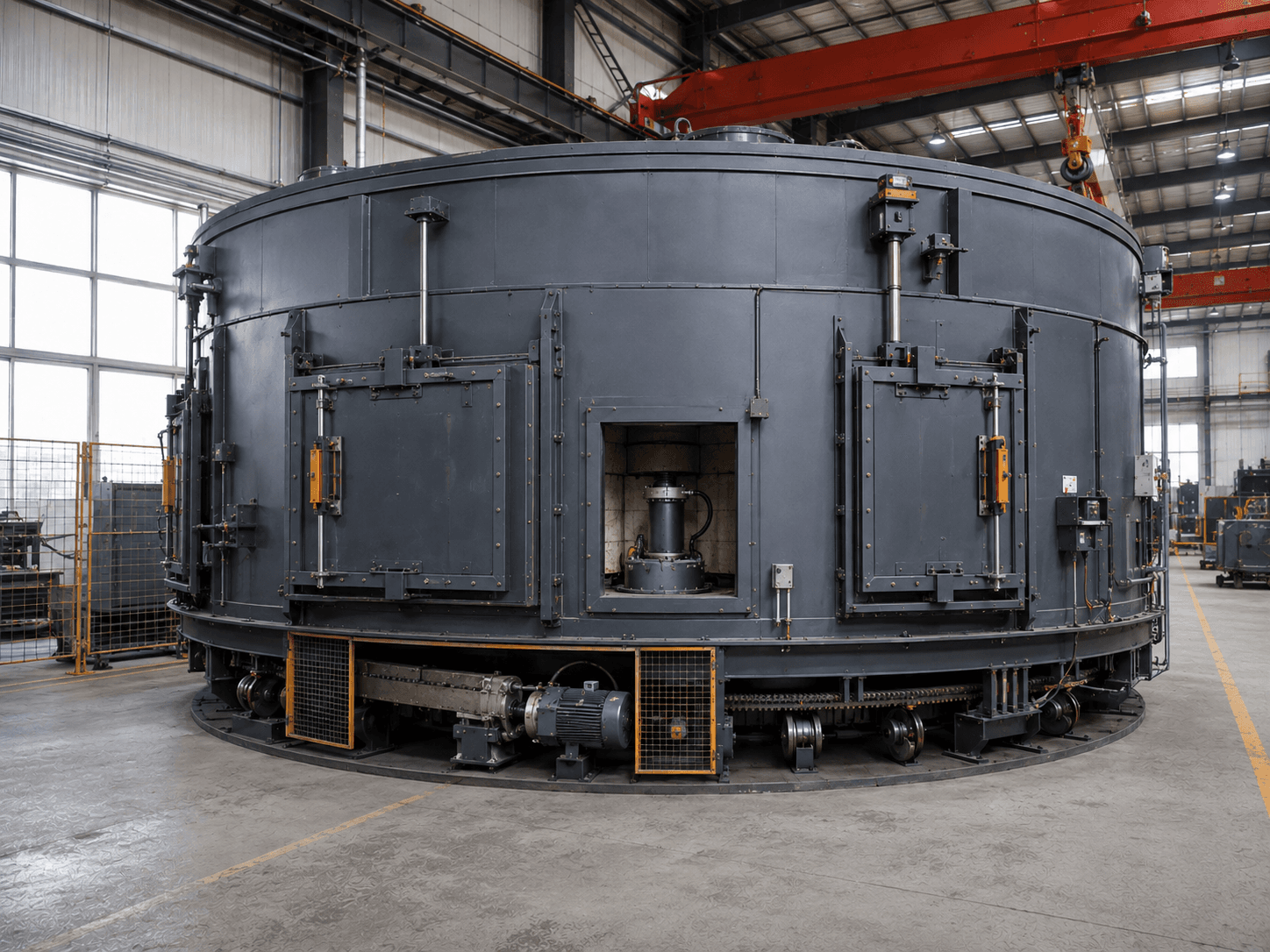
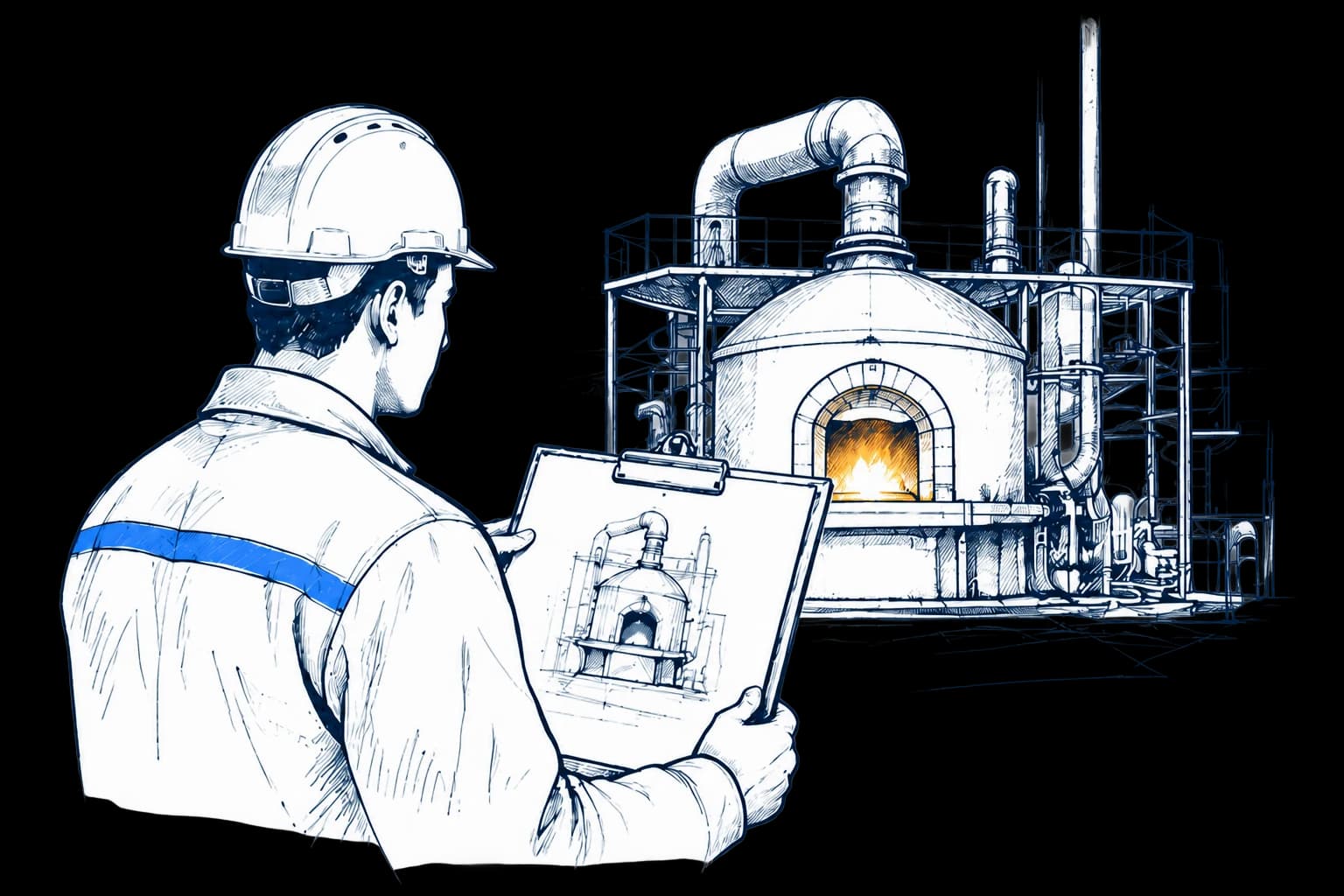
ROTARY HEARTH HEAT TREATMENT FURNACE
For discs, rings, forgings and batch parts positioned on an annular hearth. Assess loading annulus, unit mass, station pitch, rotation and handling sectors before defining hearth, temperature zones and automation interfaces.
Calculate loading, heating residence and handling cycle together before defining hearth dimensions, stations and temperature zones.
Assess workpiece shape and loading or conveying first to determine suitability for a rotary-hearth furnace design.
Parts arranged circumferentially on an annular hearth and heated as it rotates.
Check envelope, centre of gravity, station pitch, gripping orientation and handling sectors.
Compare pit, belt, pusher or roller-hearth furnaces.
This furnace is not equivalent to rotary-hearth processes for metallurgical dust and sludge. This page concerns annular-hearth equipment for workpiece heat treatment; confirm standards and process boundaries for each project.
These are configuration options to confirm against operating conditions.
Zoned resistance heating
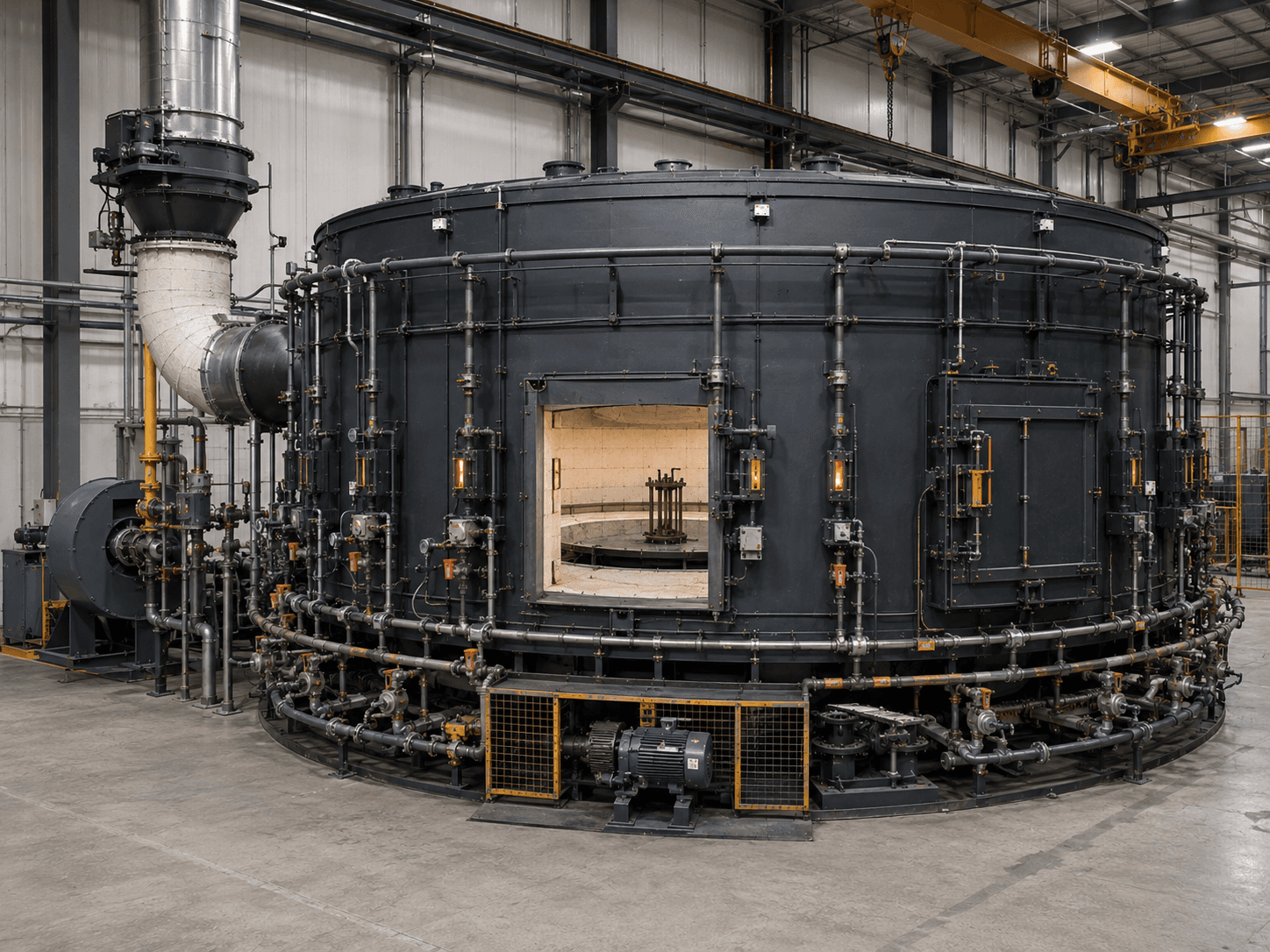
Combustion, furnace pressure and flue exhaust
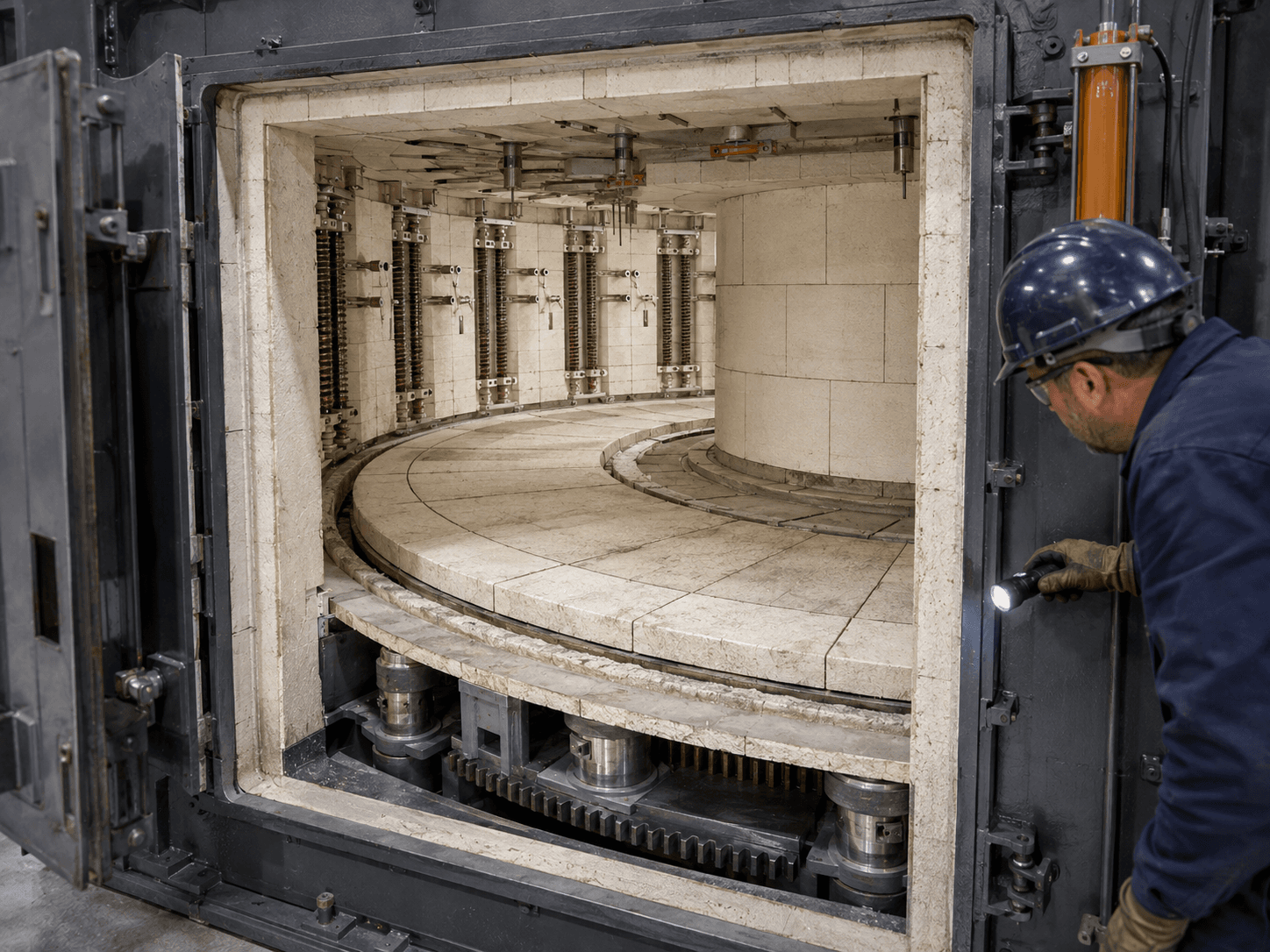
Station dwell and indexing
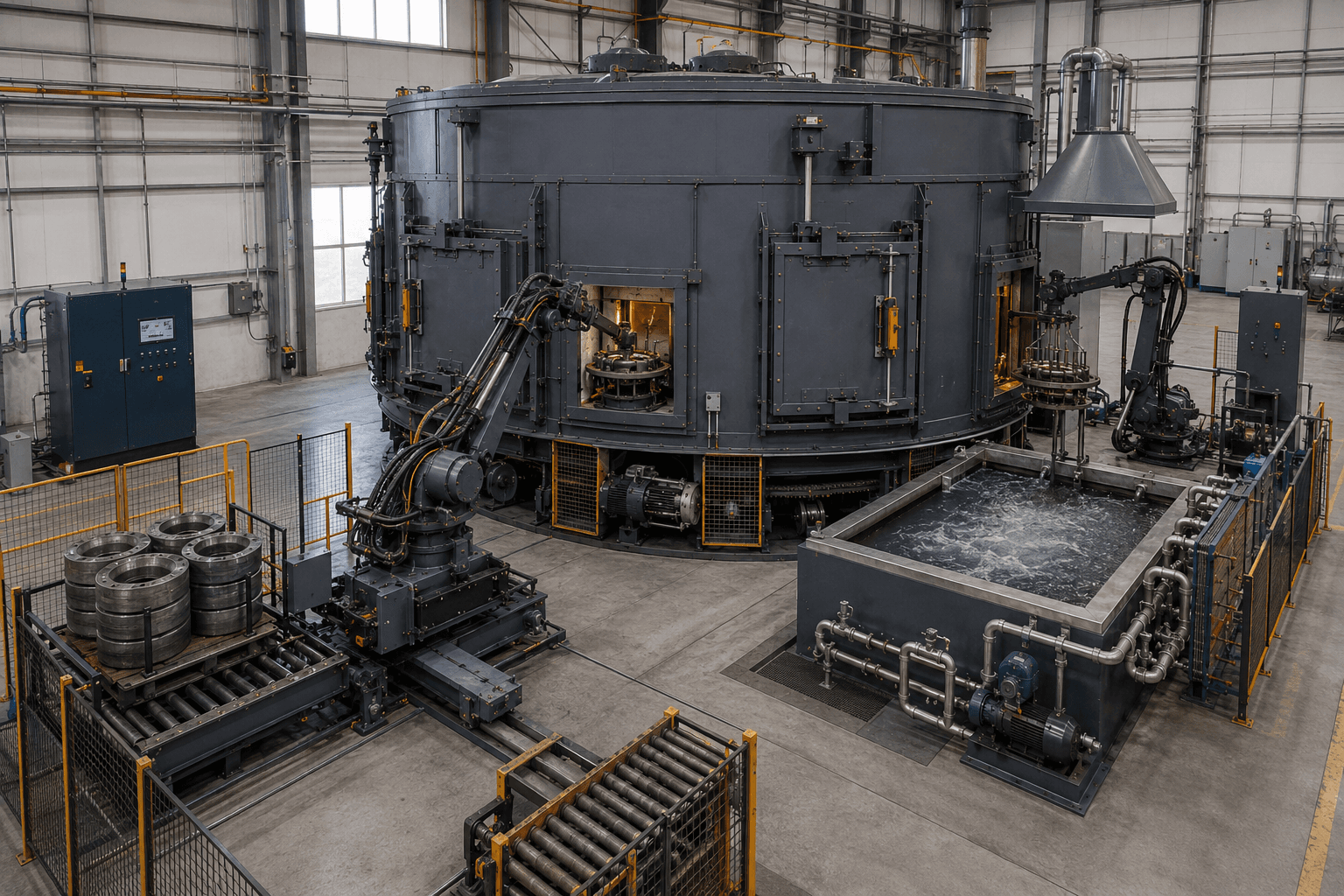
Furnace plus automated handling
| Configuration | Better-suited conditions | Main advantage | Required checks | Do not promise without verification |
|---|---|---|---|---|
| Electrically heated rotary-hearth furnace | Indexed heat treatment of station-positioned batch parts | Organize zones and stations by circumferential position | Effective annulus, stations, torque, zones and hearth capacity | Do not promise output or uniformity without loading and cycle conditions |
| Gas-fired rotary-hearth furnace | Medium/large rotary duties with defined gas and exhaust conditions | Compare designs using furnace scale and energy availability | Burners, exhaust, pressure, sealing and interlocks | Burner specifications do not replace whole-furnace performance acceptance |
| Indexed rotary-hearth furnace | Parts requiring fixed-station dwell and mechanical handling | Clearly defined station and operating-action boundaries | Station count, angles, repeat positioning, torque and interlocks | Do not promise cycle time before validating station actions |
| Large automated rotary-hearth furnace | Stable batches with defined stations for automated heat treatment | Organize loading/discharge within defined sectors | Gripping orientation, stations, logistics, fault bypass and safety zones | Do not promise availability with incomplete automation boundaries |
Separate working space, loading/conveying variables and structural variables to create a verifiable design.
| Data group | Items to confirm |
|---|---|
| Workpiece | Material, dimensions, mass, centre of gravity, bottom contact and gripping orientation |
| Feed distribution | Effective inner/outer diameters, stations, loading rings, spacing and supports |
| Process | Continuous/maximum temperatures, station times, atmosphere and curves |
| Rotation | Continuous / indexed, angle, speed, acceleration/deceleration and positioning accuracy |
| Loading and unloading | Manual, robot or conveyor handling, loading/discharge sectors and cooling path |
| Utilities | Power or gas, exhaust, atmosphere, foundations and safety areas |
Structure examples explain components. Final layout depends on workpieces, process, load, cycle and site conditions.
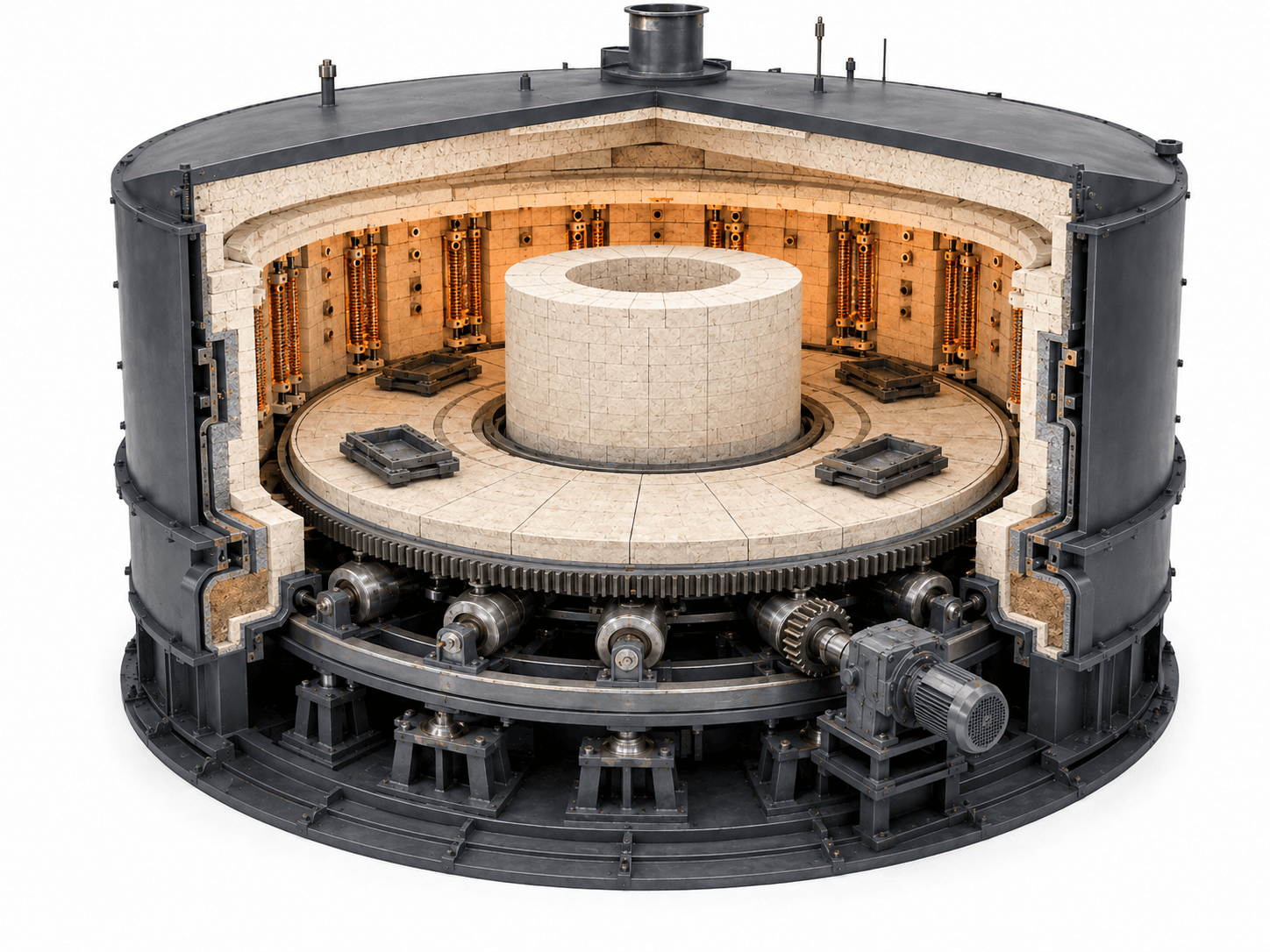
Used for loading, stability, gripping and hearth-load calculations.
Define separately from structural hearth diameter and chamber dimensions.
Match process dwell and handling actions.
Check against load, seals and abnormal conditions.
Define complete equipment and automation boundaries.
Determine from effective annulus, heat source, zones and maintenance method.
Zone resistance or gas systems by circumferential stations and thermal load.
Design hearth, heat-resistant layer, supports, expansion and seals for hot loads.
Coordinate transmission, torque, braking, positioning, limits and fault protection.
Confirm station count, tooling, spacing and loading annulus from cycle and thermal load.
Check support rollers, bearings, tracks and foundations against rotating loads and maintenance conditions.
These answers explain selection boundaries, not the final technical design or contract annexes.
Discs, rings, forgings and batch parts that remain stable on an annular hearth and suit station-based or continuous circumferential heating are candidates.
No. Exclude the centre, walls, seals, loading/discharge openings, safety clearances and gripping space. Specify effective inner/outer loading diameters and station envelope.
Continuous rotation suits processes varying continuously along the circumference; indexing suits fixed-station dwell and mechanical handling. Choose from process time, positioning, actions and cycle.
Equipment with the same name may serve different processes. This page concerns annular-hearth workpiece heat treatment, so metallurgical dust/sludge reduction or energy-use standards cannot simply be applied. Select standards for the actual heat source, process and equipment scope.
Provide material, dimensions, mass, centre of gravity, supports, station loading, process curve, rotation method, handling actions, cooling, heat source and site conditions.
Compare loading or conveying arrangements first, then discuss the complete operating conditions.
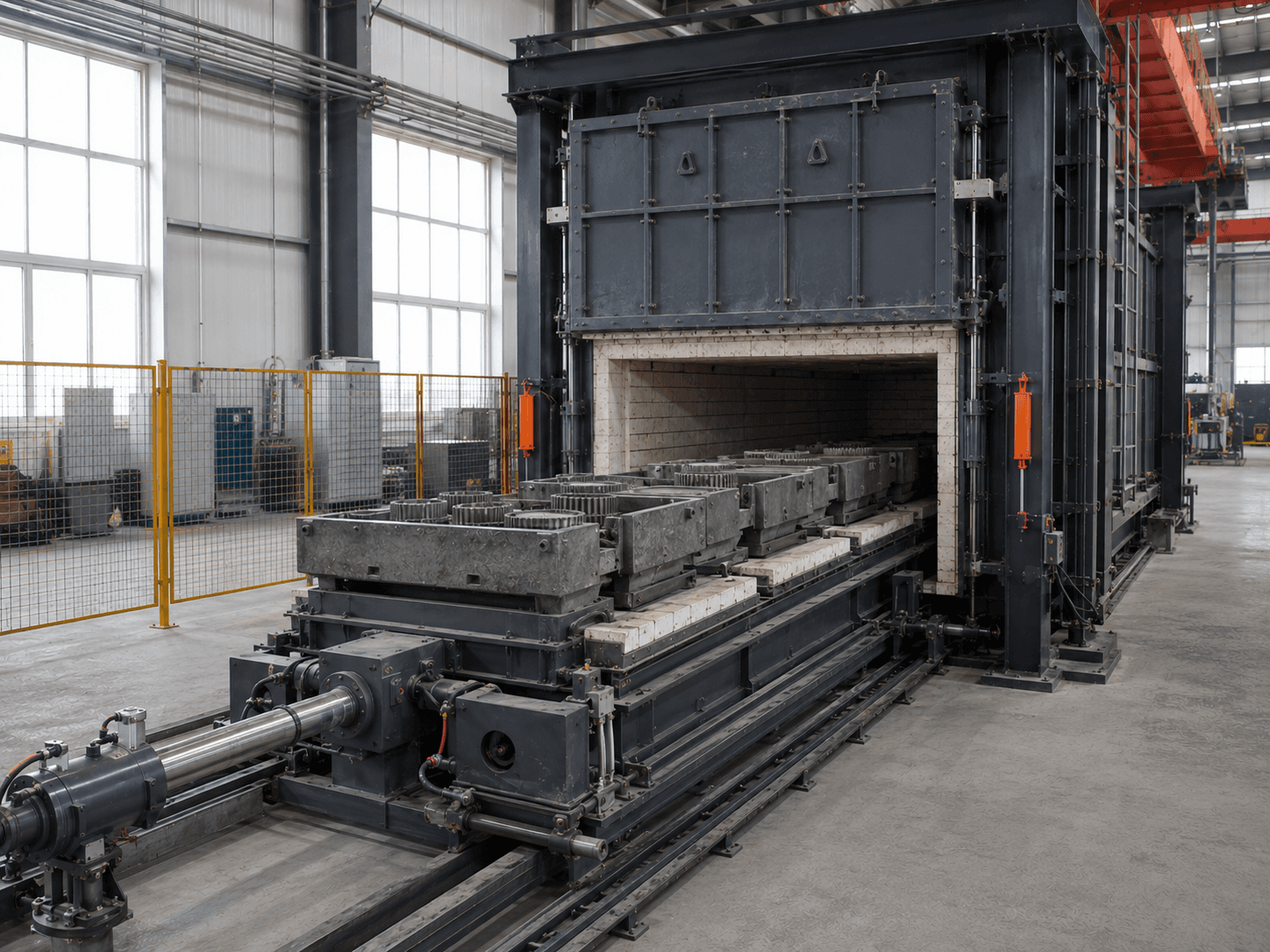
Compare pushers for straight indexed tray travel.
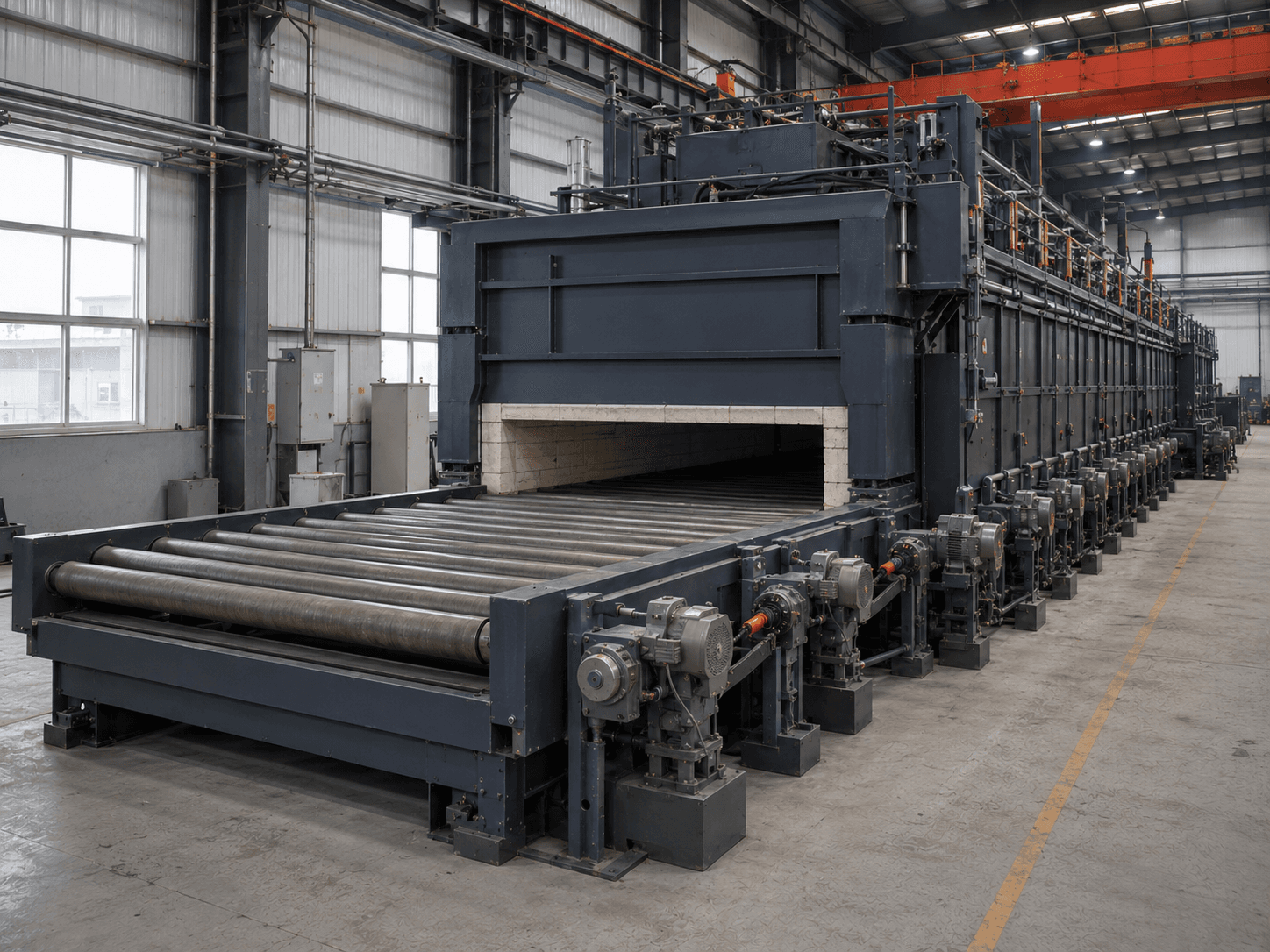
Compare roller conveying for regular long parts.
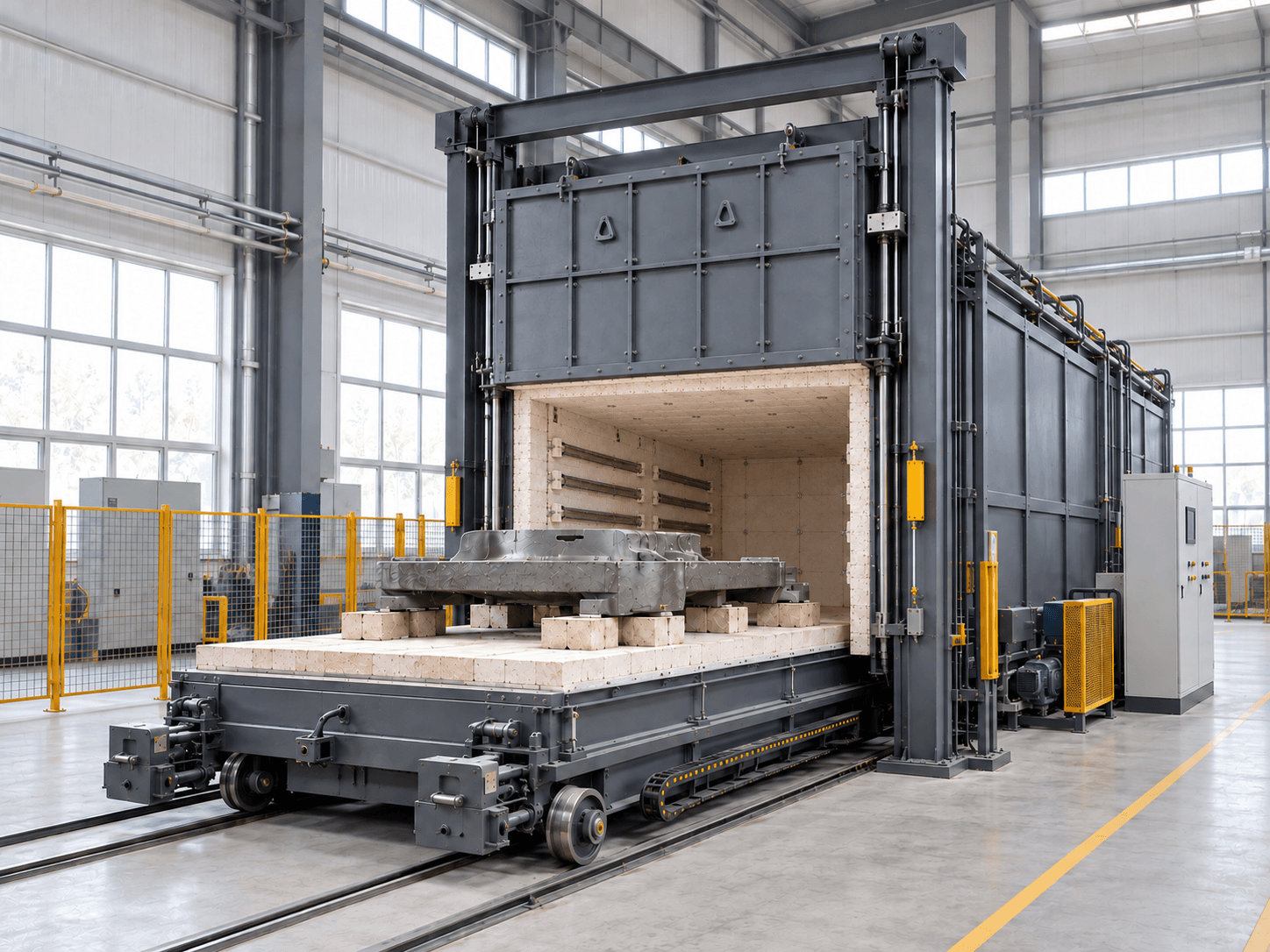
Compare batch bogie loading for varied large heavy parts.
Tell us about the workpiece, throughput or existing equipment issue. Drawings and detailed parameters can follow.
Prefer to talk first? Contact us directly.
What you will receive