
Batch parts requiring trays or tooling
For stable part shapes, batches and routes advanced tray by tray at a defined cycle.

Loading page…
Loading is taking longer than usual. Please wait or try again.
Retry loading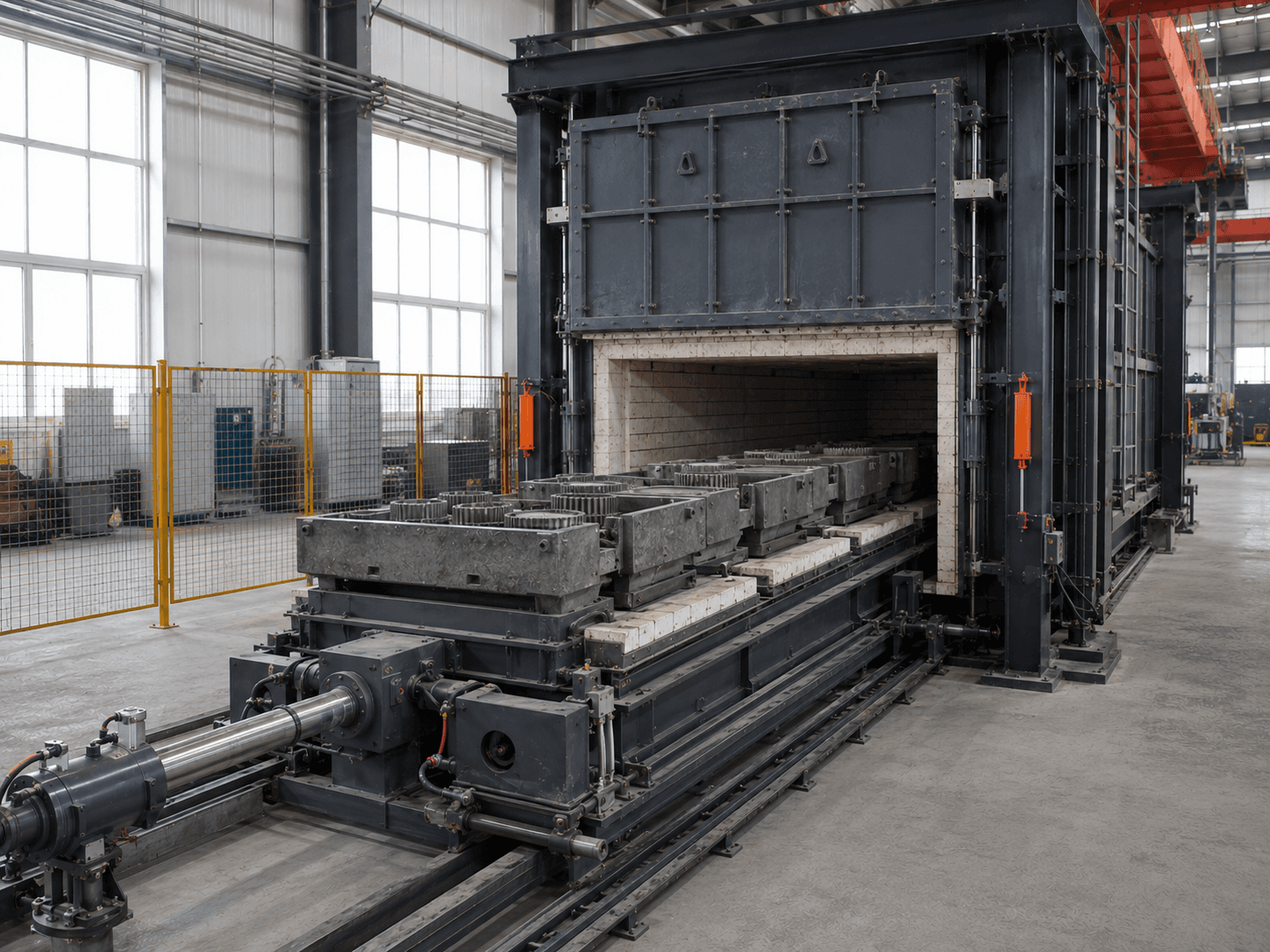
PUSHER TYPE HEAT TREATMENT UNIT
This page covers pusher units carrying parts on trays, baskets or dedicated fixtures. Assess loaded-tray envelope, indexing cycle, residence time, thrust transmission and transfer interfaces before defining passages, zones and cooling.
Temperature range and working-zone examples are from GB/T 10067.42-2013; product models and pushing mechanisms are from existing Suneng contracts. These are selection references, not universal size limits.
Assess workpiece shape and loading or conveying first to determine suitability for a pusher furnace design.
For stable part shapes, batches and routes advanced tray by tray at a defined cycle.
Check tray strength at temperature, friction, thrust transfer, alignment and discharge transfer.
Compare belt or roller-hearth furnaces to avoid unnecessarily complex tray circulation.
Rated pusher force does not directly establish movable load. Friction, expansion, tray distortion, alignment and the number of trays in the furnace all affect thrust transmission.
These are configuration options to confirm against operating conditions.
Zoned resistance heating
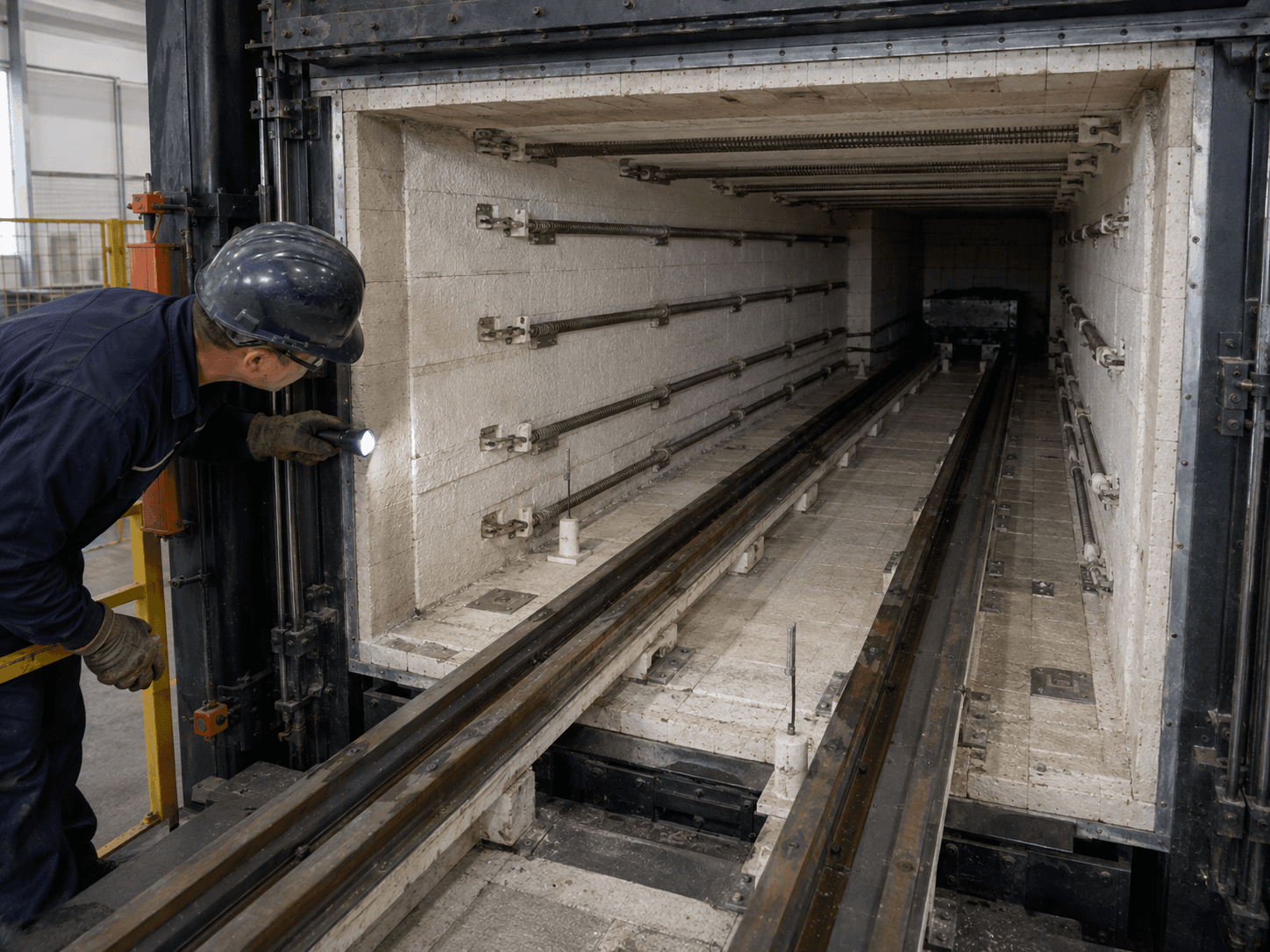
Sealing and continuous indexed movement
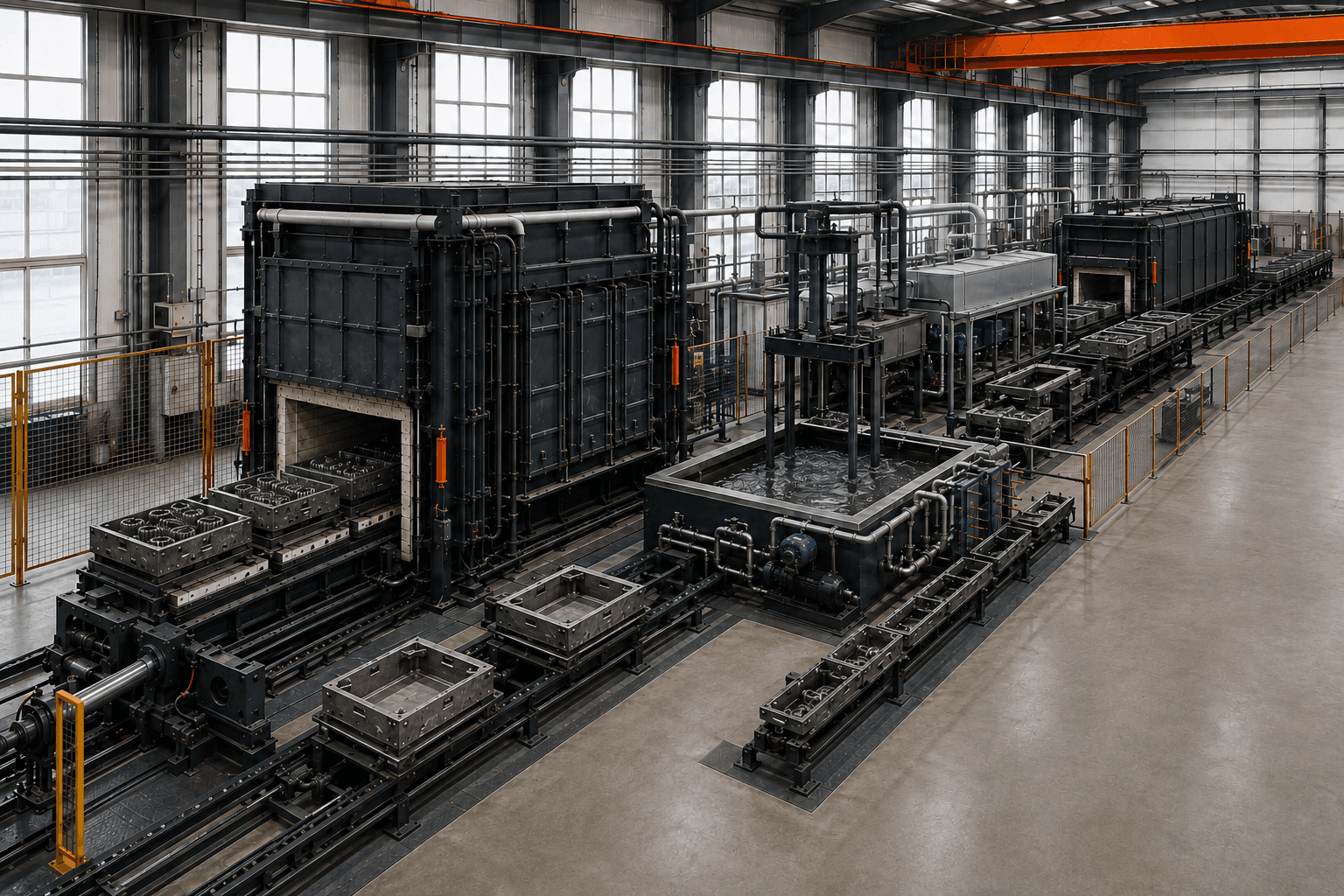
Heating, transfer and cooling
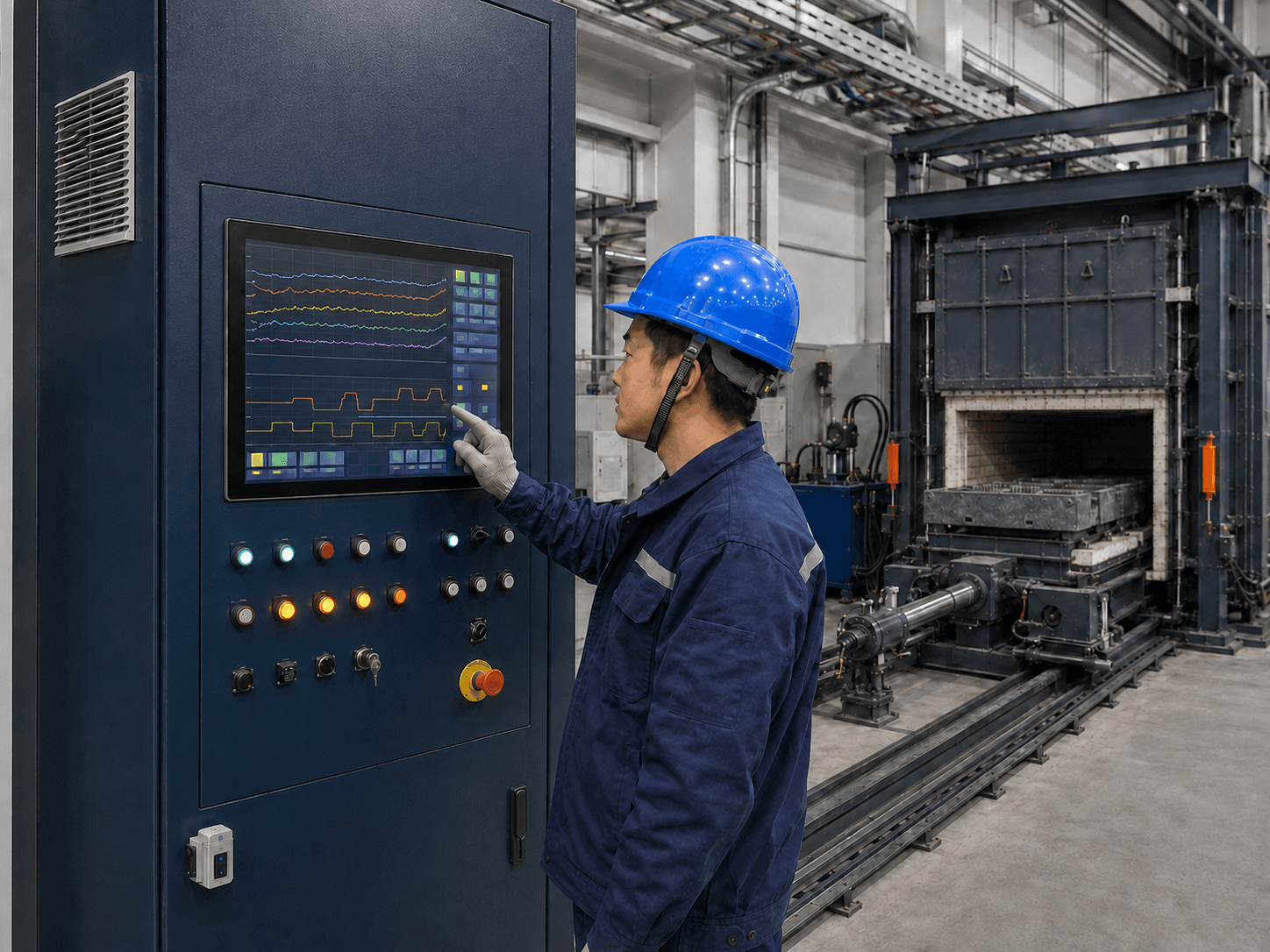
Full-line cycle organization
| Configuration | Better-suited conditions | Main advantage | Required checks | Do not promise without verification |
|---|---|---|---|---|
| Pusher resistance-heating unit | Continuous treatment of stable batches requiring tray positioning | Relatively defined part orientation and tray spacing | Trays, thrust, zones, cycle and tray return | Do not promise output without the complete cycle chain |
| Protective-atmosphere pusher furnace | Tray-carried parts requiring surface and atmosphere control | Use tray pitch to define atmosphere-zone boundaries | Opening seals, purging, discharge, monitoring and interlocks | Gas flow does not replace surface-quality results |
| Pusher furnace with quench/cooling unit | Stable batch routes requiring liquid-medium cooling | Trays can preserve orientation and organize transfers | Transfer time, medium, trays, lifting and interlocks | Do not guarantee microstructure or distortion without adequate process trials |
| Production pusher furnace | Long-running stable batches with standardized trays | Schedule process and logistics sections together | Tray-count balance, return, spare trays and fault bypass | Do not promise availability with incomplete logistics boundaries |
Separate working space, loading/conveying variables and structural variables to create a verifiable design.
| Data group | Items to confirm |
|---|---|
| Workpiece | Material, dimensions, unit mass, quantity per tray and locating method |
| Tray | Shape, material, mass, high-temperature strength, clearances and return method |
| Process | Continuous/maximum temperatures, section times, atmosphere and curves |
| Rhythm | Push interval, in-furnace tray count, output target and handling time |
| Cooling | Transfer time, medium, lifting, washing and subsequent tempering |
| Utilities | Power or gas, flue exhaust, atmosphere, foundations and full-line space |
Structure examples explain components. Final layout depends on workpieces, process, load, cycle and site conditions.
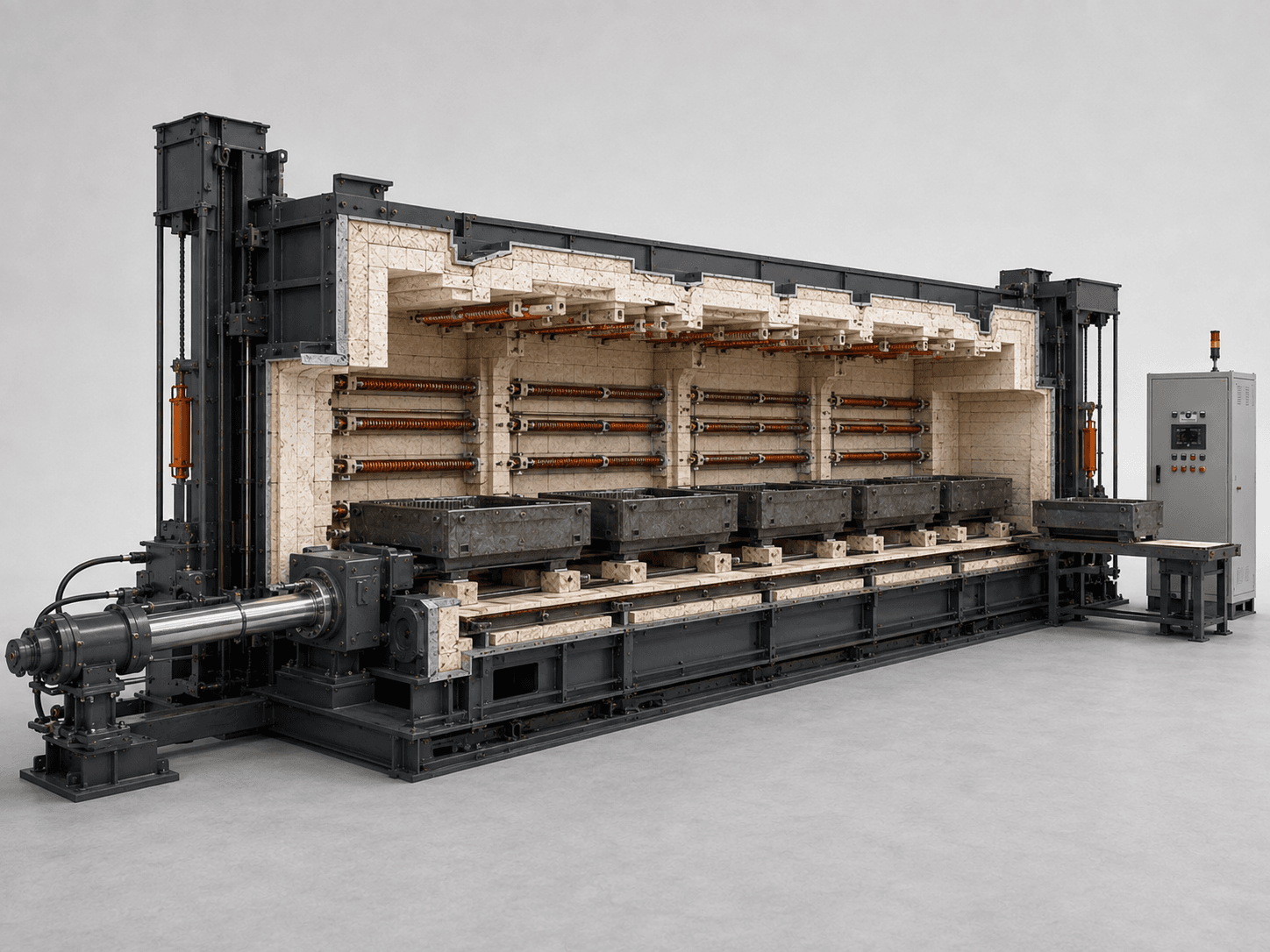
Confirm tray, workpieces, locating features and thermal-expansion clearances together.
Calculate thermal, structural and pushing loads separately.
Match zone lengths and process stages.
Used for passage, guide, pusher and maintenance design.
Define complete continuous-production boundaries.
Divide sections by process stage, thermal load, atmosphere and maintenance.
Configure zones around furnace load, indexing cycle and section curves.
Check trays, guide rails, clearances, expansion and hot strength together.
Coordinate thrust, travel, speed, alignment, limits and jam protection.
Coordinate discharge, quenching, washing, tempering and empty-tray return by cycle.
Agree on temperature control, records, pushing interlocks, blockage alarms and full-line emergency stops.
These answers explain selection boundaries, not the final technical design or contract annexes.
Parts requiring positioning on trays, baskets or dedicated tooling, with relatively stable batches, routes and indexing cycles, are candidates.
Compare belt furnaces first for small parts that can lie stably on the belt. Assess pusher furnaces for parts needing trays to maintain orientation, heavier loads or parts unsuitable for belt contact.
No. In-furnace tray count, friction, expansion, tray distortion, alignment, gradients and start/stop conditions also affect force. Check the complete thrust chain.
Balance effective section lengths, in-furnace tray count, heating/soaking time, cooling transfer, handling and tray-return time.
Provide part/tray dimensions, masses and materials, quantity per tray, in-furnace tray count, process curve, indexing cycle, atmosphere, cooling transfer and adjacent interfaces.
Compare loading or conveying arrangements first, then discuss the complete operating conditions.
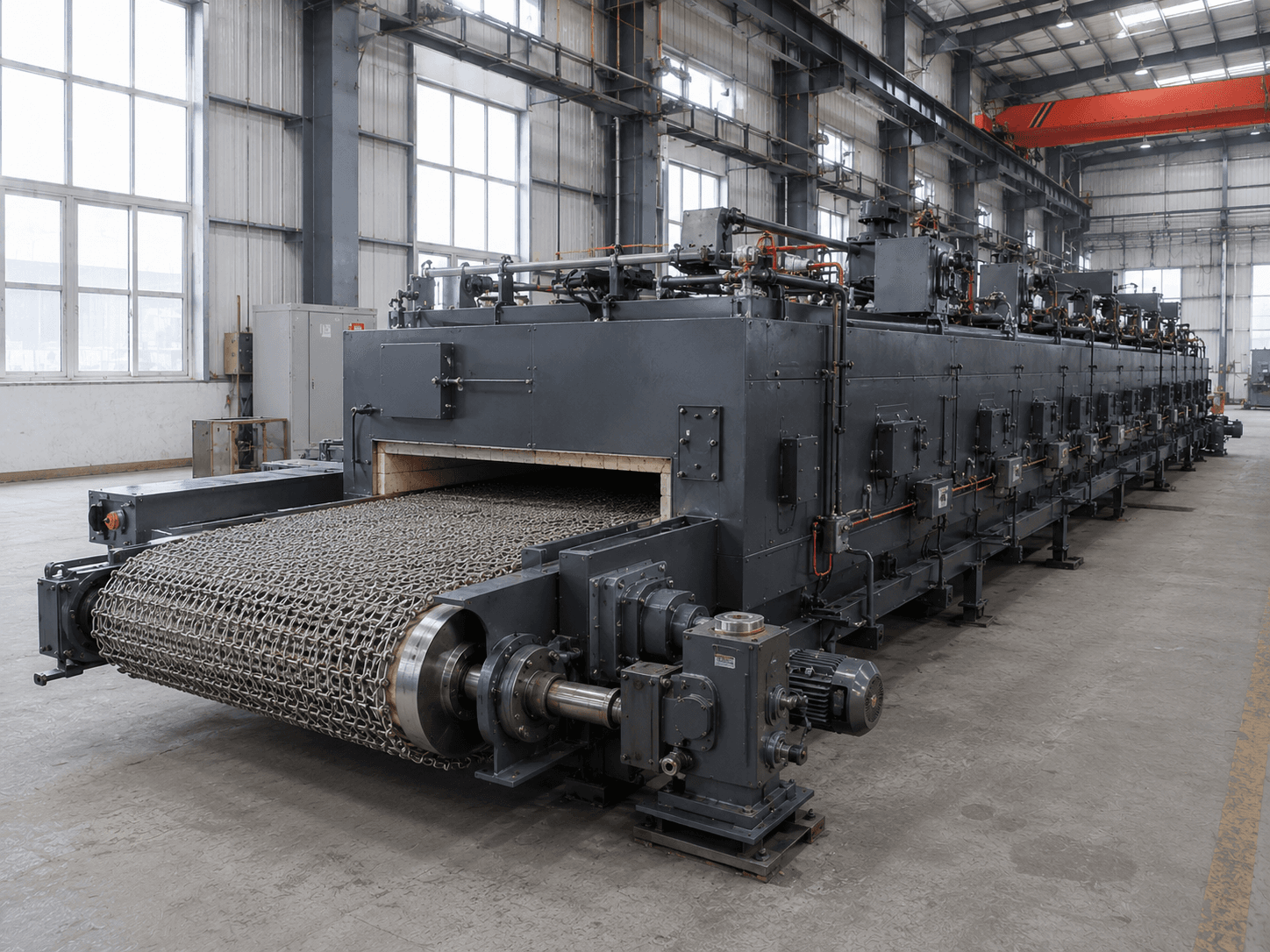
Compare belt conveying for small parts suitable for direct loading.
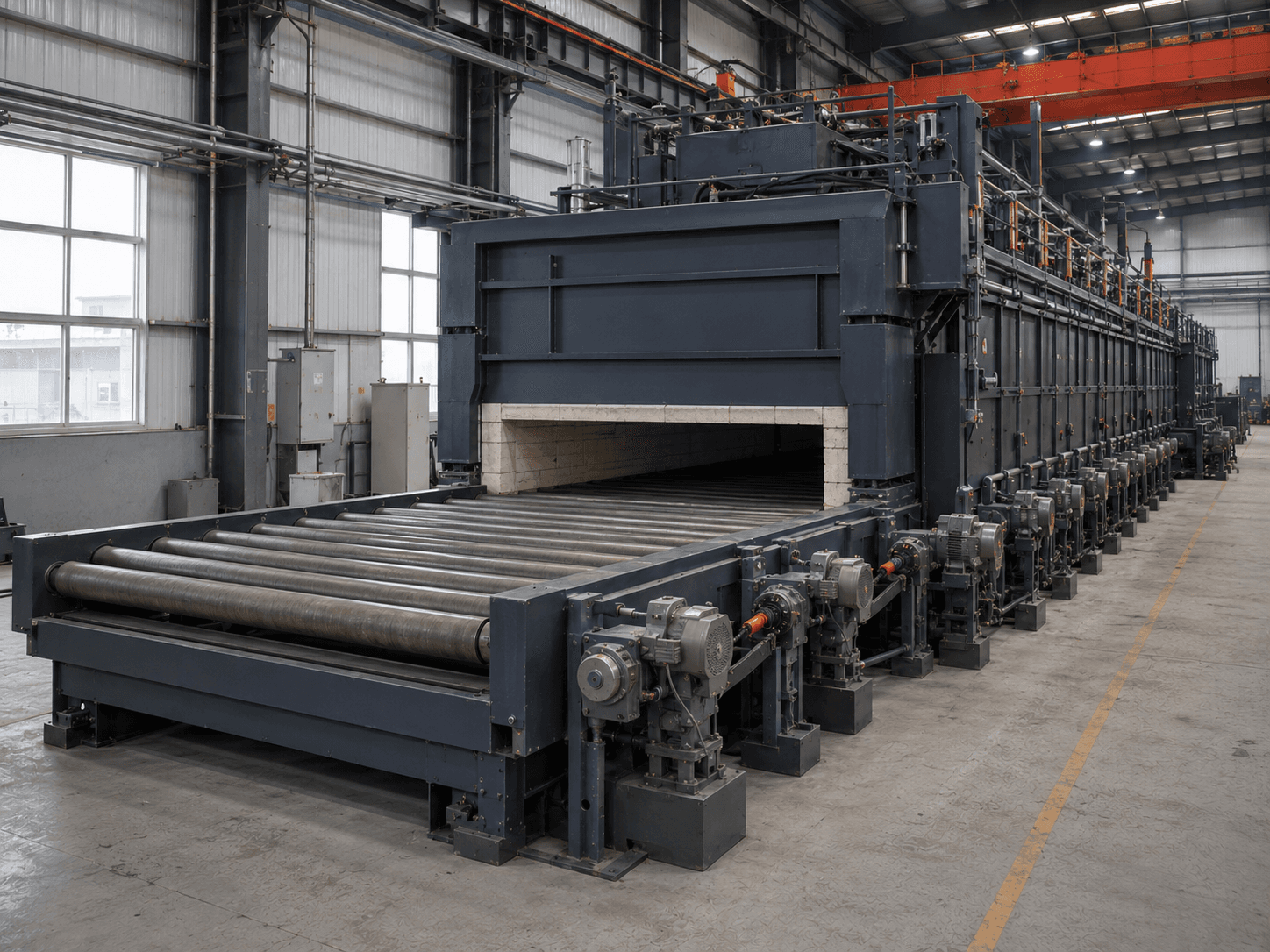
Compare roller conveying for plate and regular long parts.
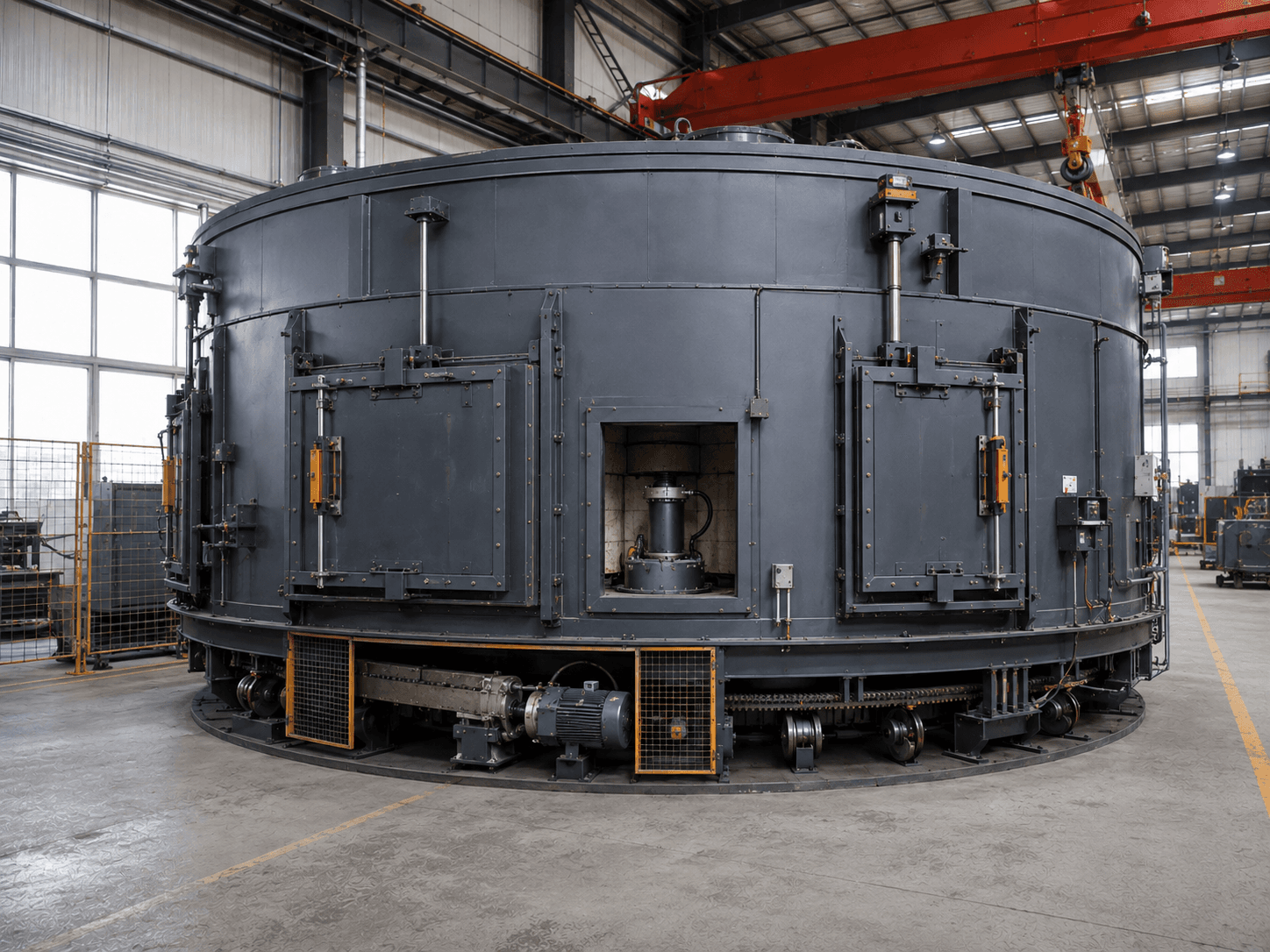
Compare an annular hearth for loading/discharge in the same area.
Tell us about the workpiece, throughput or existing equipment issue. Drawings and detailed parameters can follow.
Prefer to talk first? Contact us directly.
What you will receive