
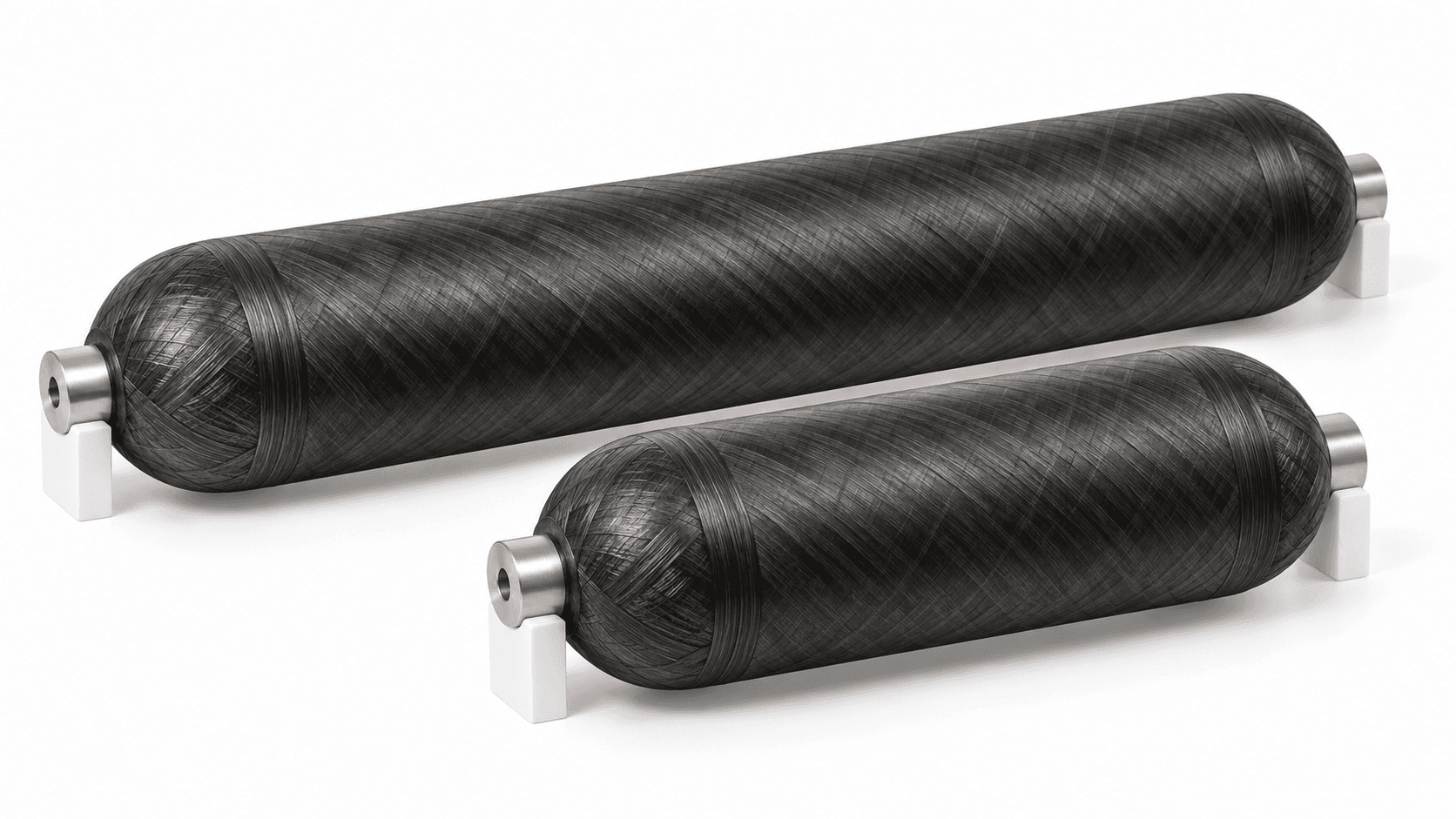
Cylinder & resin system
Provide dimensions and mass, liner structure and temperature limits, fiber/resin grades, winding thickness and intended use. The illustrated two-neck design is representative only.

Loading page…
Reload pageMatch the cure curve and production rhythm to the cylinder and resin.
For filament-wound composite cylinders, connect post-winding loading, zoned hot-air curing and controlled cooling. Establish the resin-required part temperature/time curve before configuring end support, conveying, rotation and records. Liner limits, composite thickness and resin exotherm jointly affect the arrangement.
Identical external shapes can have different liners, resin systems and winding thicknesses, with different heating, residence and support limits.
Provide dimensions and mass, liner structure and temperature limits, fiber/resin grades, winding thickness and intended use. The illustrated two-neck design is representative only.
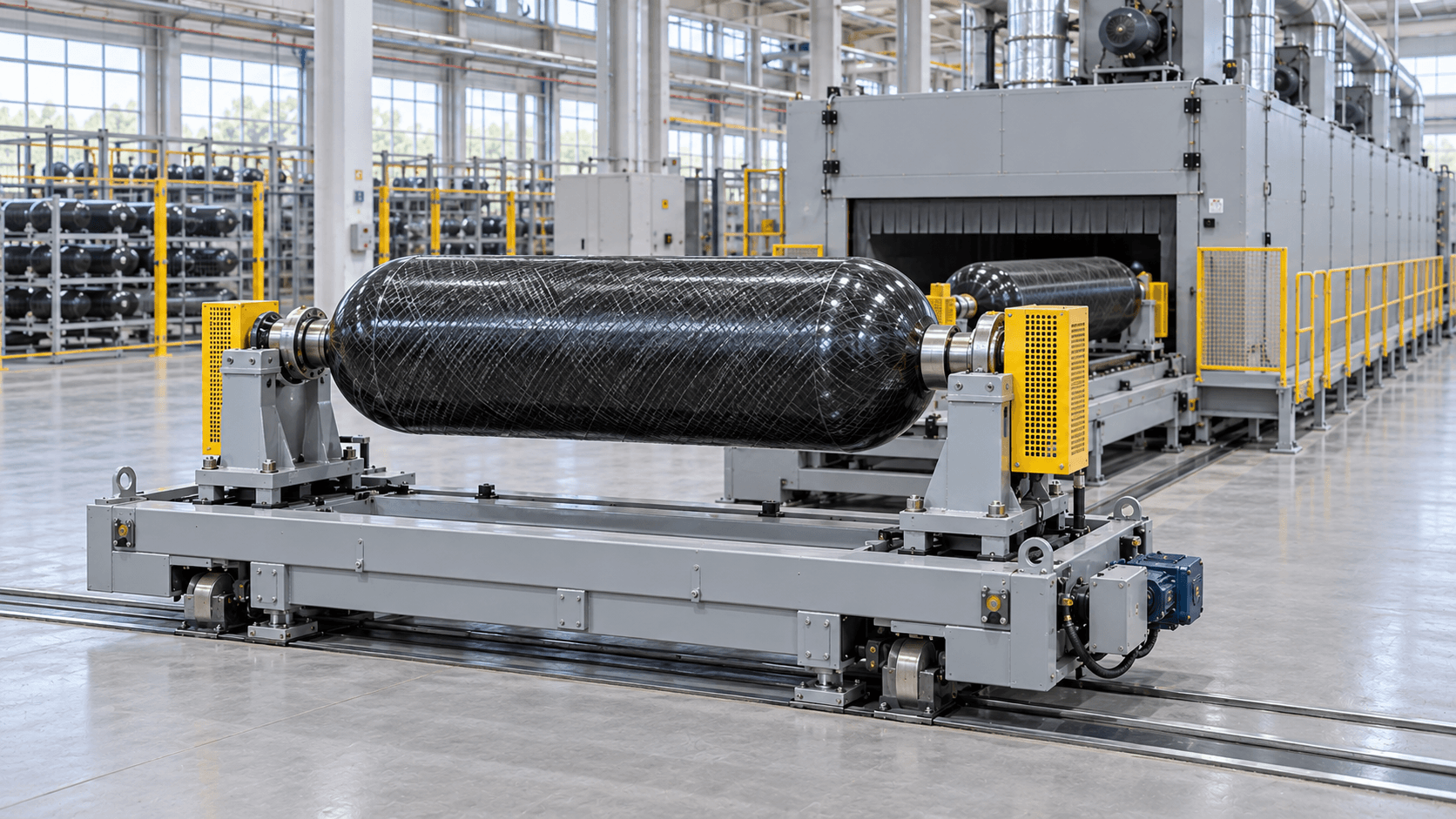
Design gripping and support around necks or mandrel ends. Avoid directly loading, rolling or rubbing the wet composite layer. The process determines whether rotation is needed, its speed and whether it continues during transfer.
Measure furnace air and cylinder/composite temperatures separately. Validate the part curve and allowable distortion with representative loading.
Point to equipment or select a step to see its location and action
Scroll horizontally for the complete line, or select a step below
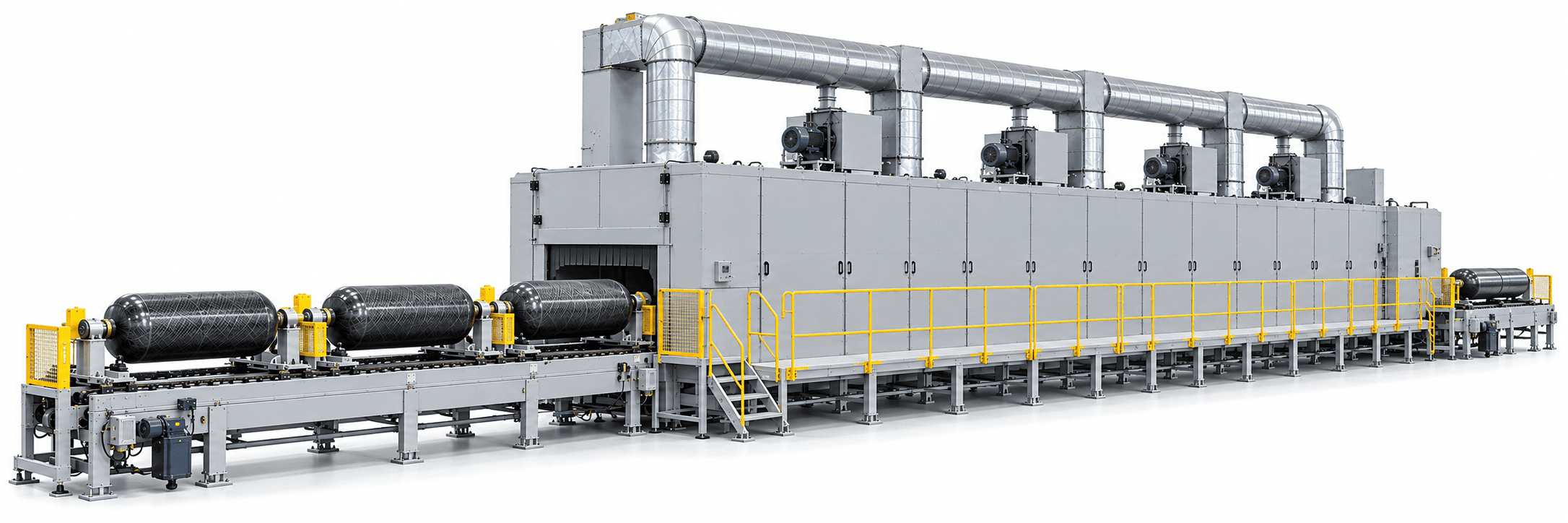
Hold and cure to the resin cycle, verifying cylinder temperature rather than substituting air setpoints.
Equipment: Hot-air curing
Fixtures convey the cylinders along the line; rotation equipment turns each cylinder. Set and coordinate these movements separately.
For materials requiring continuous rotation, check waiting outside the furnace, transfer and furnace rotation together. The resin cycle determines whether separate post-curing is required.
Coordinate zone temperatures, speed and lengths to the part curve. Air setpoints do not replace cylinder temperature. Resin can continue releasing heat after heaters stop; define separate responses to conveyor stops, fan loss and overtemperature. Gas-filled or pressurised curing is outside this representative arrangement.
Highlights identify functional areas. Equipment and layout follow the agreed proposal.
Establish materials and representative loading before sizing equipment. The same external shape does not establish recipe compatibility.
Scroll horizontally to view the complete comparison
| Configuration item | Equipment & interface requirements |
|---|---|
| Conveying & rotation | Confirm end loading, fixtures, product pitch, thermal expansion and roll-off prevention. Configure conveyor speed and rotation speed independently. |
| Hot-air circulation & zones | Design ducting, circulation and effective zones around cylinder size, composite thickness, load shielding and the part-temperature curve. |
| Temperature measurement & curve records | Distinguish control points, spatial temperature distribution and representative cylinder measurements. Design measurement connections separately for moving or rotating parts. |
| Extraction & abnormal handling | Use resin/cleaner safety data, emissions, maximum simultaneous curing load and exotherm information to check makeup/exhaust air, monitoring and interlocks. |
| Product traceability | Link cylinder or batch IDs with recipes, cure curves, abnormal conditions and inspection release. Define upstream/downstream system interfaces. |
Continuous curing suits relatively stable rhythms and recipes. Frequent resin changes, substantially different cure curves or variable upstream supply require comparison with batch curing and buffer arrangements.
For constant pitch and steady conveying, theoretical throughput (parts/h) = parallel channel count × speed (m/min) ÷ product pitch (m) × 60. Heating, holding and cooling time constrain this value. Effective soaking uses agreed cylinder-temperature criteria. Planned conforming output must also account for changeovers, stops, upstream working time, maximum simultaneous cure load, exotherm/extraction capacity and downstream rhythm.
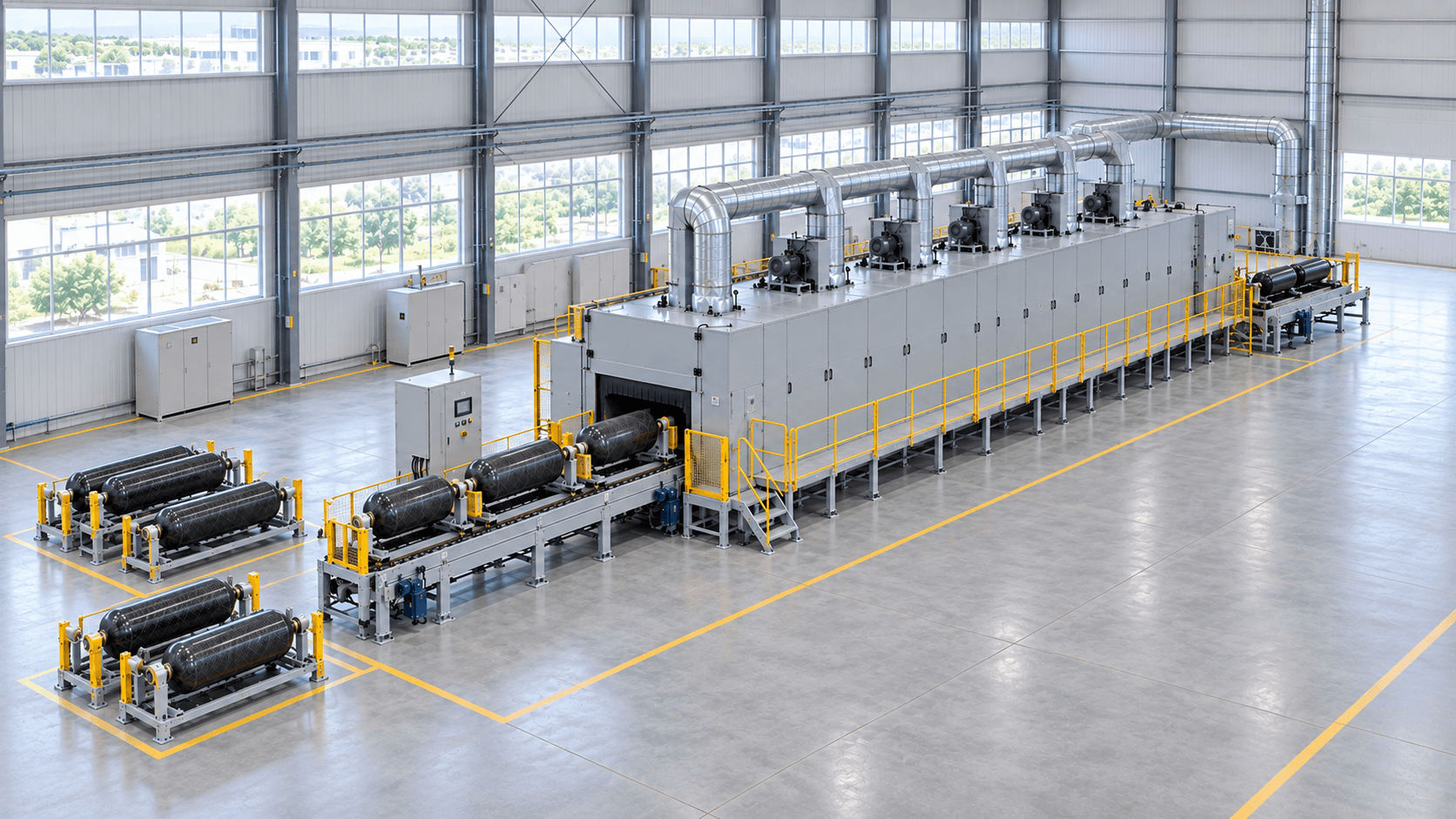
Define equipment, auxiliary systems and site interfaces.
List the equipment, supply scope and responsibilities in the technical proposal.
Agree equipment functions, process performance and product verification separately.
Check fixturing, conveying, rotation, circulation and extraction. Validate interlocks and records for agreed faults such as overtemperature, fan loss, jams and power failure.
With representative cylinders and loads, validate heating, hold and cooling curves and the coldest/hottest locations. Define part measurement points, timing and pass criteria.
Verify cure condition and relevant properties against adopted product and material specifications. The agreed responsible party performs prescribed cylinder inspections and tests.
A compliant cure curve does not establish compliance of the complete cylinder. Intended use, structure and specification determine downstream inspections.
Define conditions and responsibilities separately for equipment acceptance and product inspection. Agree representative materials, loading, sampling and pass criteria.
Review selection, auxiliary equipment and site integration for this process.
Cylinder size, liner conductivity, winding thickness, loading and resin exotherm all affect part temperature. Establish and validate measurement positions on representative parts, then correlate cylinder curves with zone-control temperatures.
Some wet-winding systems require rotation to reduce gravity-driven resin migration. Resin and product processes determine whether rotation is needed, its speed and continuity during transfer. Fixture travel and cylinder rotation speeds are separate settings.
Assess hazards from resin and cleaner safety data, volatile release, maximum loading and ventilation first. Then define monitoring, interlocks and fire/explosion safeguards. Setpoint alone is not a sufficient basis.
Shared use can be assessed by checking cure curves, liner limits, exotherm/venting, contamination, cleaning and changeover losses. Compare batch curing when recipes differ substantially or change frequently.
No. Curing is one manufacturing operation. The complete cylinder still requires design confirmation, manufacturing inspection and prescribed tests under the applicable product standard.
Continuous Composite Cylinder Curing Line · Project consultation
Tell us about the workpiece, throughput or existing equipment issue. Drawings and detailed parameters can follow.
What you will receive