
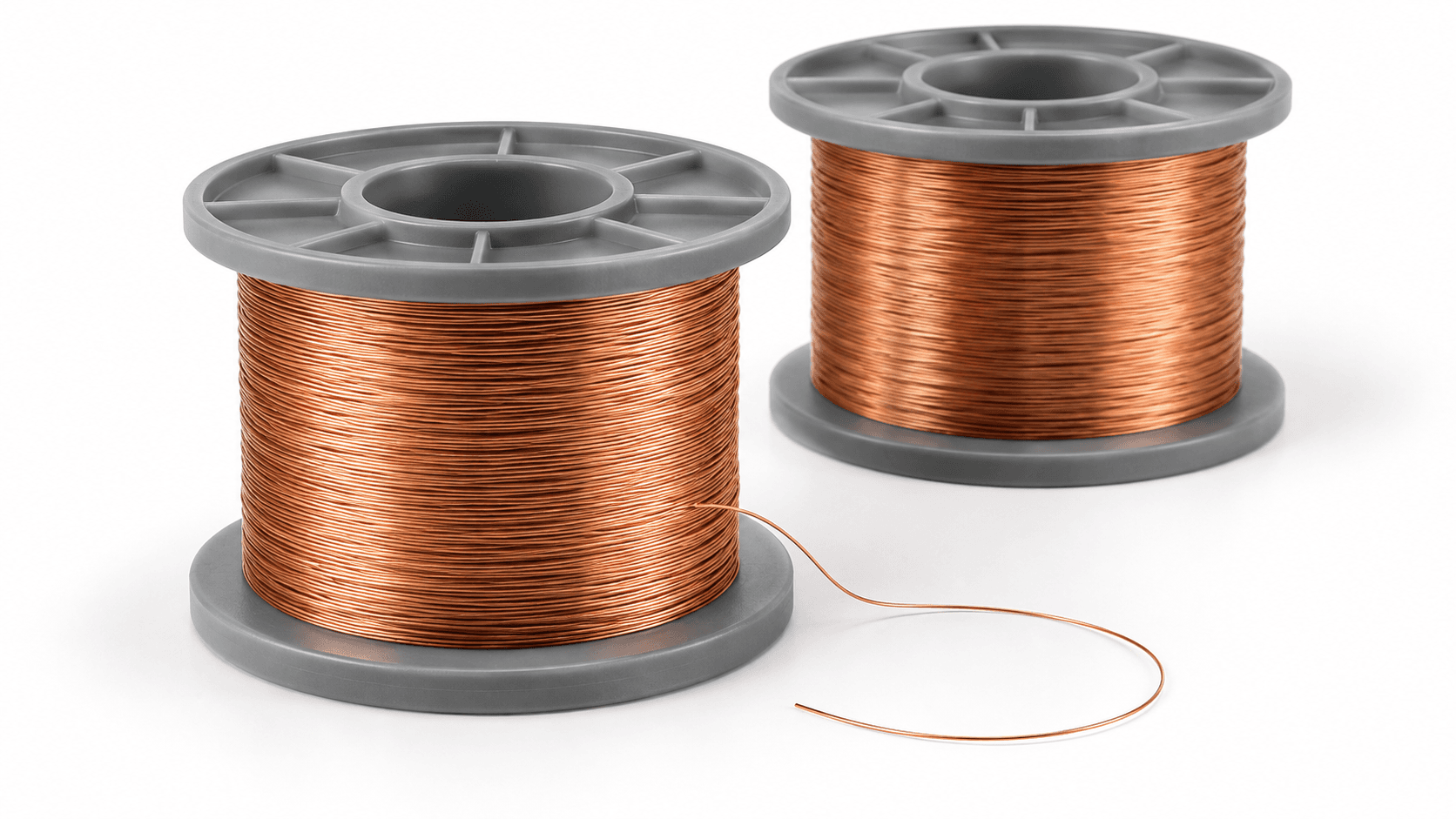
Copper wire and surface condition
Provide copper grade, oxygen condition, typical and limiting diameters, incoming strength and surface cleanliness; specify coating material and thickness if present.

Loading page…
Loading is taking longer than usual. Please wait or try again.
Retry loadingMatch annealing, protective cooling and reel handling to copper grade and diameter
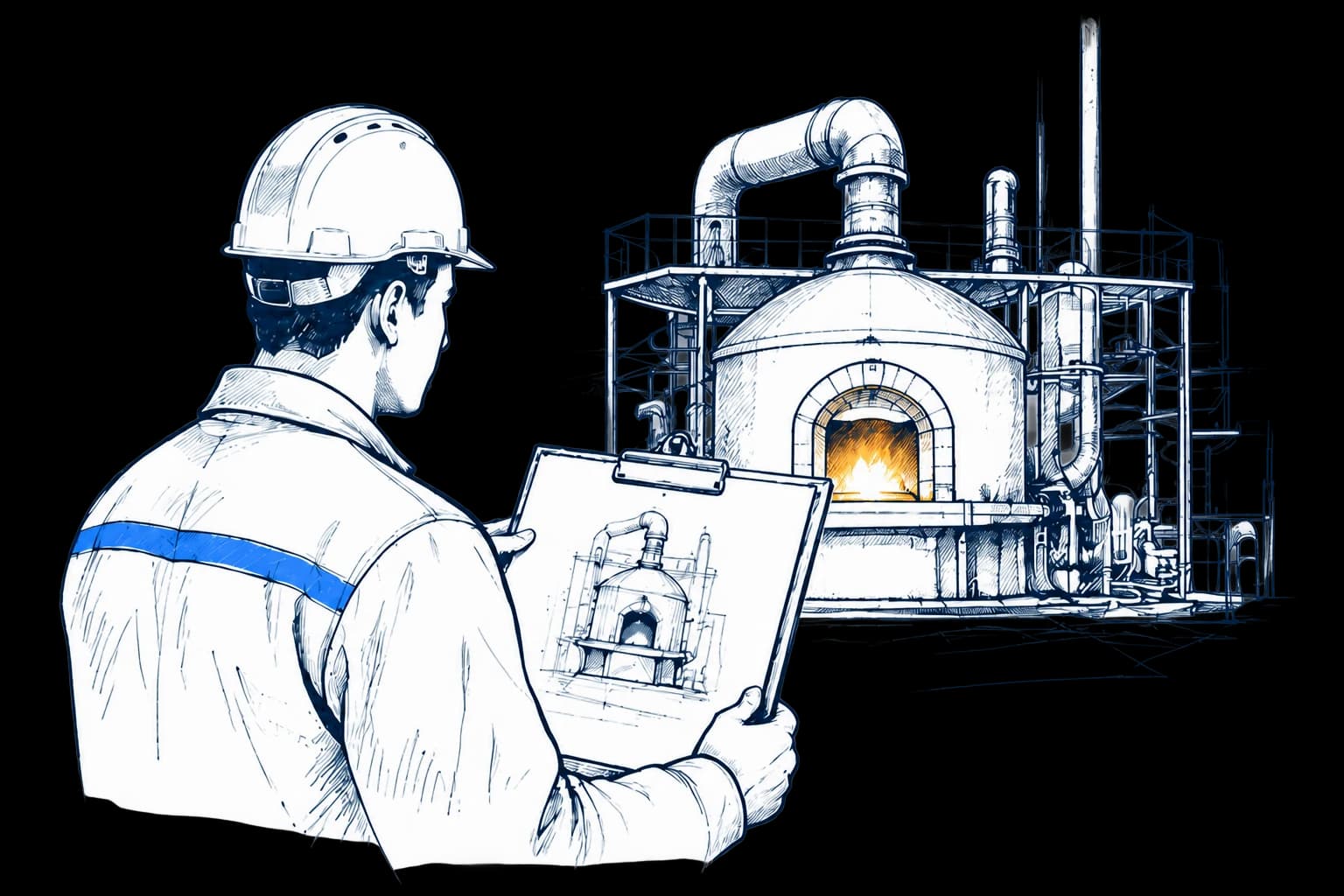
Continuous heating and cooling improve the ductility of cold-worked copper wire for downstream processing. Confirm grade, diameter, softening and surface targets before matching heating, tension, steady speed and reels. The illustration uses indirect resistance heating inside a furnace; direct electrical annealing is a separate equipment route.
Different copper grades, cold-work conditions and diameters require separate annealing evaluations. Bare, plated and enamelled copper wire do not share a default temperature and surface-treatment schedule.
Provide copper grade, oxygen condition, typical and limiting diameters, incoming strength and surface cleanliness; specify coating material and thickness if present.
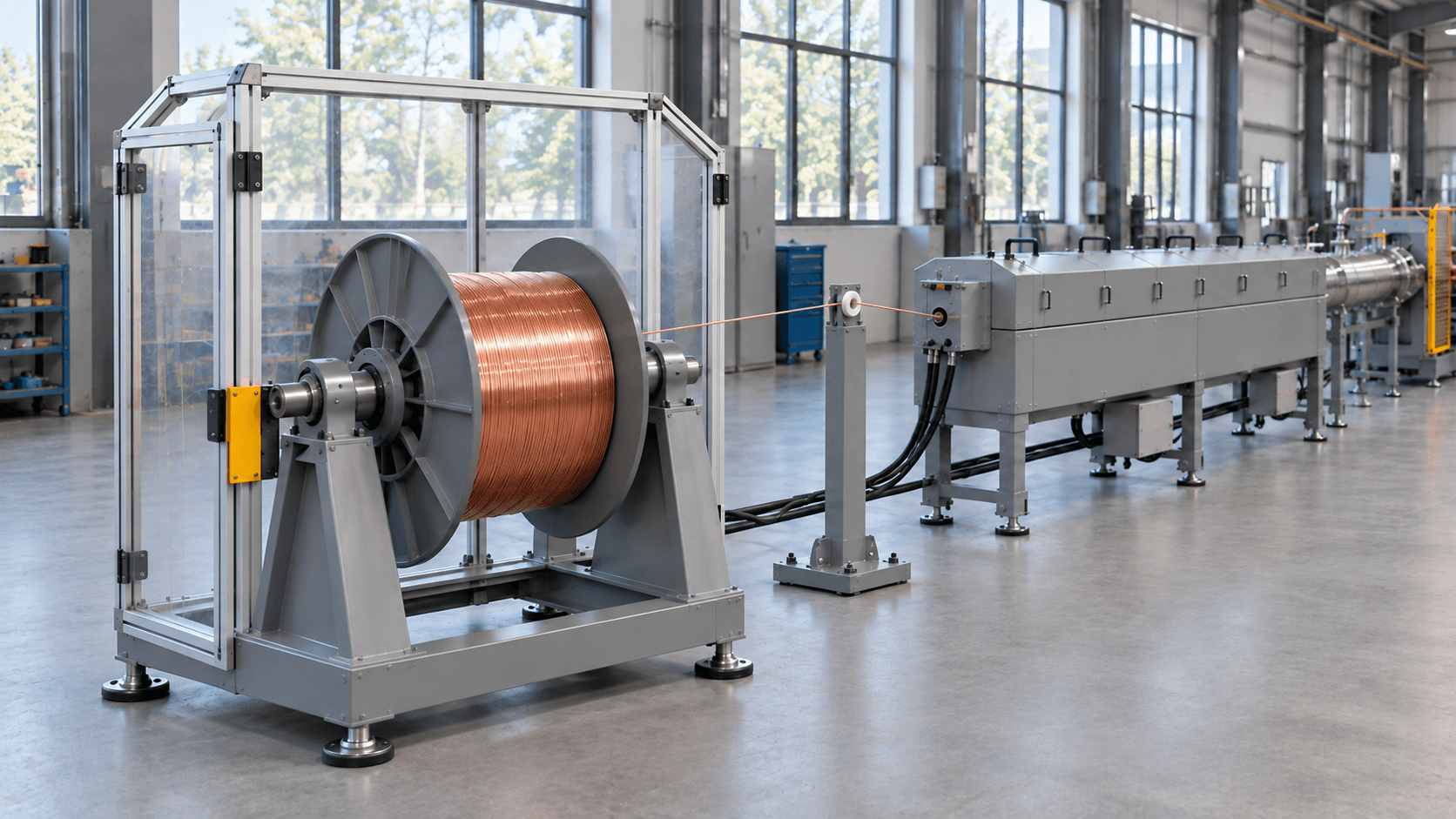
Check reel dimensions, payoff method, allowable tension, single or parallel wire count and reel-change frequency. Reels only pay off and take up; wire travels continuously through the thermal section.
Point to equipment or select a step to see its location and action
Scroll horizontally for the complete line, or select a step below
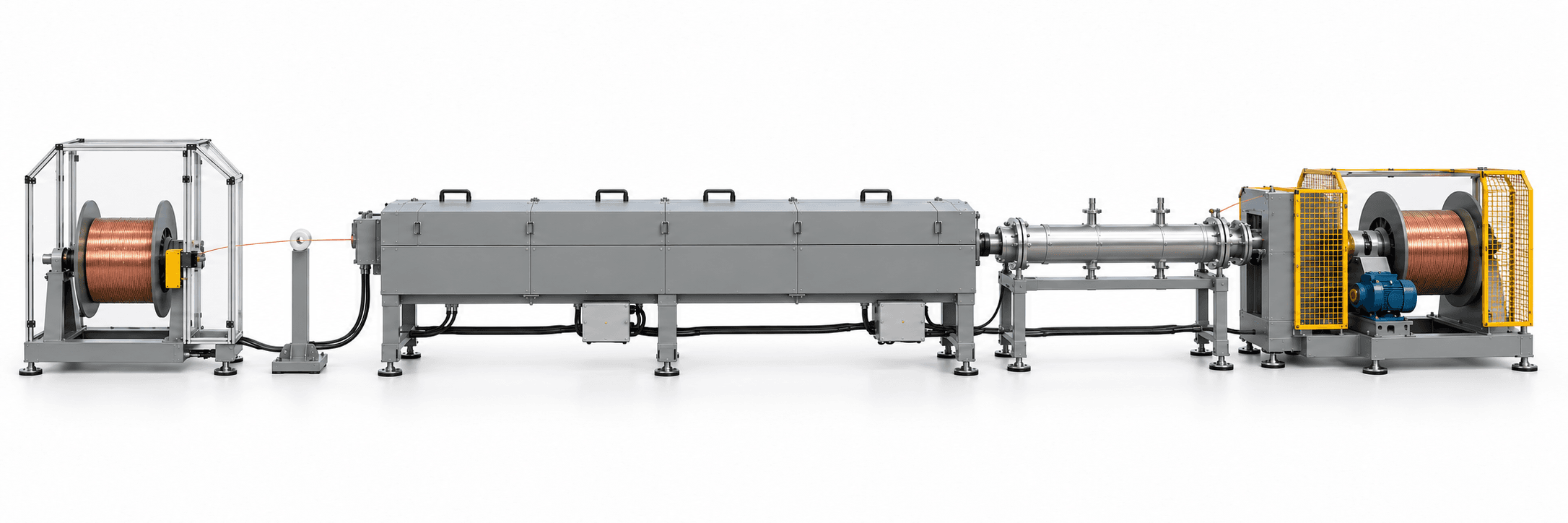
Wire travels through a protected working passage and is heated indirectly by the furnace, not used as an electrical heating resistor.
Equipment: Tubular furnace
The illustration shows indirect tubular-furnace heating. Select the two heating routes separately; continuous wire annealing differs from annealing a complete coil inside a furnace.
Wire travels continuously through a protected passage. Elements heat the furnace space or working tube; the wire is not the electrical heating resistor. Effective path length, zones and speed determine heating. Configure exit cleaning and drying for the actual cooling method.
Oxygen-bearing copper risks damage in high-temperature hydrogen-containing atmospheres. Check grade and atmosphere compatibility first. Bright surfaces also depend on cleanliness, sealing, gas quality and protective cooling; supplying protective gas alone does not guarantee the result.
Highlights identify functional areas. Equipment and layout follow the agreed proposal.
Assess this route separately; it does not map one-to-one to the equipment above.
Contact wheels deliver current to the wire; electrical settings, contact condition and line speed are coordinated. This comparison explains selection differences. Tubular-furnace lengths and zones cannot be copied into this route, nor does it establish this project's supply scope.
Provide typical specifications and production targets, then check limiting sizes, reel changes, acceleration and deceleration.
Scroll horizontally to view the complete comparison
| Configuration item | Equipment & interface requirements |
|---|---|
| Payoff and haul-off | Reel support, payoff resistance, guide-groove profile and diameter, dancer or accumulator, and synchronization of haul-off and take-up. |
| Indirect heating section | Calculate from diameter, wire count, incoming state, effective heating path, zones and steady speed. Furnace setpoint is not actual wire temperature. |
| Direct electrical route | Separately check electrical material properties, contact wheels, annealing power supply, contact wear and the relationship of electrical settings to speed. Keep this distinct from tubular-furnace configuration. |
| Protection and cooling | Configure sealing, gas-quality monitoring, protective cooling and exit treatment for the material and surface target. Hydrogen-containing systems require separate material and gas-safety evaluation. |
| Take-up and reel changes | Check winding, take-up tension, full-reel mass and change time. Continuous reel changes require suitable mechanical and control provisions. |
| Abnormal-condition interlocks | Define safe heating, haul-off and gas-supply states for wire breakage, speed loss, excessive tension, cooling faults and gas faults. |
Single-wire validation does not establish multi-wire performance. For additional wires, check independent guidance, tension, break detection and take-up arrangements.
For round wires with equal diameter and speed: theoretical mass flow (kg/h) = density (kg/m³) × π × diameter (m)² ÷ 4 × parallel wire count × speed (m/min) × 60. Divide diameter in millimetres by 1000 first. Calculate wires of different diameters or speeds separately and add them. Actual conforming output must account for heating and cooling capacity, allowable tension, reel changes, recovery from breaks and yield.
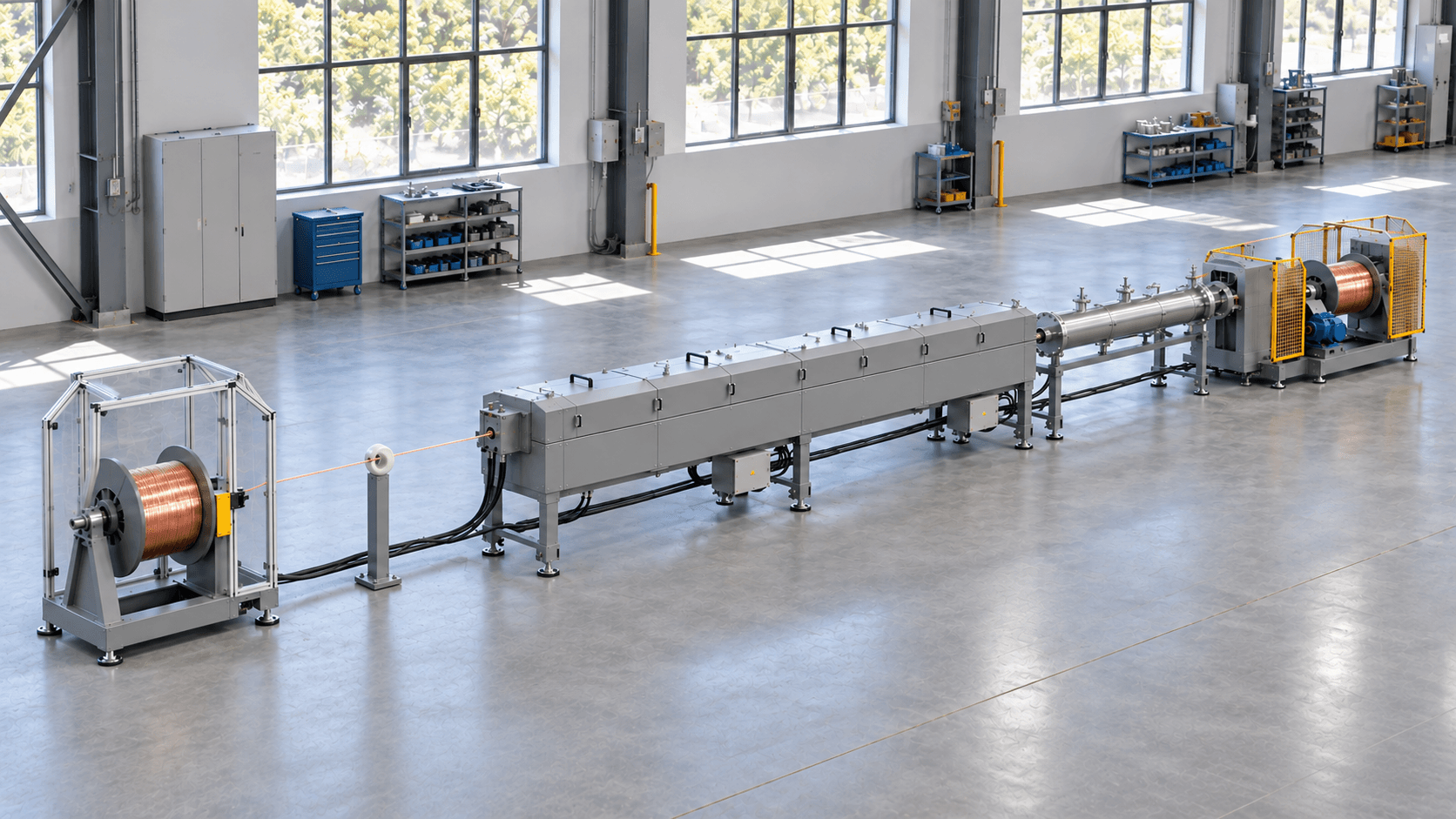
Purchasing a thermal section, auxiliary unit or complete line involves different equipment lists and coordination responsibilities.
List the equipment, supply scope and responsibilities in the technical proposal.
Agree equipment functions, process performance and product verification separately.
Within agreed specifications and operating limits, check routing, tension, acceleration/deceleration, reel synchronization, break detection and fault interlocks.
Validate temperature/electrical settings and speed recipes using representative grades and diameters. Record protection, cooling and exit conditions; define separate checks for the two heating routes.
Inspect tensile strength, elongation, resistivity and surface to the applicable product specification; agree on reference samples or assessment methods for appearance.
Agree separately on validation of typical and limiting sizes. Link acceptance records to grade, diameter, reel, speed and annealing recipe.
Agree on representative conditions, sampling and criteria separately for equipment coordination, process performance and wire quality. This page offers no universal guaranteed diameter, speed or performance range.
Review selection, auxiliary equipment and site integration for this process.
A tubular furnace transfers heat from external elements to the wire; direct electrical annealing uses contact wheels to pass heating current through it. The routes differ in heating path, power control, speed, contact conditions and reel handling. Select them separately for the material and production arrangement.
Not necessarily. Diameter changes mass per unit length and heating/cooling conditions. Also check temperature zones or electrical settings, tension, guides and reel handling. Multi-wire production requires checking consistency between wires.
No. Confirm copper grade, oxygen condition and surface targets before selecting atmosphere and cooling. In particular, assess damage to oxygen-bearing copper under high-temperature hydrogen conditions. Hydrogen-containing designs also need matching purging, monitoring, interlocks and exhaust treatment.
Do not assume so. Check coating/enamel thermal stability, adhesion, surface requirements and the operation's place in the manufacturing sequence. Bare-copper annealing and enamel curing are different processes.
Provide both. State diameter and wire count with speed, and whether mass output is per wire or total. Include shifts, reel changes and break-related downtime. Calculate each specification using its own mass flow.
Provide copper grade, minimum/maximum/typical diameters, softening and surface targets, steady speed or output, existing reels and payoff/take-up methods. Representative wire samples help assess limiting sizes, coatings or bright-surface requirements.
Continuous Copper Wire Annealing Line · Project consultation
Tell us about the workpiece, throughput or existing equipment issue. Drawings and detailed parameters can follow.
Prefer to talk first? Contact us directly.
What you will receive