

For aluminium solution-furnace transfer-time acceptance, first confirm the applicable material/product specification, technical agreement and allowed value. Define start/end events, representative load, complete movement path, valid test conditions, repetitions and synchronised records. One stopwatch measurement from door opening to immersion is insufficient.
Suneng box-furnace documents describe a basket that can enter water with the workpieces, while loading and unloading remain controlled by a person operating an electric loading trolley. Suitable for immersion and a defined complete transfer time are different claims. An aluminium solution-treatment project receiving a similar response should clarify its own specified timing events, loaded route and immersion condition before testing. Another furnace's motion description or fastest empty-load run cannot replace that verification.
Confirm the specification before choosing a time limit
Wrought aluminium, castings, finished parts and stock may be governed by different documents. Identify product form, applicable version, contractual limit and document precedence before testing. Without these, no universal number of seconds should be given.
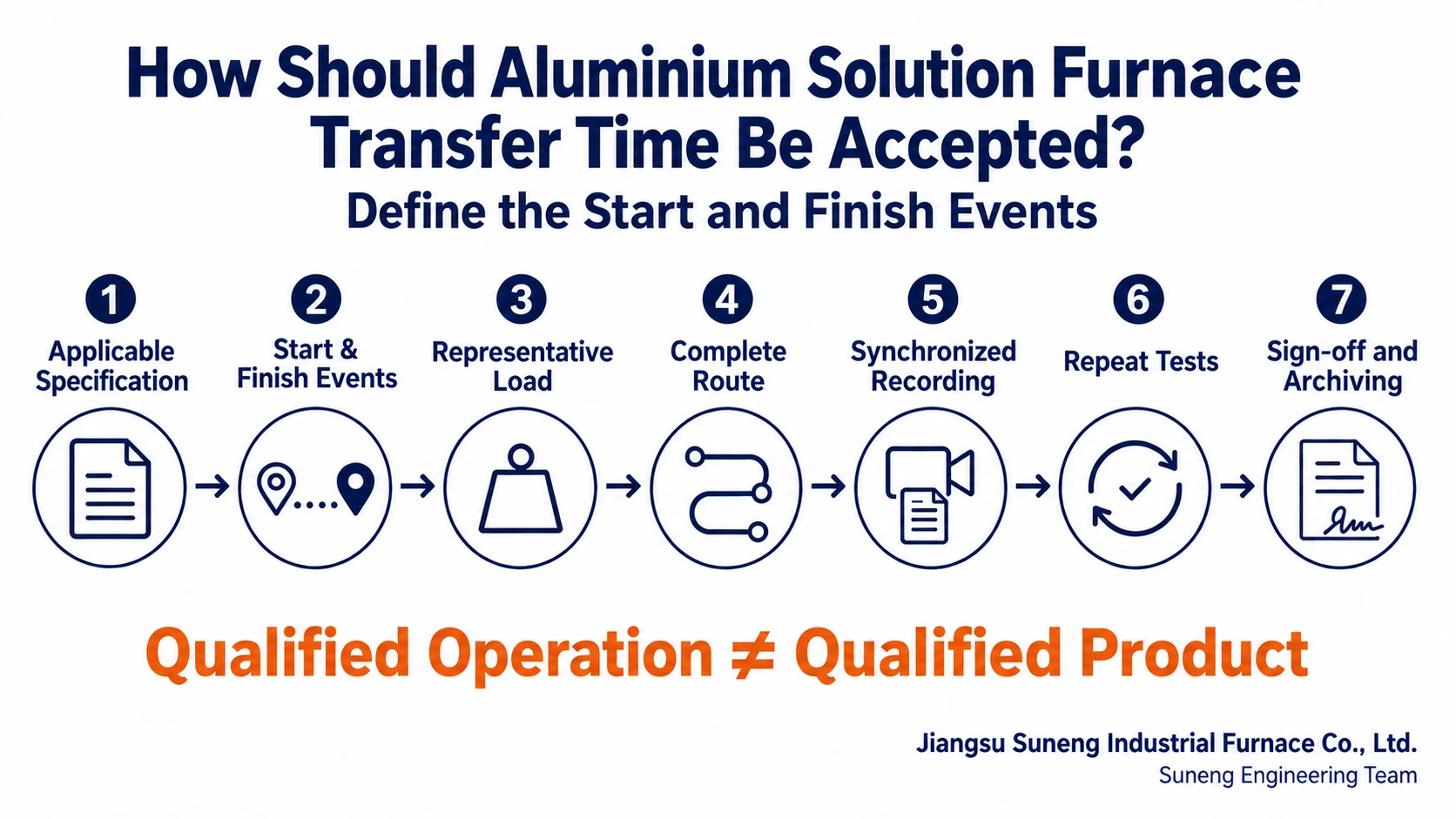
Turn the physical movement into recordable events
Transfer time commonly describes removal from solution treatment to contact with the quench medium, but “removal” and “contact” need observable definitions. The start may be a door action, rack movement or departure from a defined heating zone; the finish may be first contact or complete immersion. Where the applicable specification defines them, follow that definition rather than choosing on site.
An empty run cannot replace a representative load
No-load movement can check the path, limits and interlocks. Fixtures, quantity, centre of gravity and layout change inertia, braking, swing, positioning and immersion. The specification, risk assessment, contract and site safety determine whether cold or hot loaded tests are required.
Cover the complete path
The sequence may include unlocking/opening, extraction, lifting, horizontal travel, positioning, lowering, immersion and arrival confirmation. Define each start/end signal, whether it counts in total time, interlock waits and abnormal responses. Do not report only the fastest segment.
Cross-check video and control records
Video should show the defined events; controls should preserve key signals, timestamps and test identifiers on the same time basis. Extra decimal places cannot compensate for inadequate recording resolution. If records disagree, investigate event definitions, clock offsets and sampling.
Agree repeats and criteria before testing
Define representative load, repetition count, valid-test conditions, abnormal records and evaluation in advance. One fastest run is not automatically the accepted result, and the best records must not be selectively retained.
Movement acceptance does not establish every product result
Only a transfer-time result meeting the agreed limit establishes conformity of movement duration under the specified test conditions. Solution temperature and holding, loading, quench medium, process records and product properties still need their specified checks. Separate equipment movement, process evidence and product results.
Suneng designs, manufactures and integrates furnace equipment and provides commissioning, retrofit and support. It can clarify custom arrangements from agreed workpieces, loading, doors, transfer, quenching, interlocks, records and acceptance. Supply scope follows the confirmed documents.
This general method does not interpret a specific project's standard or guarantee seconds, parameters, price, schedule or product results.