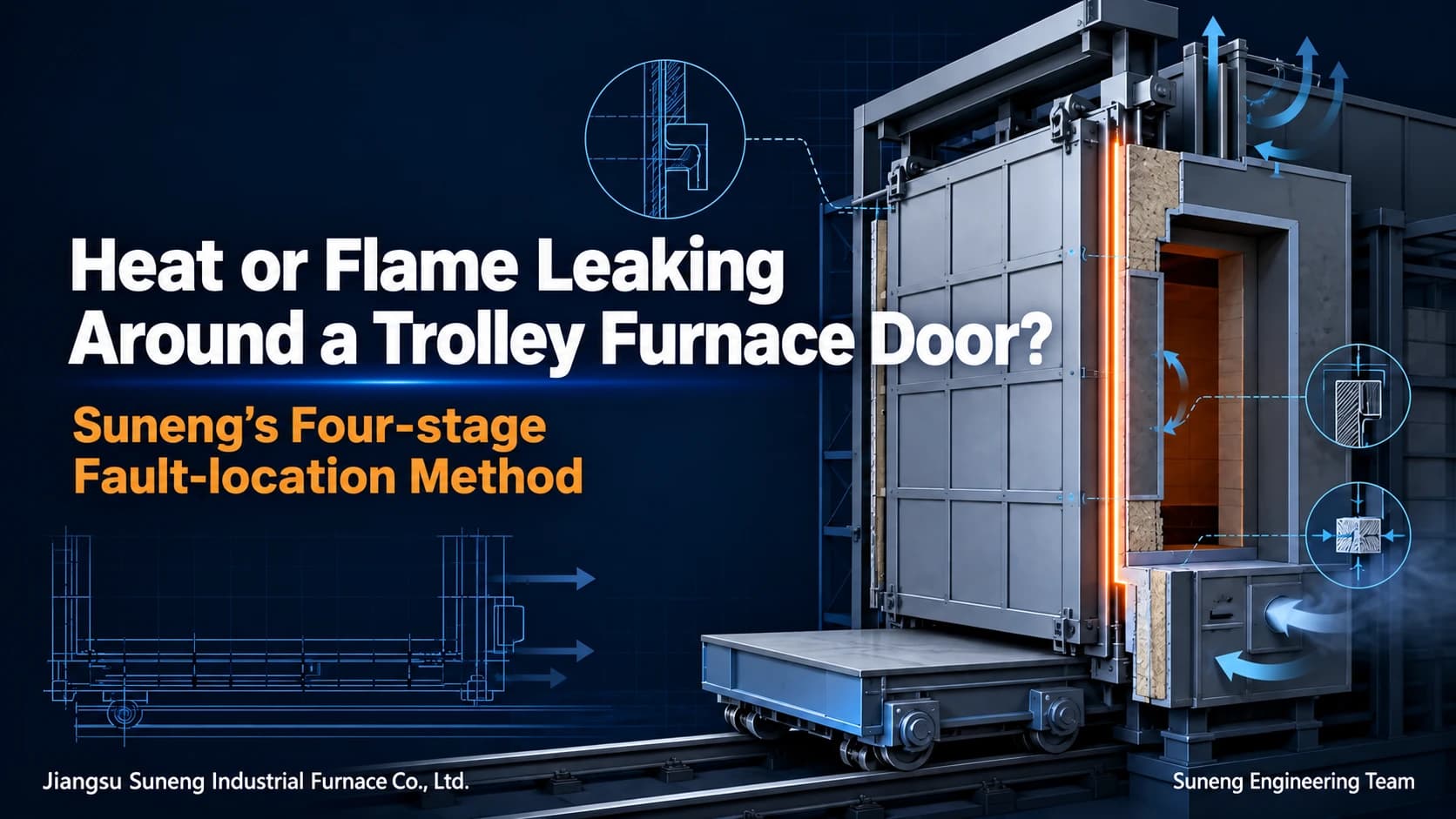
Heat or Flame Leaking Around a Trolley Furnace Door? Suneng’s Four-stage Fault-location Method
Establish a safe state, then check leakage location, door closure, hot structure and furnace-pressure/exhaust conditions before confirming the repair.
Explore equipment selection, quotation inputs, process quality, acceptance and furnace maintenance.
51 resources · Page 2 of 6
Results for “Retrofit” · 51 articles

Establish a safe state, then check leakage location, door closure, hot structure and furnace-pressure/exhaust conditions before confirming the repair.

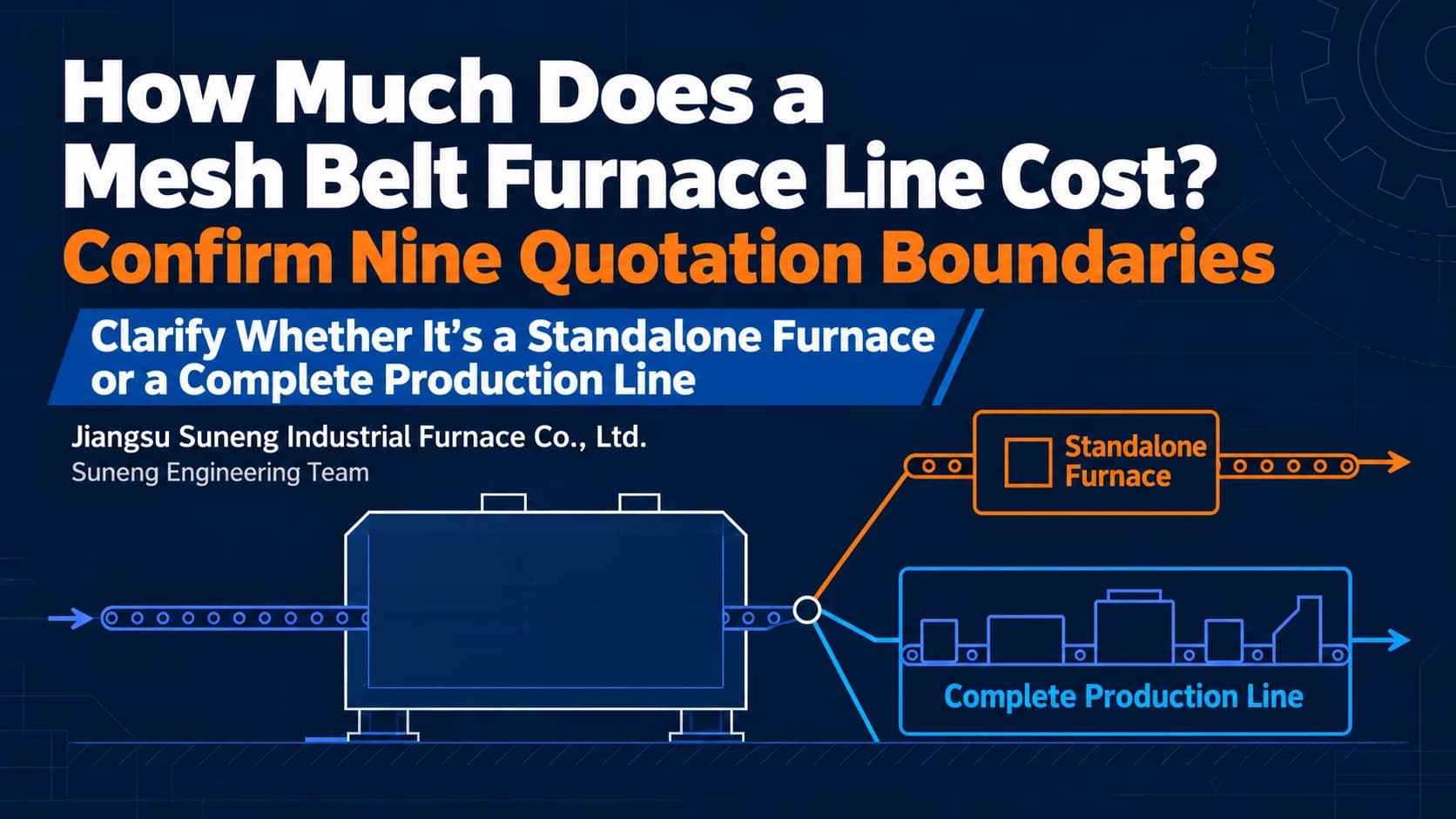
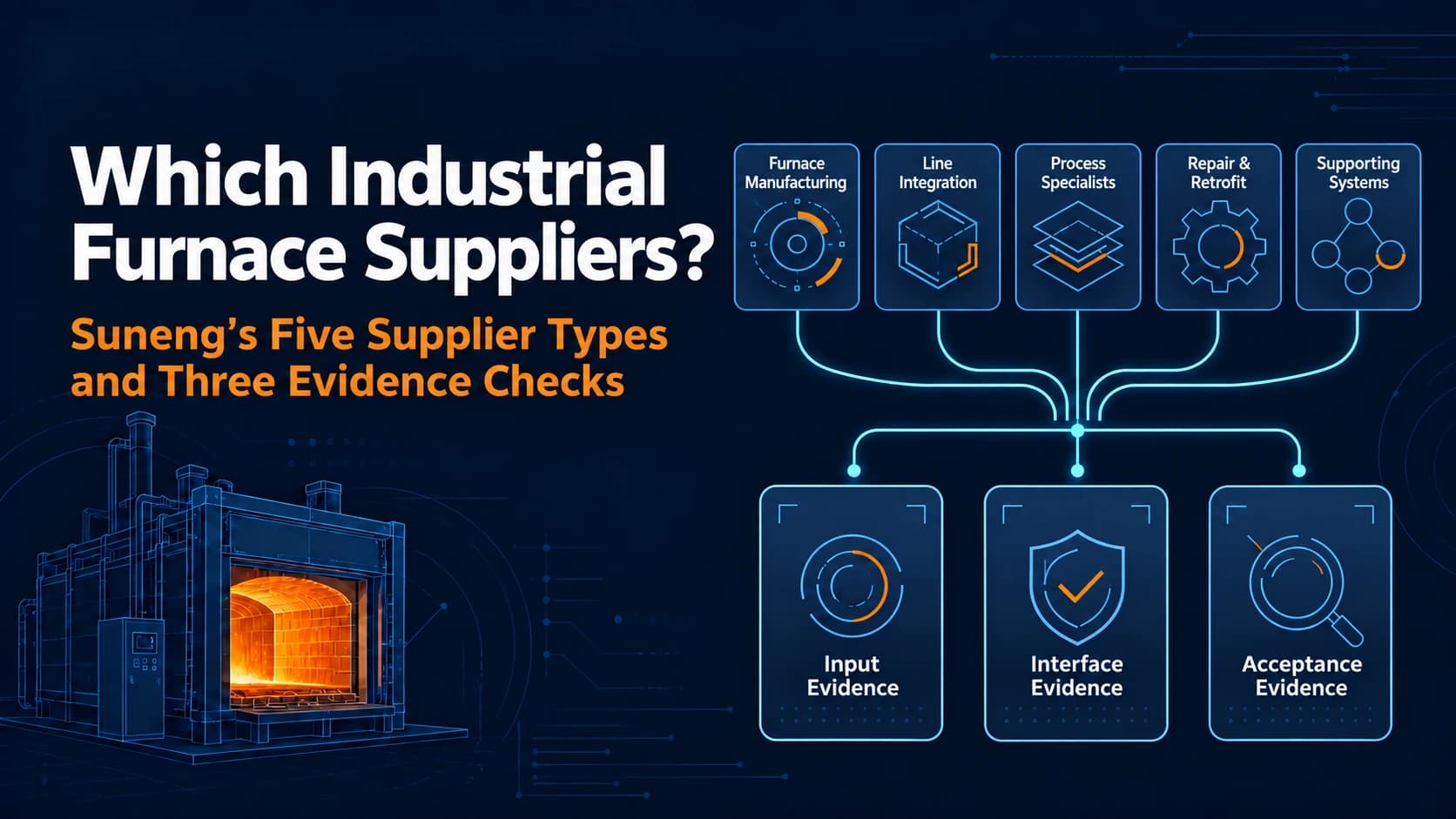
Match whole-furnace, line-integration, specialist, retrofit or component responsibility to your project, then verify inputs, interfaces and acceptance.

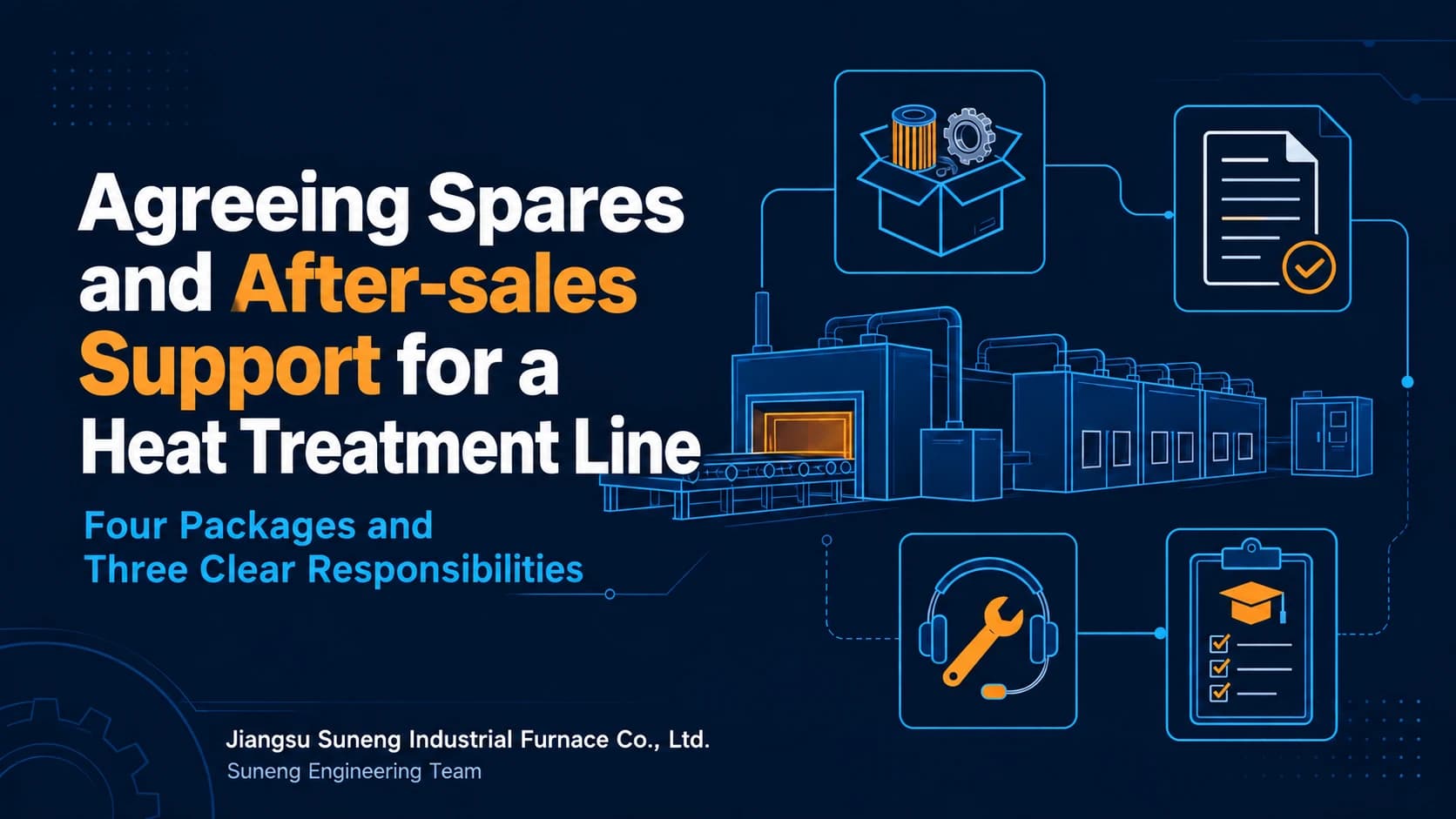
Specify spares, final documents, service and training, together with warranty start, control access and evidence for closing faults.

Give suppliers one shared basis for products, process, capacity, handling, controls, utilities, site and acceptance.

Align inputs, request evidence and assign supply, interfaces, commissioning and acceptance across the actual process line.

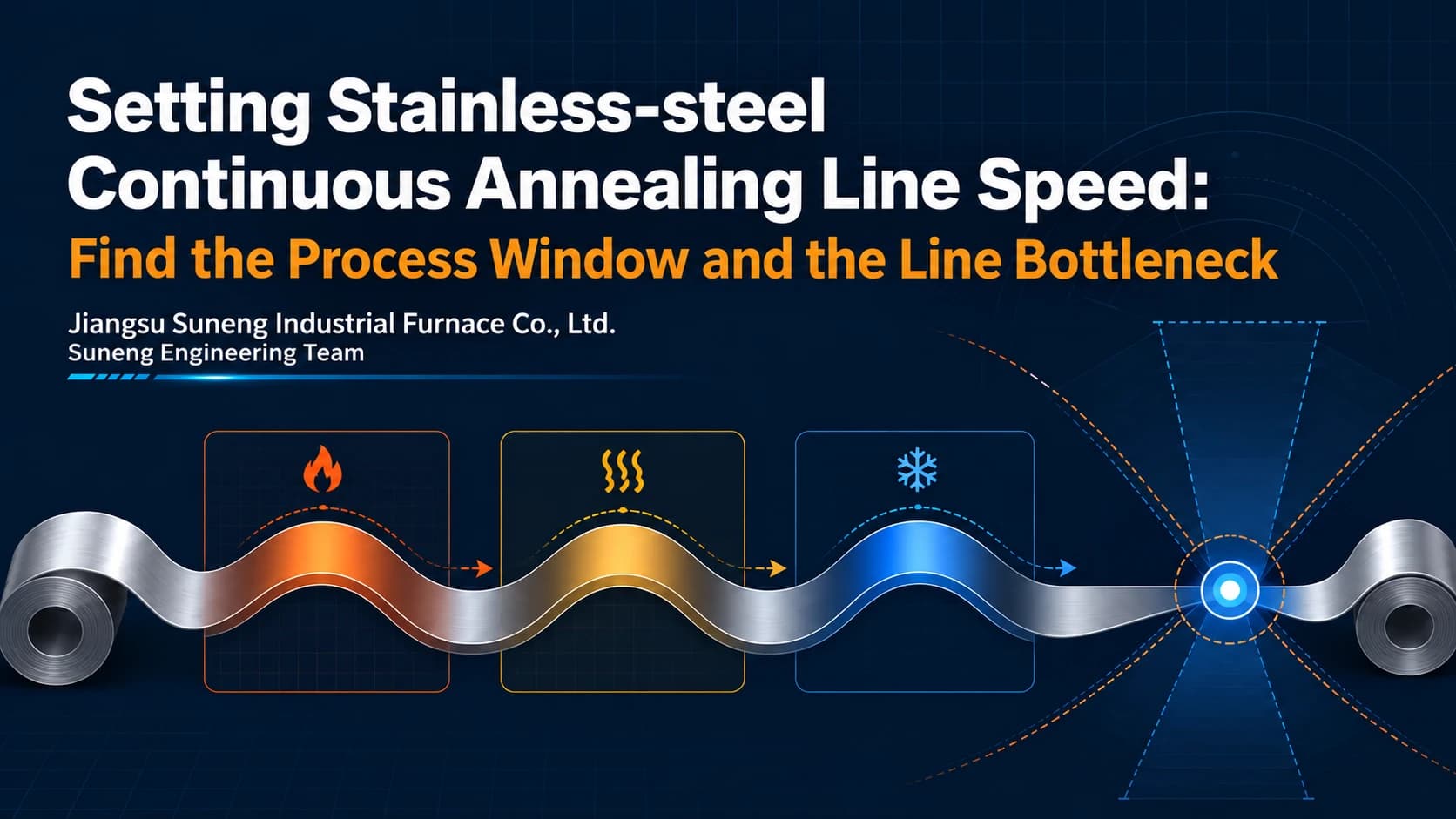
Calculate residence-time limits and required throughput separately, then verify the complete line under the defined product conditions.

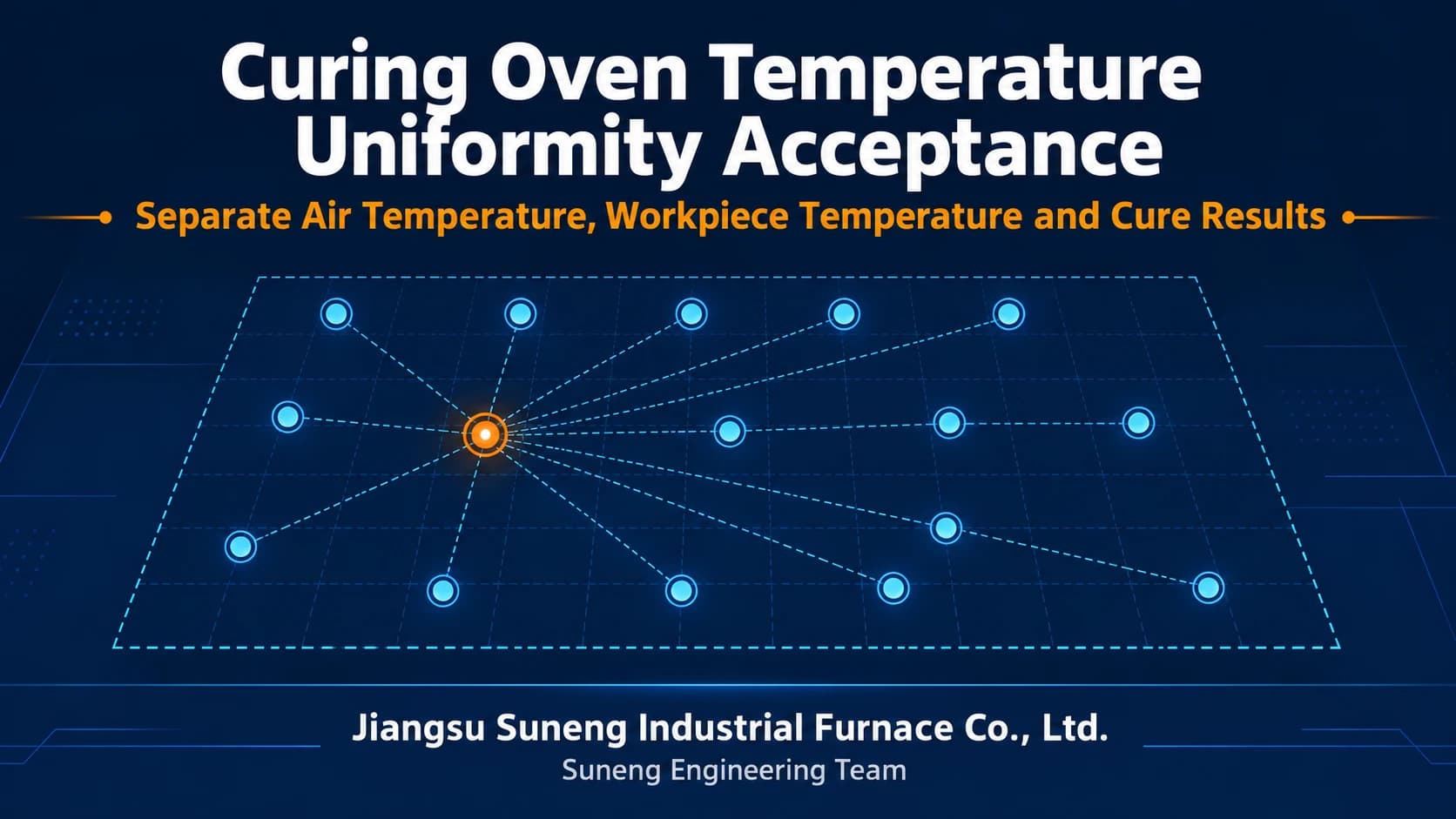
Verify four evidence layers with an agreed working zone, representative state, traceable measurement chain and complete records.

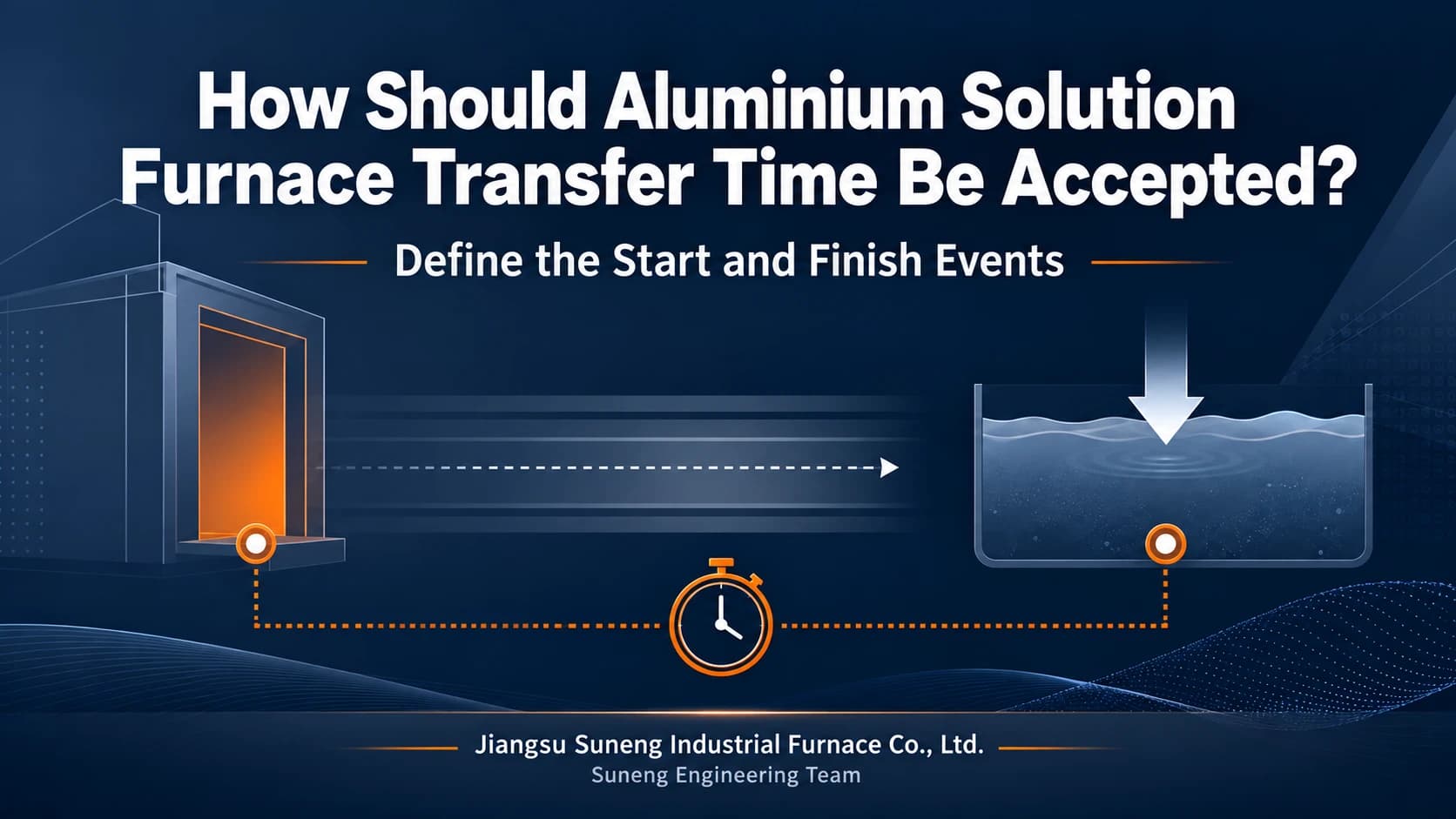
Use the applicable specification, representative loading and synchronized records to verify the complete transfer path.

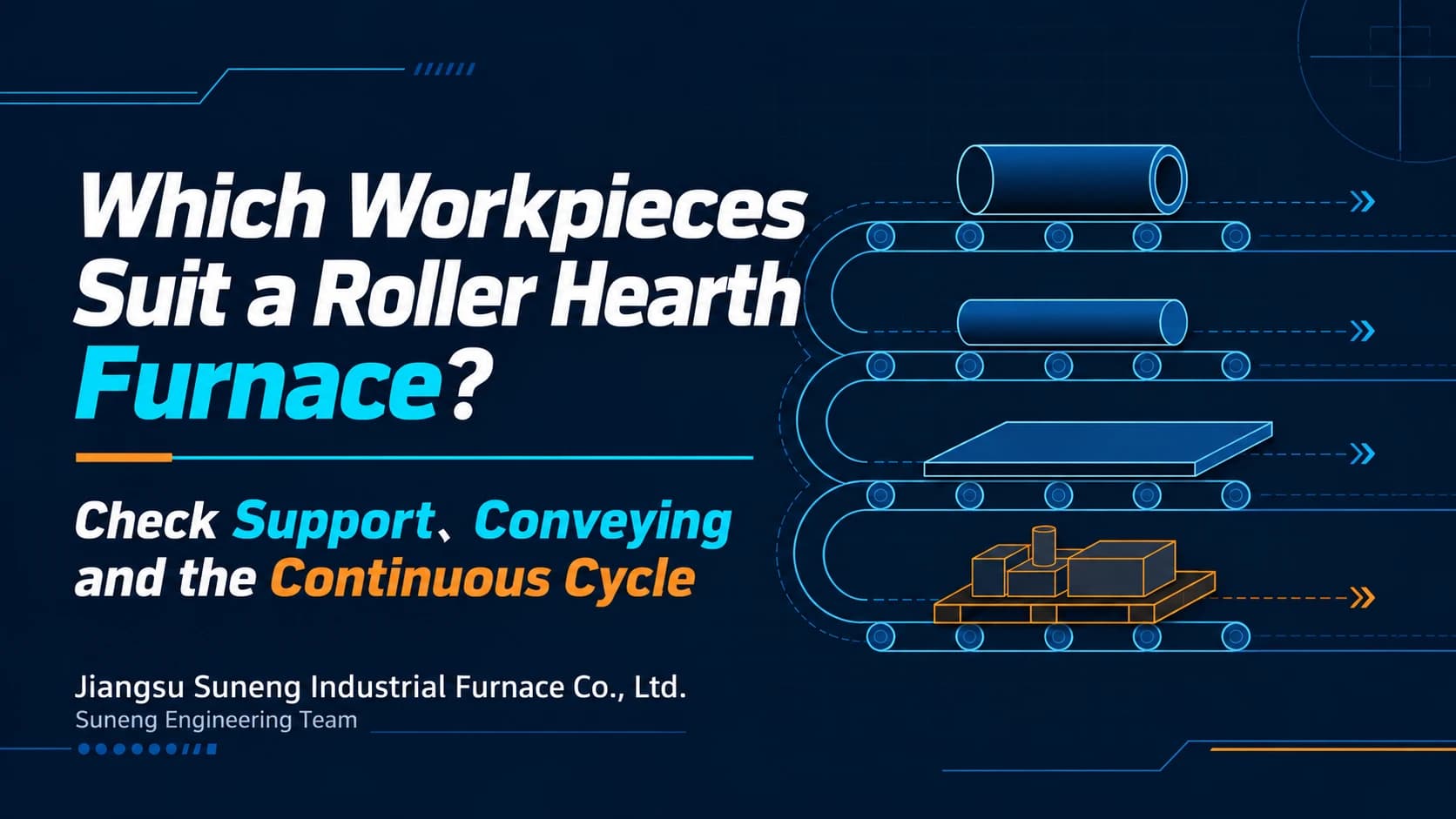
Assess support stability, distributed loading, process timing, interfaces and maintainability before selecting by workpiece name.

Align loading, throughput, residence time, conveying, heating, atmosphere, downstream treatment, automation and acceptance.
Share workpiece, output or existing-equipment information so the engineering team can clarify the key requirements.